
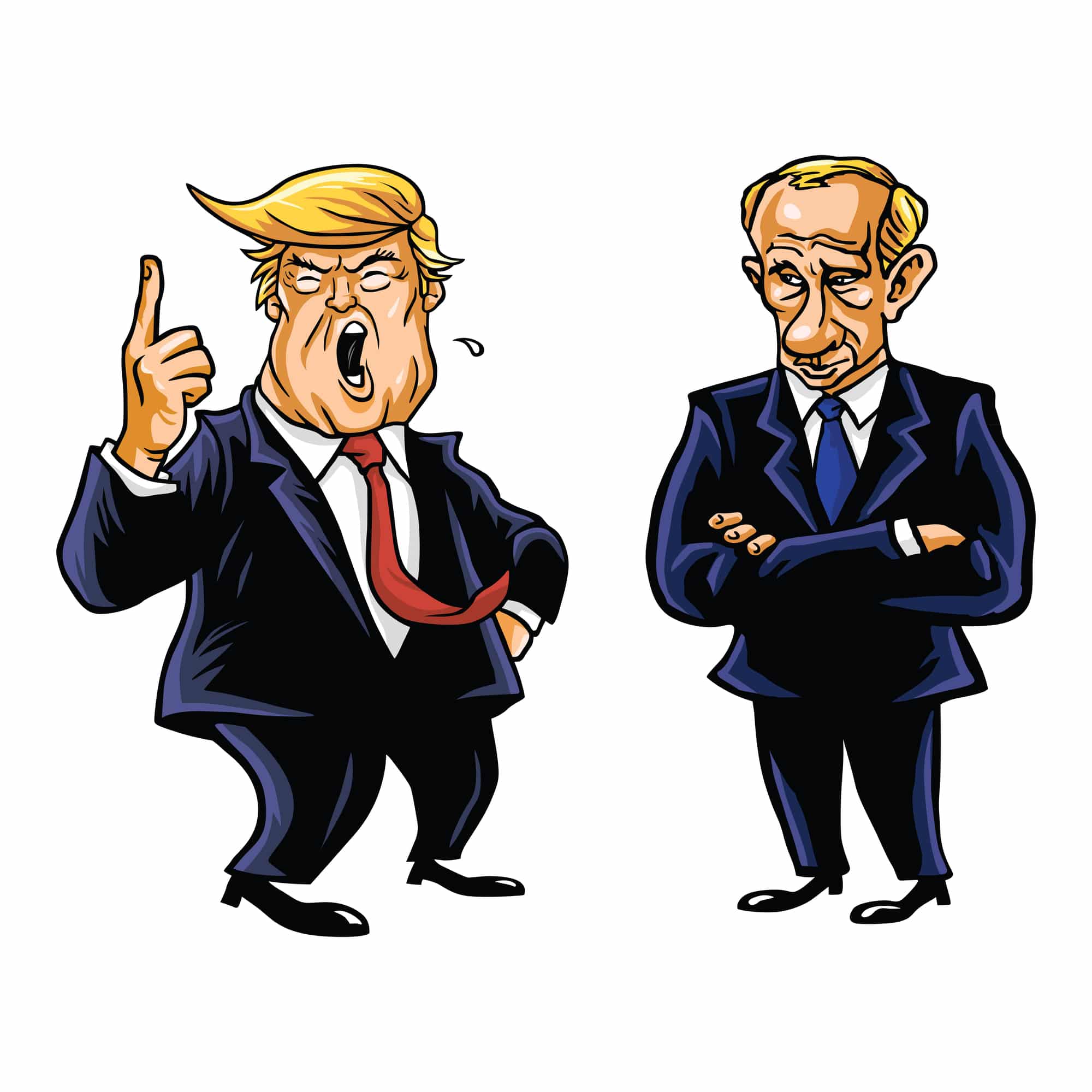
The chaotic rollout of the latest Ukraine peace initiative reveals a troubling reality that transcends partisan politics. Three years into a devastating European war, American policymakers still operate under the delusion that diplomatic papering over irreconcilable positions can substitute for the hard work of strategic disengagement.
The proposal emerged from secret discussions between President Donald Trump’s Special Envoy Steve Witkoff and Russian sovereign wealth fund chief Kirill Dmitriev, a close confidant of President Vladimir Putin. Developed without coordination from the U.S. State Department or European allies, the plan was presented to Ukrainian President Volodymyr Zelensky on November 20, 2025. Its provisions include territorial concessions legitimizing Russian control over Crimea, Luhansk, Donetsk, and parts of Kherson and Zaporizhzhia, alongside military restrictions capping Ukrainian forces at 600,000 troops and barring NATO membership.
But focusing on these specific terms misses the deeper dysfunction the plan exposes about American foreign policy. Alexander Mercouris of The Duran delivered perhaps the most scathing assessment, describing the document as a confused mess.
“There are points here which are fairly consistent with what we’ve been hearing. Ukraine is not going to join NATO, for example. That Ukraine is going have to change its constitution back to neutral status. That is what the Russians want. Ukraine has to withdraw from Donbass,” Mercouris explained. “There is massive confusion in this document about all kinds of provisions. So Russia is to have de facto sovereignty over Donbass and Crimea. What does that even mean? And then we are told that the document is legally binding. So if it is legally binding, how can it be de facto? I mean there’s already absurdities there.”
Former CIA analyst Larry Johnson poured further cold water on the 28-point plan by calling attention to constitutional and military realities on the ground that U.S. decisionmakers are glossing over. Following referendums in September 2022, Russia absorbed Kherson, Zaporizhzhia, Luhansk, and Donetsk into the Russian Federation. Given these circumstances, Putin cannot legally cede this territory regardless of diplomatic pressure.
“Russia is winning on the battlefield and is confident that it will prevail, not only over Ukraine, but over NATO,” Johnson wrote, citing his interview with Russian Foreign Ministry spokesperson Maria Zakharova. “Given the current collapse of the Ukrainian military, it will be Russia who will dictate the terms.”
The tentative plan’s military provisions bear no relationship to Russian objectives established in earlier negotiations. During Istanbul talks in March 2022, Russia demanded a peacetime cap of 85,000 active Ukrainian personnel compared to the pre-war standing army of 200,000 to 250,000 troops. The Trump plan’s cap of 600,000 represents a trivial reduction from current mobilization levels, which the Russians will likely reject outright.
“Russia will insist that all sanctions be lifted immediately,” Johnson emphasized. “Given the growing importance of BRICS, Russia has little interest in returning to the G8.
Johnson concluded bluntly that Russia will not accept the plan in its current form because “Russia is not going to put its security in the hands of Donald Trump. Trump is a lame duck leader and there is no guarantee on the table that will satisfy the Russians that this proposed agreement would be enforced by his successor.”
Russia’s rapid territorial advances in the Donbass have panicked Western policymakers. The Trump administration is scrambling to broker a diplomatic settlement before potentially facing something worse than Joe Biden’s chaotic Afghanistan withdrawal. As Mercouris noted, Trump fears a “Fall of Saigon” moment—the April 30, 1975 capture of South Vietnam’s capital that symbolized America’s humiliating defeat and the collapse of its client government.
“The one thing that it seems to me that Trump is obviously frightened of is that there’s going to be a Fall of Saigon moment. We saw that when Kabul fell in Afghanistan. Biden’s reputation never recovered. Trump wants to avoid that at all costs,” Mercouris stated.
A new twist emerged when a new 19-point peace plan was developed through intensive U.S.-Ukrainian negotiations in Geneva following widespread backlash to the original 28-point document. Ukrainian officials confirmed on November 24-25, 2025 that the plan has been condensed and significantly modified, with Ukraine’s First Deputy Foreign Minister Sergiy Kyslytsya stating that “very few things are left from the original version,”
Of note, this new plan would not put hard caps on the size of Ukraine’s military and provided vague language about Ukraine’s aspirations to join NATO. Regardless of the details, it has become abundantly clear that diplomatic tinkering at the margins can only go so far. Given Russia’s manpower and economic advantages, Ukraine faces certain defeat on the battlefield. Continued military aid and other measures to keep Ukraine in the fight are merely prolonging the inevitable and could likely see the veritable destruction of the Ukrainian state once the smoke clears.
At this juncture, the United States needs to rip the band-aid off and completely disengage from this war. The Ukraine crisis is the culmination of NATO’s post-Cold War grand strategy of constant expansion. The alliance’s extension to Russia’s borders violated reasonable security concerns of a major power while entangling the United States in conflicts where no vital American interests exist.
The solution to this dilemma is not face-saving negotiated settlements but a fundamental strategic reorientation. America should exit NATO entirely if it wants real peace globally. The alliance has become a mechanism for dragging the United States into European territorial disputes that the country has no business adjudicating.
Instead, an America First foreign policy would focus on border security and maintaining benign hegemony in the Western Hemisphere via an updated Monroe Doctrine. This represents an actual defensive posture rather than the global interventionism that NATO membership requires.
The resources America has poured into Ukraine—over $100 billion in military and economic aid—could address genuine security challenges at America’s southern border. The intelligence assets devoted to supporting Ukrainian operations could be re-allocated to focus on transnational criminal organizations operating throughout Latin America.
Rather than implementing half measures attempting to revive the unipolar moment of the 1990s, American policymakers should pursue genuine strategic disengagement. This means accepting that Russia and Europe must resolve their security issues without American mediation.
The United States has no vital interests at stake in where borders are drawn between Russia and Ukraine. American security is not threatened by Russian control over Donetsk or Ukrainian neutrality. The conflict matters to Americans only because previous administrations made the disastrous decision to treat NATO expansion and Ukrainian alignment with the West as core policy objectives.
Unwinding this mistake requires acknowledging that America’s attempt to extend liberal hegemony to Russia’s borders failed. The costs of continuing this policy—measured in Ukrainian lives, European economic dislocation, and the risk of great power war—vastly exceed any conceivable benefits.
A genuine America First foreign policy would announce immediate cessation of military aid to Ukraine, withdrawal of intelligence personnel and advisers, and initiation of negotiations for American exit from NATO over a defined timeline. This would force European nations to take responsibility for their own security while removing the United States from entanglement in conflicts where America has no business being in.
The path forward is not the tentative 28-point plan, European counter-proposals, or any other diplomatic framework drafted in Washington, London, or Brussels. The path forward is American recognition that the Russo-Ukrainian conflict represents the consequences of strategic overextension, followed by the difficult work of unwinding commitments that never served American interests in the first place.
Only when America stops treating European border disputes as existential threats to its security can genuine peace emerge—not through Washington-brokered deals, but through allowing the parties with actual stakes to reach their own accommodation.