Americans who value civil liberties are justifiably outraged at reports about some of the enforcement tactics used by Immigration and Customs Enforcement (ICE) agents. Similar complaints are now surfacing about the behavior of ICE’s sister agency, Customs and Border Protection (CBP). There have been verified episodes in which masked agents have forcefully grabbed suspected illegal immigrants at their places of employment or even off the streets and taken them to jail, all while refusing to identify themselves or apprise the individuals of their constitutional rights. In some cases, the people seized have been kept in custody for days. Several of the terrorized victims have even turned out to be U.S. citizens.
Most of the news media’s attention focused on ICE’s role until early November 2025. However, the White House then instructed the CBP to be more active. The change became quite visible a little later that month when CBP launched a major immigration enforcement initiative (“Charlotte’s Web”) in Charlotte, North Carolina (a city not near any U.S. border). The crackdown resulted in 130 arrests in just the first two days. Several especially ugly incidents involving CBP agents occurred, including the rather violent arrest of two U.S. citizens for allegedly warning people that enforcement operations were taking place in their neighborhood.
The tactics that ICE and CBP are using seem far more appropriate for a police state than a democratic republic. As with so many other recent highlighted civil liberties abuses, though, the problem did not begin when Donald Trump became president. Instead, previous administrations set a number of troubling precedents. Unsavory practices to enforce U.S. immigration laws, including holding detainees without due process for extended periods in overcrowded conditions, certainly are nothing new. Even accosting suspects at their place of employment or on the streets is not unprecedented.
One historical episode that bears an especially troubling similarity to the current conduct of ICE and CBP was the so-called Palmer Raids during Woodrow Wilson’s administration. Wilson’s minions had waged a brutal crackdown on dissent regarding a wide range of issues during World War I. But that armed conflict ended in November 1918. The Palmer raids occurred months after the cessation of hostilities.
Likewise, the United States is supposedly at peace now. The Palmer raids and the current ICE-CBP crackdowns thus have occurred in peacetime settings—making the typical expansive “national security” justifications used during wars much weaker and less credible.
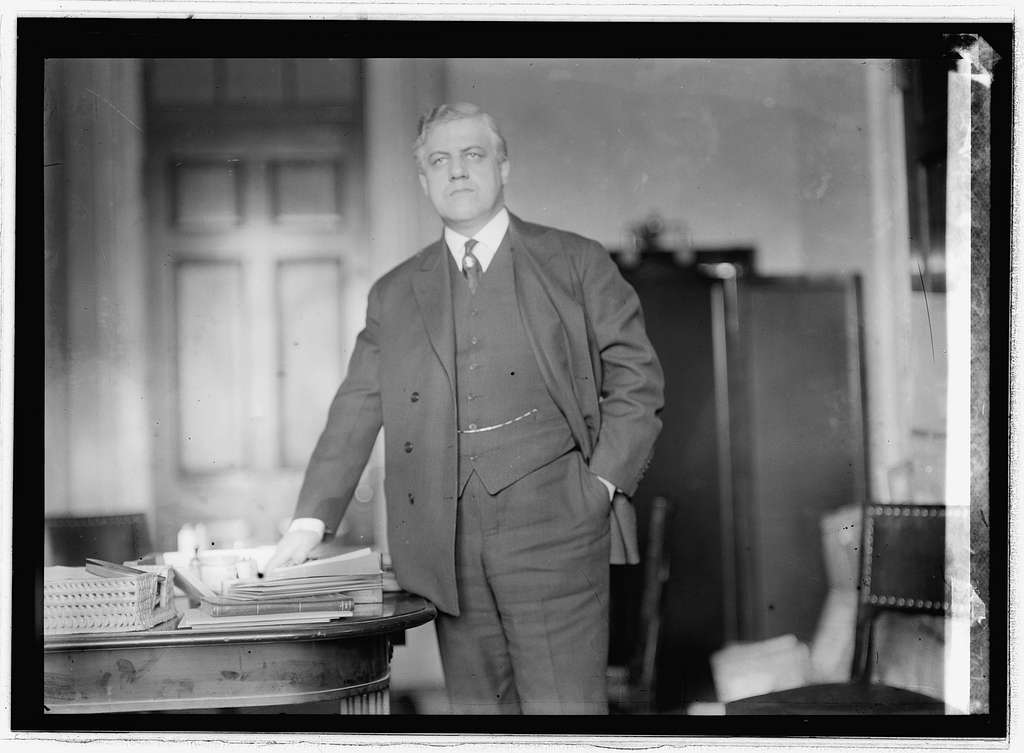
The Palmer raids began on November 7, 1919, coinciding with the second anniversary of Russia’s Bolshevik revolution. Federal agents, operating in collaboration with state and local law enforcement agencies, led hundreds of simultaneous raids and took more than two hundred radical leftists into custody. Wilson’s attorney general, A. Mitchell Palmer, ordered the searches and arrests following the discovery of multiple bomb plots directed against prominent Americans in April 1919. During the rest of that year and into 1920, the detonation of several bombs took place, including one major incident on Wall Street and an attack on Palmer’s own home in June 1919.
Palmer was ideologically inclined to support a hardline authoritarian approach in any case. He had been a vocal advocate of repressive wartime measures, especially the Espionage Act of 1917 and sedition legislation in 1918. Even though the war was now over, Palmer lobbied for congressional passage of a new peacetime sedition act. The bill he endorsed would not only have made permanent all of the wartime restrictions of the Sedition Act of 1918, but also sought to add a provision prohibiting “incitement” to commit sedition. That language was so vague and vacuous that it could mean virtually anything law enforcement officials wanted it to mean.
Fortunately, Congress balked at the Wilson administration’s latest foray into blatant authoritarianism. However, Palmer and his allies were able to carry out part of his agenda through the raids he initiated in late 1919 and early 1920. Indeed, the Palmer raids culminated in early January 1920 with another wave of arrests that incarcerated another 3,000 suspects. The majority of the individuals targeted were immigrants, primarily from Central or East European countries. Nearly half of them were from Russia. The Bolshevik revolution in that country put Russian emigres under additional suspicion and intense scrutiny.
Officials routinely accused those arrested of being communists, anarchists, or other violent radicals. Some indeed were. However, the Wilson administration’s pervasive assault on political dissent that had occurred during World War I clearly had carried over into the post-war period. Moreover, as during the war, political authorities had little inclination to make any distinction between people with peaceful, albeit radical, views and advocates of violence and terrorism. Even peaceful dissenters were swept up in the dragnet raids and, in the case of immigrants, earmarked for deportation.
Most of the arrests conducted during the Palmer raids took place without valid warrants, much less other basic due process protections. The raids and subsequent detentions frequently were quite brutal, and many of the detainees were beaten or tortured in the process. Once again, there is a marked similarity between that episode and the ICE or CBP operations that are currently taking place. There also is a notable resemblance to the treatment that accused illegal immigrants are receiving now and the punishment inflicted on suspected terrorists in the months following the attacks on 9/11. By April 2025, 178 Venezuelan illegal immigrants apprehended in the United States were being held at the U.S. naval base in Guantanamo Bay, Cuba, the same facility used for years after the 9/11 attacks to hold accused Al Qaeda terrorists.
President Trump and his advisers also have openly targeted immigrants who have dared to speak out against aspects of Washington’s foreign policy. Such hostility has been directed against defenders of Venezuela’s leftist autocracy—or even activists who oppose Washington’s increasingly apparent goal of conducting a regime change military intervention. The administration’s targeting and harassment of dissenters is even more blatant with respect to people who favor the Palestinian cause and denounce Israel’s conduct in Gaza and other portions of the Arab world. There have even been attempts to chill vocal opposition on the part of U.S. citizens to Washington’s support for Israeli policy. Indeed, the administration is taking steps to revoke the citizenship of foreign born critics.
But immigrants who are not U.S. citizens are even more vulnerable to manifestations of the administration’s displeasure. Again the similarity to the aftermath of the Palmer raids and the overall Red Scare is evident when some 249 individuals, including the famous left-wing activist Emma Goldman, were successfully deported to the Soviet Union.
The effort of the Trump administration and its political allies to legitimize and enforce the modern equivalent of the Palmer raids needs to be resisted vehemently. There already has been a dangerous erosion of basic civil liberties in the United States. People in a free country should never be required to “show their papers” to alleged law enforcement personnel, especially when those agents are masked and refuse to identify themselves. Yet that is the very real danger that we now face, as did the victims of the Palmer raids.