
The Congress shall have Power To lay and collect Taxes, Duties, Imposts [tariffs] and Excises…. —U.S. Constituton, Article I, Section 8
Referring to the International Emergency Economic Powers Act (IEEPA), on which Trump claimed authority to impose any tariffs he pleases unilaterally, Chief Justice John Roberts, writing for the 6-3 majority, summed up:
The President asserts the extraordinary power to unilaterally impose tariffs of unlimited amount, duration, and scope. In light of the breadth, history, and constitutional context of that asserted authority, he must identify clear congressional authorization to exercise it.
IEEPA’s grant of authority to “regulate . . . importation” falls short. IEEPA contains no reference to tariffs or duties. The Government points to no statute in which Congress used the word “regulate” to authorize taxation. And until now no President has read IEEPA to confer such power.
We claim no special competence in matters of economics or foreign affairs. We claim only, as we must, the limited role assigned to us by Article III of the Constitution. Fulfilling that role, we hold that IEEPA does not authorize the President to impose tariffs.
Snap! What a blow to Trump and his autocratic aspirations. He believes that other statutes authorize him unilaterally to blanket the world in tariffs, which he promptly attempted (first at 10, then 15 percent). The problem, for him, is that those other laws are much more cumbersome, require investigations and reports, and permit tariffs for only 150 days unless Congress extends them, which it won’t do with the midterms approaching. Trump will not like those obligations to the first branch of government. (See my previous articles on Trump’s tariffs and the separation-of-powers doctrine.)
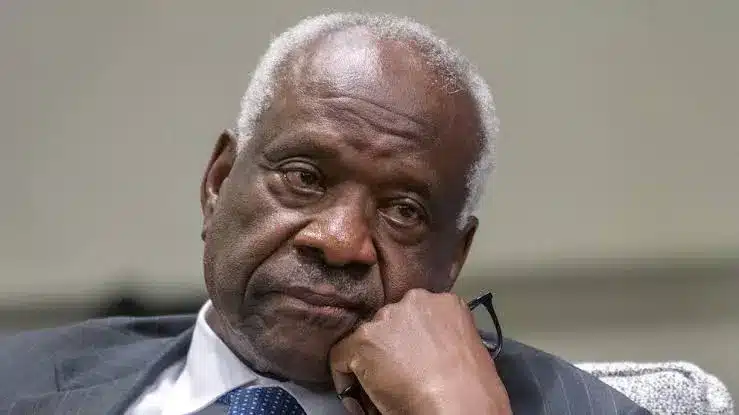
Among the three dissenters was Justice Clarence Thomas, who is regarded as the leading conservative and originalist on the court. The other dissenters were Trump nominee Brett Kavanaugh and Samuel Alito, nominated by George W. Bush. Two other Trump nominees, Amy Coney Barrett and Neil Gorsuch, helped make up the majority.
Before I proceed, I acknowledge that I never went to law school (despite my father’s long-standing offer to pay). (As a newspaper reporter over 50 years ago, however, I spent three years covering criminal and civil courts in suburban Philadelphia.) But I won’t let that lack of credentials stop me. After all, I’d bet the innocent kid who pointed out that the emperor was wearing no clothes had not apprenticed as a tailor.
Justice Thomas wrote an 18-page dissent. He agreed with Justice Kavanaugh’s principal dissent that, in Thomas’s words, “Congress authorized the President to ‘regulate . . . importation.’ Throughout American history, the authority to ‘regulate importation’ has been understood to include the authority to impose duties on imports.” That, of course, was the point in dispute. See the majority opinion and Justice Gorsuch’s concurring opinion for the other side.
Thomas had something else on this mind, however. He aimed to show that Congress, as the country’s legislature, could and did constitutionally delegate the power Trump exercised under IEEPA to raise tariffs. IEEPA, Thomas wrote, “is consistent with the separation of powers as an original matter.” We are wrong, he wrote, to think that Congress may not delegate any of its powers to the executive branch.
The Constitution’s separation of powers forbids Congress from delegating core legislative power to the President. This principle, known as the nondelegation doctrine, is rooted in the Constitution’s Legislative Vesting Clause and Due Process Clause. Art. I, §1; Amdt. 5. Both Clauses forbid Congress from delegating core legislative power, which is the power to make substantive rules setting the conditions for deprivations of life, liberty, or property. [Emphasis added.]
Wouldn’t that mean the majority was correct? No, Thomas wrote.
Neither Clause prohibits Congress from delegating other kinds of power. Because the Constitution assigns Congress many powers that do not implicate the nondelegation doctrine, Congress may delegate the exercise of many powers to the President. Congress has done so repeatedly since the founding, with this Court’s blessing. [Emphasis added.]
I see a problem already. Thomas said that only Congress can exercise “core legislative power,” that is, “the power to make substantive rules setting the conditions for deprivations of life, liberty, or property.” But tariffs and duties on imported goods are taxes, aren’t they? And as we all should know, taxes are “deprivations of … liberty or property”—both, actually. Moreover, if you don’t pay taxes and resist the IRS in defense of your property, armed government agents may deprive you of your life.
But Thomas has a comeback. While Congress may not delegate the core power to impose internal taxes, external affairs are another matter. “Although internal affairs are governed by the domestic law of one sovereign, external affairs implicate the relationship between sovereigns, which is subject to the law of nations…. The power to regulate external affairs was accordingly not viewed as within the core legislative power at the founding.” (Emphasis added.)
So Congress may legally delegate the power to impose external taxes, he said. But doesn’t Article I, Section 8, of the Constitution, which specifies Congress’s powers, say that the legislature has the exclusive power to “regulate Commerce with foreign Nations…”? How can that be delegable? It is, according to Thomas, because regulating foreign commerce has been regarded as an executive power since before the days of King George III. (Ignore the fact that the framers of the Constitution assigned it to Congress.)
But, hang on: a tariff is an internal tax levied directly on American importers. (Whether or not a tariff can be passed forward or backward in any given case is an empirical matter. Taxes frequently fall on parties other than those the legislature intended.)
No, Thomas responded. A tariff isn’t a tax at all. It’s a fee. How so? Importing foreign products is not a right, Thomas said. It’s a privilege! We don’t pay taxes to exercise a government privilege. We pay a fee.
A person had no core private right to import goods at the founding. On the Founders’ understanding, statutes allowing “importation of goods from abroad were thought to create mere privileges rather than core private rights.” Foreign commerce was governed by the law of nations, which is a law of “sovereigns,” not of “private individuals.”… Because “no one had a vested right to import” any “goods from abroad,” the imposition of “tariffs” as a condition for importing those goods did not implicate the Due Process Clause any more than when the government charges money for other privileges…. [Emphasis added.]
In delegating the power to impose duties on imports, it gave the President no core legislative power to make substantive rules setting the conditions for deprivations of life, liberty, or property. Its delegation therefore complied with the constitutional separation of powers and is consistent with centuries of practice and precedent.
What a conjuring feat!
I’ll grant that at the founding, rulers thought that importation was a privilege, not a right. Who cares? We know better now. Besides, to regular people in those days, the smuggler of goods was a hero. The villain was the meddlesome customs official. He, not the smuggler, was likely be tarred, feathered, and ridden out of town on a rail.
I’ll give Thomas this: he and his clerks were certainly able to find many legal citations to back his claim. I’ll tell you what that means. It means that legal scholar John Hasnas is right. His paper “The Myth of the Rule of Law” demonstrates that the legal system in America is like “Alice’s Restaurant,” where “you can get anything you want.” Judges first decide where they want to go and then choose previous cases that will get them there. That’s how two judges can end up on opposite sides of a question.