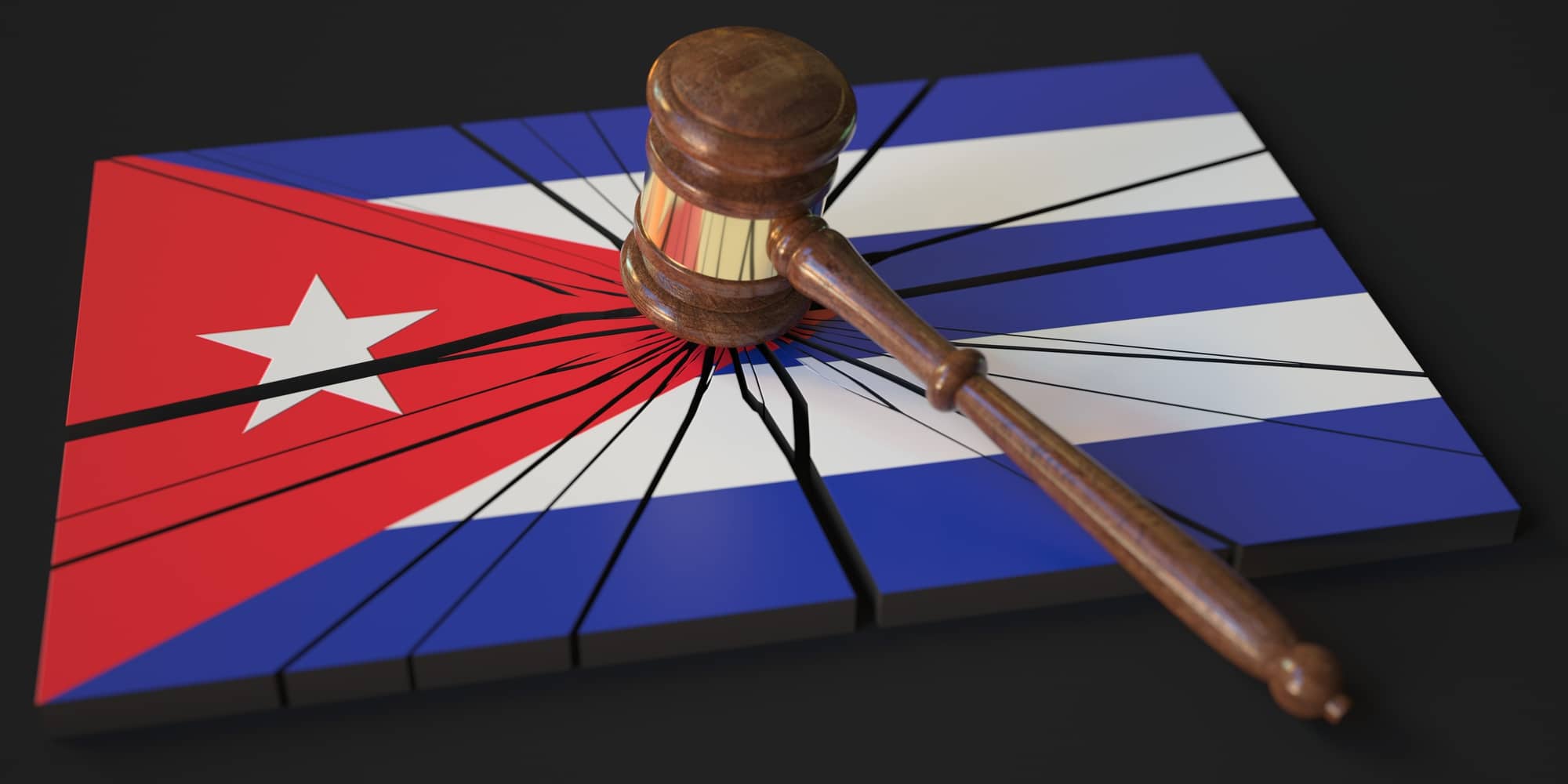
The Trump administration’s May 2026 indictment of former Cuban President Raúl Castro represents the latest escalation in a six-decade campaign of economic warfare that has failed to achieve regime change while inflicting catastrophic harm on the Cuban people.
The roots of the U.S. embargo lie in the aftermath of Fidel Castro’s 1959 revolution, which overthrew the U.S.-backed government of Fulgencio Batista and set Cuba on a course of nationalization and Soviet alignment. The United States first launched an arms embargo in 1958, with the energy and agricultural sectors targeted beginning in 1960, after the Castro government nationalized American-owned properties including oil refineries without compensation. After Cuba moved to trade with the Soviet Union and formally signed a trade agreement with Moscow in February 1960, U.S. policymakers decided the situation required a more aggressive response.
The internal rationale was made explicit in a now-declassified April 6, 1960 memorandum—titled “The Decline and Fall of Castro”—written by Lester D. Mallory, Deputy Assistant Secretary of State for Inter-American Affairs, to his superior Roy R. Rubottom Jr. Mallory acknowledged that “the majority of Cubans support Castro (the lowest estimate I have seen is 50 percent)” and that “there is no effective political opposition,” concluding that “the only foreseeable means of alienating internal support is through disenchantment and disaffection based on economic dissatisfaction and hardship.” He called for measures to “decrease monetary and real wages, to bring about hunger, desperation and overthrow of government.”
President Dwight D. Eisenhower severed diplomatic relations with Cuba on January 3, 1961, and President John F. Kennedy proclaimed a full economic embargo on February 3, 1962, covering trade, travel, and financial transactions—in the wake of the Bay of Pigs invasion and the broader context of Cold War confrontation. A CIA case study written twenty years later concluded that the sanctions “have not met any of their objectives.”
Over the following decades, multiple presidents maintained and codified the embargo. In 1982, President Ronald Reagan labeled Cuba a state sponsor of terrorism for its support of leftist groups in Africa and Latin America. The 1992 Cuban Democracy Act tightened the embargo by prohibiting U.S. foreign subsidiaries from trading with Cuba. The 1996 Helms-Burton Act, signed by President Bill Clinton, codified the embargo into statute, allowed U.S. nationals to sue those who “traffic” in confiscated property, and established specific conditions Cuba must meet before Congress could lift the embargo.
President Barack Obama concluded that six decades of isolation had failed and secretly opened negotiations with the Cuban government, brokered in part by Pope Francis. In December 2014, Obama and Raúl Castro jointly announced plans to restore full diplomatic ties. Obama’s administration rescinded Cuba’s state sponsor of terrorism designation on May 29, 2015, re-opened mutual embassies in July 2015, eased restrictions on remittances, travel, and financial services, became the first sitting U.S. president to visit Cuba since Calvin Coolidge in 1928, and restored commercial airline service between the two countries for the first time in over fifty years.
The economic damage inflicted by the embargo is staggering. The United Nations Economic Commission for Latin America and the Caribbean estimated in 2018 that the U.S. embargo had cost Cuba more than $130 billion over nearly sixty years, “leaving an indelible mark on its economic structure.” More recent estimates from Havana, cited before the UN General Assembly, report that between March 2024 and February 2025 alone, the blockade cost Cuba an estimated $7.5 billion—roughly $20 million per day.
The human damage is even more devastating. A 1997 peer-reviewed study in the American Journal of Public Health—”The Impact of the Economic Crisis and the US Embargo on Health in Cuba” by Garfield and Santana—found that the tightening of the U.S. embargo in 1992 contributed to “declining nutritional levels, rising rates of infectious diseases and violent death, and a deteriorating public health infrastructure” in Cuba. A 2010 peer-reviewed study in Science confirmed that by the end of the twentieth century, “few international pharmaceutical companies supplied essential medicines or raw chemicals to Cuba,” and that the 1992 Torricelli Act caused the number of foreign subsidiaries of U.S. companies licensed to sell medicines to Cuba to “decline dramatically.” A 1997 report by the American Association for World Health, produced after a year-long investigation, concluded that the embargo “has caused a significant rise in suffering—and even deaths—in Cuba” and that Cuban physicians had in some instances found it “impossible to obtain life-saving medicines from any source, under any circumstances.”
While U.S. law nominally permits exports of food and medicine to Cuba, the requirement that no product contain more than 10% U.S.-origin components, combined with banking restrictions and the chilling effect of secondary sanctions on third-country suppliers, means Cuban doctors historically had access to only a fraction of the world’s drug market.
By September 2025, 69% of Cuba’s 651 essential medicines were in short supply and 51% were in stockout. By March 2026, 80% of domestically produced essential medicines were below required levels, with most available only through an informal black market at prices far exceeding state salaries.
The most acute humanitarian crisis emerged from the effective oil blockade imposed after Donald Trump’s January 2026 executive order, which threatened tariffs on any third country supplying oil to Cuba. After Venezuela suspended deliveries following the U.S. operation to arrest President Nicolás Maduro in January 2026, and Mexico suspended shipments fearing U.S. reprisals, Cuba’s energy supply effectively collapsed.
A University of Washington global health analysis published in May 2026 documented the cascading health consequences. The analysis identified 32,880 pregnant women facing additional risks due to fuel shortages disrupting obstetric ultrasounds and delaying infant vaccinations. In hospitals where backup generators lack functioning batteries, health workers manually restarted ventilation for newborns during power outages. By early March 2026, the national surgical waiting list reached 96,387 patients, including 11,193 children. Only one of Cuba’s six linear accelerators is operational, with more than 4,000 patients waiting for radiotherapy, over 3,000 for chemotherapy, and bone marrow transplantation halted entirely for lack of essential medications. Approximately 30,000 children had not received scheduled vaccines on time due to cold-chain failures from fuel shortages.
Oxfam’s 2021 report found that 78% of Cuban women and girls were born under U.S. sanctions and documented how the embargo affects women disproportionately, restricting access to reproductive healthcare, maternal nutrition, and economic autonomy. A 2026 study in BMJ Paediatrics Open—”Impact of Economic Sanctions on Child Health in Cuba”—documented rising infant mortality, worsening child health indicators, and the cascading effects of U.S. sanctions on Cuba’s pediatric health system. A 2025 Lancet Global Health study analyzing 152 countries found that broad, unilateral sanctions are causally associated with approximately 564,000 deaths annually, with children under 5 accounting for 51% of those deaths.
The scale of emigration from Cuba serves as one of the most unambiguous indicators of human suffering. According to independent demographic analysis, an estimated 1.4 to 2.5 million people left Cuba between the end of 2020 and the end of 2024—the largest outmigration wave in Cuban history. Cuba’s official statistics agency confirmed a population decline of 1.4 million over that period; independent demographer Juan Carlos Albizu-Campos estimates the true figure represents a reduction of approximately 24% of Cuba’s pre-2020 population.
This collapse did not unfold in a vacuum. It coincided with a deliberate tightening of U.S. policy that began years earlier. Donald Trump entered office in 2017 pledging to reverse the Obama administration’s “one-sided deal” with Havana and did so systematically. In June 2017, Trump issued National Security Presidential Memorandum-5, reimposing restrictions on U.S. individuals conducting financial transactions with Cuba’s military-controlled entities. By 2019, Trump had eliminated all non-family, non-educational travel to Cuba, banned U.S. cruise ships from making port calls on the island, and terminated U.S. flights to Cuban cities other than Havana. In January 2021, Trump’s final major Cuba action was re-designating Cuba as a state sponsor of terrorism, reversing Obama’s 2015 decision.
Trump’s second term ushered in an even more aggressive posture. Within hours of his January 20, 2025 inauguration, Trump rescinded Joe Biden’s January 14 measures that would have removed Cuba from the state sponsors of terrorism list. In December 2025, Trump issued a travel ban proclamation restricting Cuban nationals from entering the United States, effective January 1, 2026. On June 30, 2025, Trump re-issued and strengthened NSPM-5, expanding the Cuba Restricted List criteria.
On January 29, 2026, Trump signed Executive Order 14380, declaring that Cuba “constitutes an unusual and extraordinary threat” to U.S. national security and foreign policy. The order established a tariff system targeting imports from any country that directly or indirectly supplies oil to Cuba, effectively threatening trade penalties against any nation willing to ship fuel to the island.
On May 1, 2026, Trump signed Executive Order 14404, “Imposing Sanctions on Those Responsible for Repression in Cuba and for Threats to United States National Security and Foreign Policy.” Issued under the International Emergency Economic Powers Act, the order authorized blocking sanctions on foreign persons operating in Cuba’s energy, defense, metals, mining, financial services, and security sectors, and imposed secondary sanctions on foreign financial institutions processing transactions with designated entities.
On May 20, 2026, the U.S. Justice Department indicted former Cuban President Raúl Castro, age 94, and five Cuban military pilots on charges of murder and conspiracy stemming from the 1996 downing of two planes operated by anti-Castro Cuban exile group Brothers to the Rescue. Secretary of State Marco Rubio stated that while the administration would prefer a negotiated solution, it was “not leaving military options off the table.”
Cuba’s choice to pursue socialist economic policies should not subject its people to siege warfare. The fundamental question is not whether Cuba’s government has made mistakes, but whether the United States has the right to impose collective punishment on an entire population for choosing a different economic path. The evidence of six decades is clear. The embargo has not produced regime change, has not advanced democracy, and has not served U.S. interests. What it has produced is immense human suffering, and the Trump administration’s latest escalations will only deepen that suffering while achieving nothing the previous six decades of failure could not.