
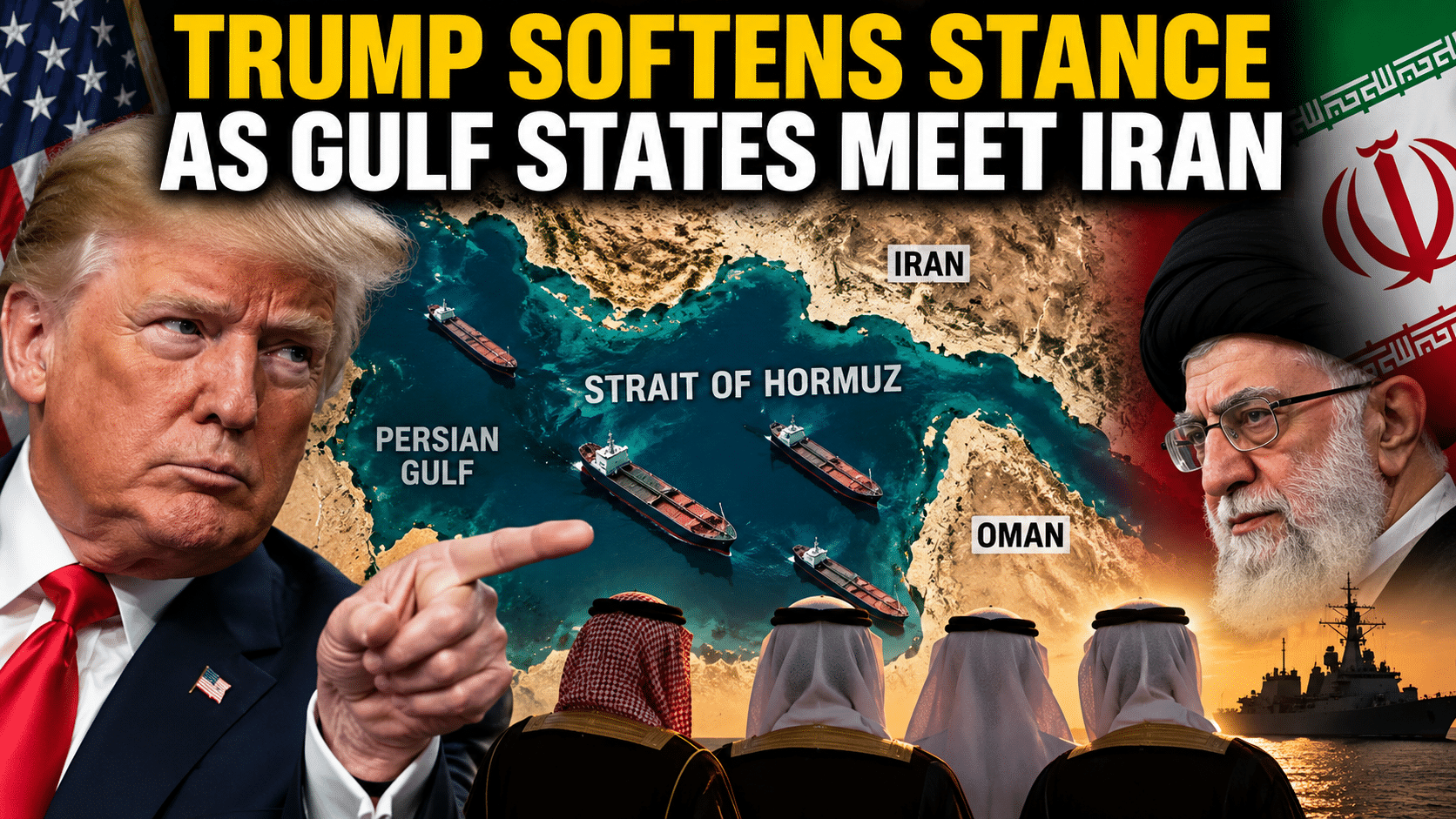
President Donald Trump said he does not object to Gulf states meeting with Iran to discuss the Strait of Hormuz, a significant shift after he previously threatened to bomb Oman over its negotiations with Tehran about the waterway.
Iran is scheduled to meet with Gulf states and Iraq in Oman on Monday. Bahrain has said it will not participate in the talks, arguing that stability in the Strait “cannot be preserved through a policy of appeasement.”
A senior Iranian official said not to expect a signed agreement from the talks.
Iranian Foreign Minister Abbas Araghchi explained Tehran will present the Gulf states with details and maps of the shipping arrangement it has negotiated with Oman. However, he stressed that an agreement with Muscat would not automatically result in Iran reopening the Strait.
Trump says he does not care if the Gulf countries meet with Iran. “I don’t care. That’s up to them,” Trump told reporters. “If they could be happy… if they’re happy, that’s fine.”
Previously, Trump said that the US would attack Oman if Muscat interfered in Washington’s negotiations with Tehran.
Trump told Fox News journalist Trey Yingst: “If Oman gets in the way, we’ll bomb the sh*t out of them.” Muscat has been negotiating with Tehran about the future of the Strait of Hormuz. The Strait is a narrow waterway that lies between Iran and Oman. The waterway is the only entrance or exit for the Persian Gulf. About a fifth of the world’s energy crosses the Strait.
This wasn’t the first time Trump threatened Oman. In May, the President said that if Oman asserts that half of the Strait is within its territorial waters, he will “blow ’em up.”
The waterway is the only entrance to and exit from the Persian Gulf. About a fifth of the world’s energy crosses the Strait.
In response to the US and Israeli war against Iran, Tehran seized control over the Strait of Hormuz. Iran says the Strait is within its and Oman’s territorial waters, and any vessels that transit the Strait will have to pay a fee.
Over the past month, Oman and Iran have engaged in direct negotiations to agree on new shipping protocols for the Strait. The deal would give Iran full control over ships entering the Persian Gulf, while exiting ships would be subject to joint oversight between Tehran and Muscat.