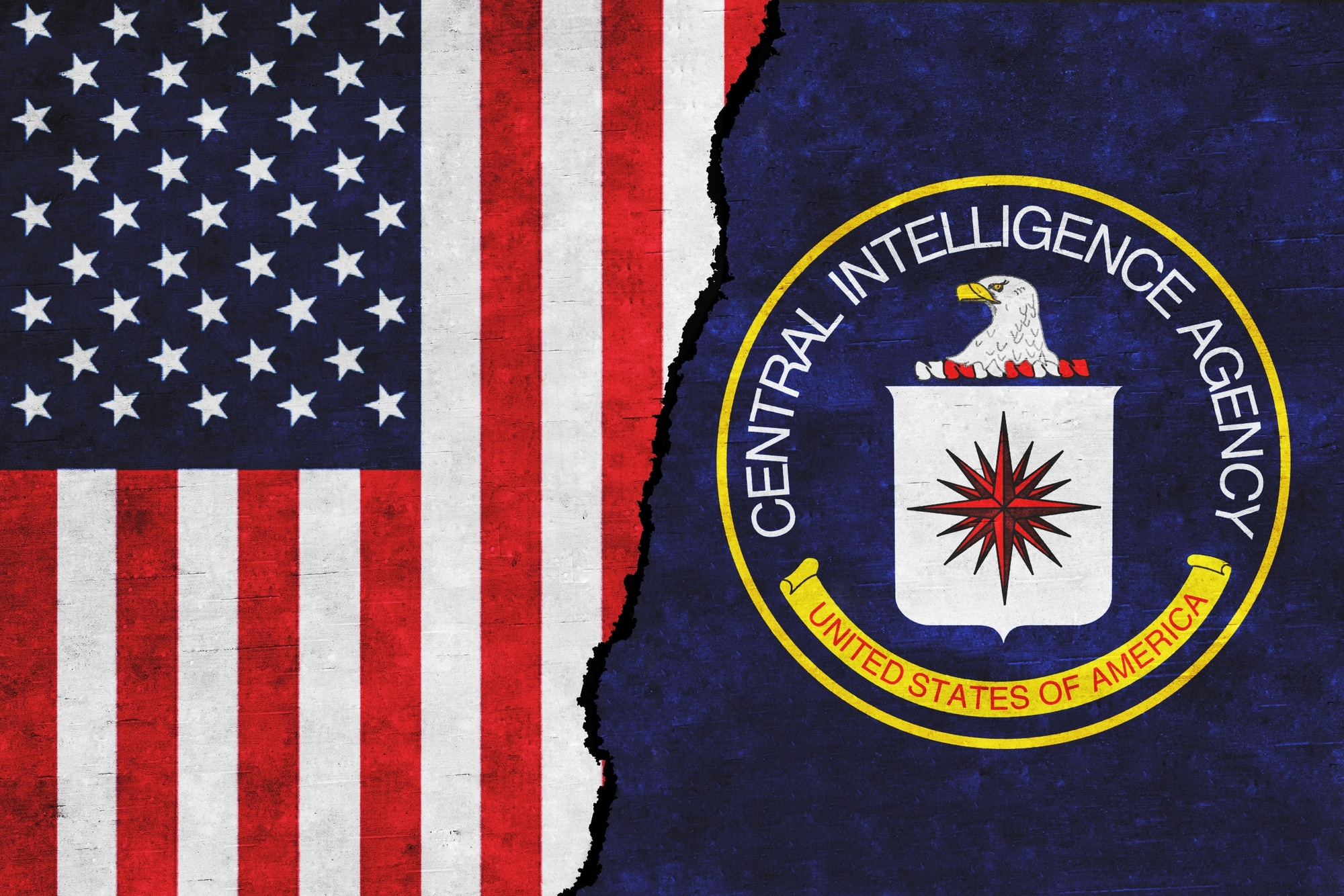
Americans have been fed a comforting fairy tale about Islamic terrorism. Radical jihadists attack the West simply because they despise freedom, democracy, and the American way of life. This narrative flatters domestic audiences while conveniently obscuring a far more troubling reality. For decades, the United States, the United Kingdom, and Israel have armed, financed, tolerated, and tapped into Sunni Islamist extremists as geopolitical tools to destabilize rivals. The evidence spans multiple theaters and rests on declassified documents, congressional investigations, and credible investigative journalism.
The most thoroughly documented case is Operation Cyclone, the CIA program to arm and finance the Afghan mujahideen from 1979 to 1992. In a 1998 interview with Le Nouvel Observateur, former National Security Adviser Zbigniew Brzezinski confirmed that the CIA began aiding mujahideen opponents of the pro-Soviet Kabul government six months before the Soviet invasion—a calculated provocation intended to draw Moscow into an unwinnable war. When asked if he regretted supporting Islamic fundamentalism that gave “arms and advice to future terrorists,” Brzezinski replied:
“What is more important in world history? The Taliban or the collapse of the Soviet empire? Some agitated Moslems or the liberation of Central Europe and the end of the cold war?”
Multiple intelligence agencies participated in this operation. MI6 ran covert operations supporting hardline commanders. Pakistan’s ISI served as the critical financial and logistical conduit—operating under the direction of Pakistani President Zia ul-Haq, who controlled ISI policy throughout the war. Saudi Arabia agreed to match CIA contributions dollar for dollar, a commitment secured when Brzezinski visited Riyadh in February 1980 and one that CIA officer Gust Avrakotos and congressman Charlie Wilson (D-TX) would fly to Riyadh to enforce whenever Saudi payments fell behind. Historian Steve Coll documented in Ghost Wars that Osama bin Laden informally cooperated with ISI-run guerrilla training camps on behalf of newly arrived Arab jihadists, with intimate connections to CIA-backed commander Jalaluddin Haqqani. The global jihadist network that became al-Qaeda grew directly from this infrastructure.
The Afghan theater was not an isolated experiment but the opening chapter of a longer story. The same networks it created spread rapidly to the next front. The Chechen insurgency of the 1990s was joined by Arab and Central Asian jihadists who had cut their teeth in Afghanistan. The most prominent was Ibn Khattab, a Saudi-born mujahideen veteran born in 1969 inʿAr’ar, Saudi Arabia, who left for the Afghan jihad at age 18 before entering Chechnya in 1995. Saudi-backed organizations funneled funds, and Gulf state charities developed during the Afghan jihad maintained, in some cases wittingly and in others not, support for al-Qaeda-affiliated groups throughout the decade. Several of the future 9/11 conspirators—including Mohamed Atta, Marwan al-Shehhi, Ziad Jarrah, and Ramzi bin al-Shibh—originally sought to travel to Chechnya in 1999 before being redirected to al-Qaeda’s Afghan camps, per the 9/11 Commission.
While the Chechen theater illustrated how Western-cultivated networks could spiral beyond control, Washington was already running new variations of the same playbook elsewhere. Veteran investigative journalist Seymour Hersh’s 2007 New Yorker article “The Redirection” documented that the W. Bush administration, in cooperation with Saudi Arabia, launched covert operations to weaken Hezbollah and Iran by bolstering Sunni factions. According to Hersh’s intelligence sources, “a by-product of these activities has been the bolstering of Sunni extremist groups that espouse a militant vision of Islam and are hostile to America and sympathetic to Al Qaeda.”
Israel was running its own parallel operations against Iran during the same period. Foreign Policy magazine published a 2012 report by journalist Mark Perry drawn from CIA memoranda, describing how Israeli Mossad officers posed as CIA agents to recruit members of Jundallah, a Pakistan-based Sunni Salafi organization responsible for numerous bombings inside Iran. As one intelligence official told Perry:
“It’s amazing what the Israelis thought they could get away with. Their recruitment activities were nearly in the open.”
The same structural logic that shaped Afghanistan, Chechnya, and the Middle East has also played out in Central Asia. The Chinese government has accused the United States of using Uyghur Islamist networks to destabilize Xinjiang, with Chinese Foreign Ministry spokesman Zhao Lijian repeatedly alleging American support for Uyghur militant organizations during 2020 and 2021. The U.S.-funded National Endowment for Democracy has provided grants to Uyghur exile organizations. NED co-founder Allen Weinstein acknowledged in a 1991 Washington Post column by David Ignatius that “a lot of what we do today was done covertly 25 years ago by the CIA.” In October 2020, Secretary of State Mike Pompeo formally revoked the designation of the East Turkestan Islamic Movement as a terrorist organization—a move Beijing characterized as evidence of Western support for Uyghur militancy.
Across Afghanistan, Chechnya, the Middle East, and Xinjiang, the same structural features recur. Western strategic interests converge with the short-term utility of Sunni Islamist networks. Operations route through intermediaries like Saudi Arabia, Pakistan’s ISI, or Gulf states, allowing Washington to maintain official distance. Blowback eventually arrives years later, paid in American blood.
The naive story about terrorists hating freedom serves domestic propaganda purposes while obscuring a far darker truth: Western intelligence agencies have functioned as architects of mayhem, generating instability abroad in pursuit of American primacy. If the world wants genuine stability, it must first acknowledge this pattern and demand that these agencies be held accountable for the chaos they have unleashed across multiple decades.