Mass deportations poll well, in part because many Americans believe immigrants should “get in line” and follow the law. However, the core issue isn’t a nation’s right to enforce its borders. When people are willing to overlook constitutional violations to “solve the problem,” they reveal a deeper disregard for the principles of liberty and individual rights that define America. If we abandon those first principles in moments of fear or frustration, we have to ask whether we still deserve to call ourselves a free society.
Regardless of one’s views on immigration levels or deportation policy, constitutional rights cannot be suspended to achieve policy ends. The Constitution applies to everyone within U.S. borders—citizen and non‑citizen alike. Since 2025, Immigration and Custom Enforcement’s (ICE) rapidly expanded interior operations have raised serious concerns about whether those protections are being honored. Reports of warrantless home entries, prolonged detentions, coerced “consent,” and retaliation against critics suggest not isolated missteps but systemic pressures created by leadership and scale. This is exactly what Dr. Ron Paul, the lone no vote against the Patriot Act, warned would happen: powers justified as tools against foreign terrorists would eventually migrate into domestic enforcement, turned inward on the very people they should protect.
Some respond by noting that previous administrations also carried out large‑scale deportations or used harsh detention practices. But past wrongdoing does not legitimize present violations. Constitutional rights are not conditional or retroactive; they do not become negotiable because earlier administrations failed to uphold them. The deeper issue is not which party oversaw which abuses, but the machinery that made those abuses possible. Since 2001, the expansion of federal surveillance and enforcement powers under the Patriot Act has created a sprawling security apparatus that many people warned would threaten individual liberty.
While key temporary provisions expired in June 2015 and were succeeded by the USA FREEDOM Act—which imposed some limits, such as prohibiting bulk collection of telephony metadata—the broader framework of enhanced authorities remained largely intact, setting the stage for their application in domestic contexts like current ICE operations. Restoring constitutional limits requires dismantling the structures that enable these excesses, not excusing them by pointing to history.
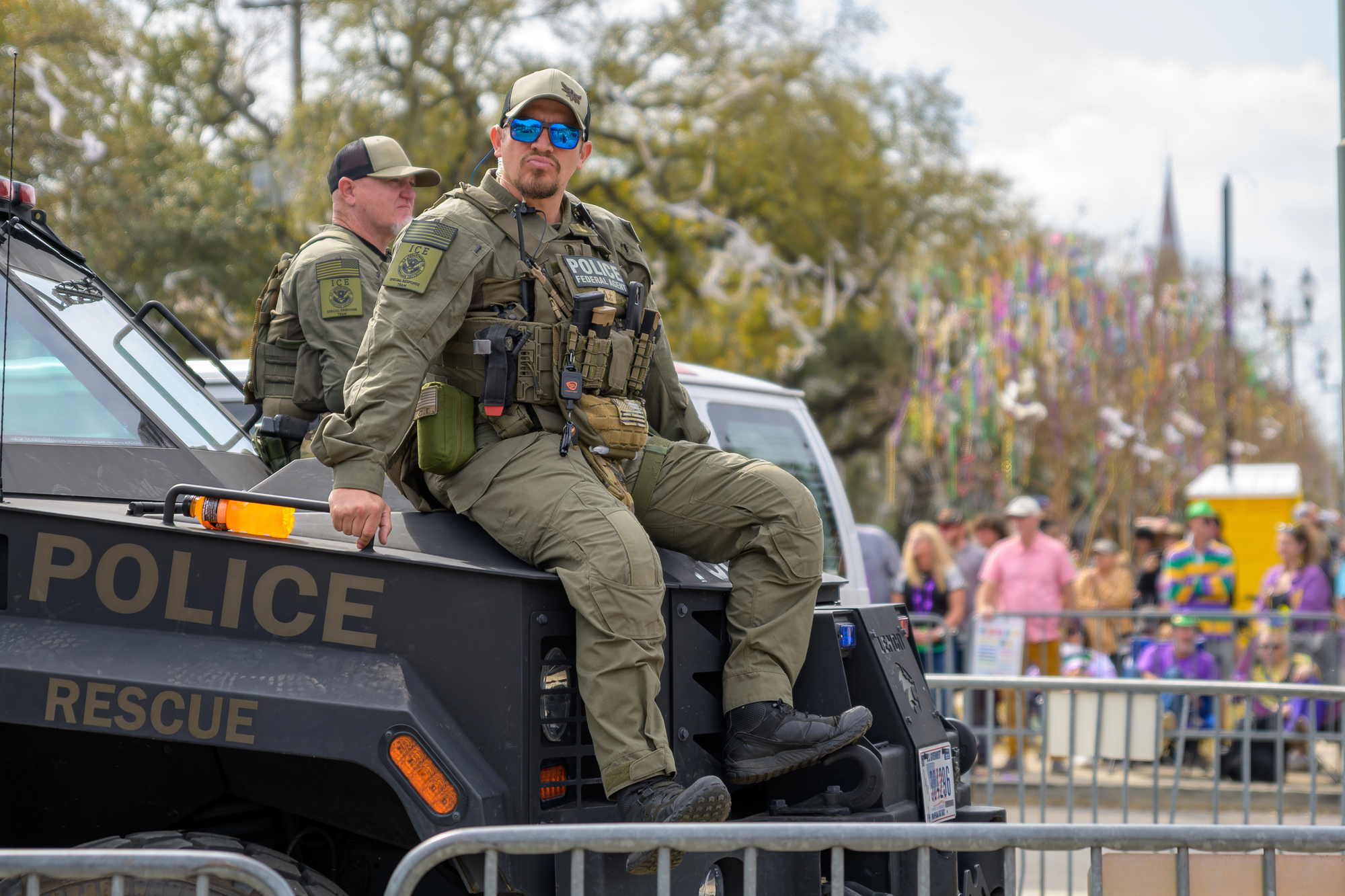
To understand why constitutional concerns have intensified, it is necessary to look directly at how ICE has transformed over the past year. The agency has undergone one of the fastest expansions in modern federal law‑enforcement history, doubling its workforce from roughly 10,000 to more than 22,000 agents and officers. Nationwide recruitment drives brought in more than 12,000 new hires in under twelve months, aided by unprecedented incentives such as $50,000 signing bonuses and relaxed eligibility standards.
Congressional appropriations and executive directives enabled aggressive surge operations like Operation Metro Surge in Minneapolis. Detention capacity expanded in parallel, with ICE custody levels peaking above 68,000 people in late 2025. The speed of this growth produced predictable strains: training cycles reportedly compressed from thirteen weeks to as little as six to eight, AI‑driven hiring systems mis-routed recruits, and performance pressures risked sending under-prepared officers into constitutionally sensitive environments.
The constitutional problems within ICE are not simply the byproduct of rapid growth; they reflect direction set by senior leadership. Executive‑branch guidance, public statements, and internal memos have encouraged increasingly aggressive interpretations of federal authority. The clearest example is the May 12, 2025 ICE memorandum authorizing forcible home entries based solely on administrative warrants—documents signed by ICE itself—rather than judicial warrants.
Legal analysts and former officials warn that this approach conflicts with longstanding Fourth Amendment standards requiring judge‑issued warrants for non‑consensual entry into a private home. Senior officials have reinforced this posture in public remarks that cast constitutional limits as operational obstacles rather than foundational constraints. Together, these signals create a top‑down environment. In this environment, officials treat constitutional boundaries as flexible, and this flexibility shapes field operations in ways that predictably lead to overreach.
After the killing of Renee Nicole Good in Minneapolis, Vice President J.D. Vance said federal immigration agents would go “door to door” as part of the administration’s crackdown. That framing sidesteps core Fourth Amendment doctrine: entering a private home without a judge‑signed warrant is presumptively unconstitutional except in narrow circumstances. The May 2025 ICE memo authorizing forcible home entry on the basis of administrative warrants—documents ICE signs itself—has already been flagged by legal experts and whistleblowers as lacking lawful grounding. Vance’s rhetoric reflects an executive posture that treats warrant requirements as optional.
The memo directed agents to enter homes using administrative warrants and “a necessary and reasonable amount of force” if refused entry. Though issued by ICE, it emerged under President Donald Trump’s second administration and aligns with his stated preference for aggressive enforcement. His public defense of hard‑line tactics after controversial shootings has further normalized constitutional shortcuts, even as the Fourth Amendment remains clear that non‑consensual home entry requires a judicial warrant.
Homeland Security leaders, including Secretary Kristi Noem, have also blurred constitutional lines in their public statements. After violent encounters at protests, officials described demonstrators as “breaking the law” even when individuals were peacefully assembled or lawfully armed. Reporting from Minneapolis documents detentions, zip‑tying without clear cause, and escalated confrontations. The First Amendment protects peaceful assembly, and in many states lawful carry is not a crime; conflating protest with criminality reflects a disregard for those protections.
Senior ICE and CBP officials have likewise suggested that recording agents constitutes “interference,” despite decades of case law affirming the right to film law enforcement in public. Highly publicized Minneapolis incidents—including the detention of a U.S. citizen grandfather pulled from his home in freezing weather wearing only underwear—were widely recorded and circulated. Attempts to discourage recording contradict well‑established First Amendment rights.
Taken together, the rapid expansion of ICE, weakened training, and top‑down encouragement of aggressive tactics have produced a wave of allegations across multiple constitutional amendments.
Allegations under the Fourth Amendment focus on unreasonable intrusions into private spaces and public movements. Civil‑rights groups and state attorneys general have filed suits alleging racial profiling in stops and detentions, concerns heightened after the Supreme Court’s stay in Noem v. Vasquez, which critics say expanded federal latitude during surge operations. Documented incidents include window breaches during stops lacking articulable suspicion, fatal shootings, and minimally justified detentions.
First Amendment concerns center on retaliation against those who observe or protest ICE operations. Lawsuits describe arrests, intimidation, and phone seizures targeting people who filmed enforcement actions, while protesters and even journalists have reported pepper‑spray use and arbitrary detentions. These patterns treat public scrutiny as a threat rather than a protected right.
Fifth and Fourteenth Amendment issues involve wrongful detentions and deaths in custody. Over 170 U.S. citizens were detained in the first nine months of 2025, with congressional inquiries detailing prolonged holds without timely verification or access to counsel. These failures stem from rushed operations, incomplete checks, and profiling.
The human cost is stark. In 2025, thirty-two people died in ICE custody, reportedly the highest annual toll since 2004, with at least six more deaths reported in early 2026 linked to ICE custody or enforcement operations. Causes include medical neglect, improper restraints, and contested incidents tied to reduced oversight and staffing shortages. Two cases illustrate the gravity. On January 3, 2026, Geraldo Lunas Campos died at Camp East Montana in Texas; an autopsy ruled the death a homicide by asphyxia, contradicting initial claims of a suicide attempt. Around the same time, Alberto Castañeda Mondragón suffered severe skull and facial fractures while handcuffed in Minneapolis; although ICE claimed he ran headfirst into a wall, ICU nurses and consulting physicians found the injuries inconsistent with that explanation.
For all the attention on ICE’s expansion and aggressive tactics, one fact stands out: the agency’s disciplinary system remains largely opaque. Despite wrongful detentions of U.S. citizens, fatal shootings such as those of Renee Good and Alex Pretti (the latter done by U.S. Border Patrol), dozens of alleged uses of banned chokeholds, and the highest number of deaths in custody in two decades, few disciplinary actions have been publicly confirmed. That gap is not administrative oversight; it signals profound institutional failure.
An armed federal agency cannot operate legitimately without transparent accountability. In functioning institutions, allegations prompt review, review leads to consequences, and consequences deter recurrence. When that chain breaks, standards erode and risks to public safety and constitutional rights grow.
ICE’s near‑absence of visible disciplinary outcomes suggests a breakdown in internal oversight and a culture in which misconduct—from unlawful entries and profiling to excessive force, medical neglect, and retaliation—too often escapes scrutiny.
Such opacity is unacceptable in a constitutional republic. This is not a partisan point but a basic requirement of governance. Whatever one’s views on immigration enforcement, no one should accept a system where an armed federal agency effectively polices itself in the dark.
The constitutional concerns raised here are not partisan talking points; they go to the heart of what it means to live under a government of laws rather than impulses. Franklin’s warning about trading essential liberty for temporary safety arose in a specific dispute, but its core insight remains: when a people allow limits on government power to be treated as expendable in moments of fear, they endanger both liberty and safety. The post‑9/11 security architecture illustrates that danger, as authorities once sold as exceptional tools against foreign terrorists have matured into a normalized enforcement model that tolerates warrantless entries, retaliatory arrests, and dragnet detentions inside the United States.
Meaningful reform requires rigorous judicial review, sustained congressional oversight, transparent investigations, and real improvements to hiring, training, and detention standards. But these measures address only the symptoms. The deeper cause—the post‑9/11 expansion of federal surveillance and enforcement powers—remains intact. The Patriot Act and the equally problematic Freedom Act laid the groundwork for the abuses now visible in ICE’s interior operations.
If the United States is serious about restoring liberty under law, the corrective cannot stop at internal reform. It must include unwinding the authorities that enabled this drift. Returning to a pre‑Patriot Act legal framework is not nostalgia; it is constitutional repair. Dismantling the structures the Patriot Act empowered would reaffirm that freedom is not a privilege granted by the state but a constraint placed upon it. Such measures would strengthen national security, protect civil liberties, and help rebuild public trust, signaling that the nation’s commitment to freedom is not situational or negotiable. That is the promise that should define a free society.