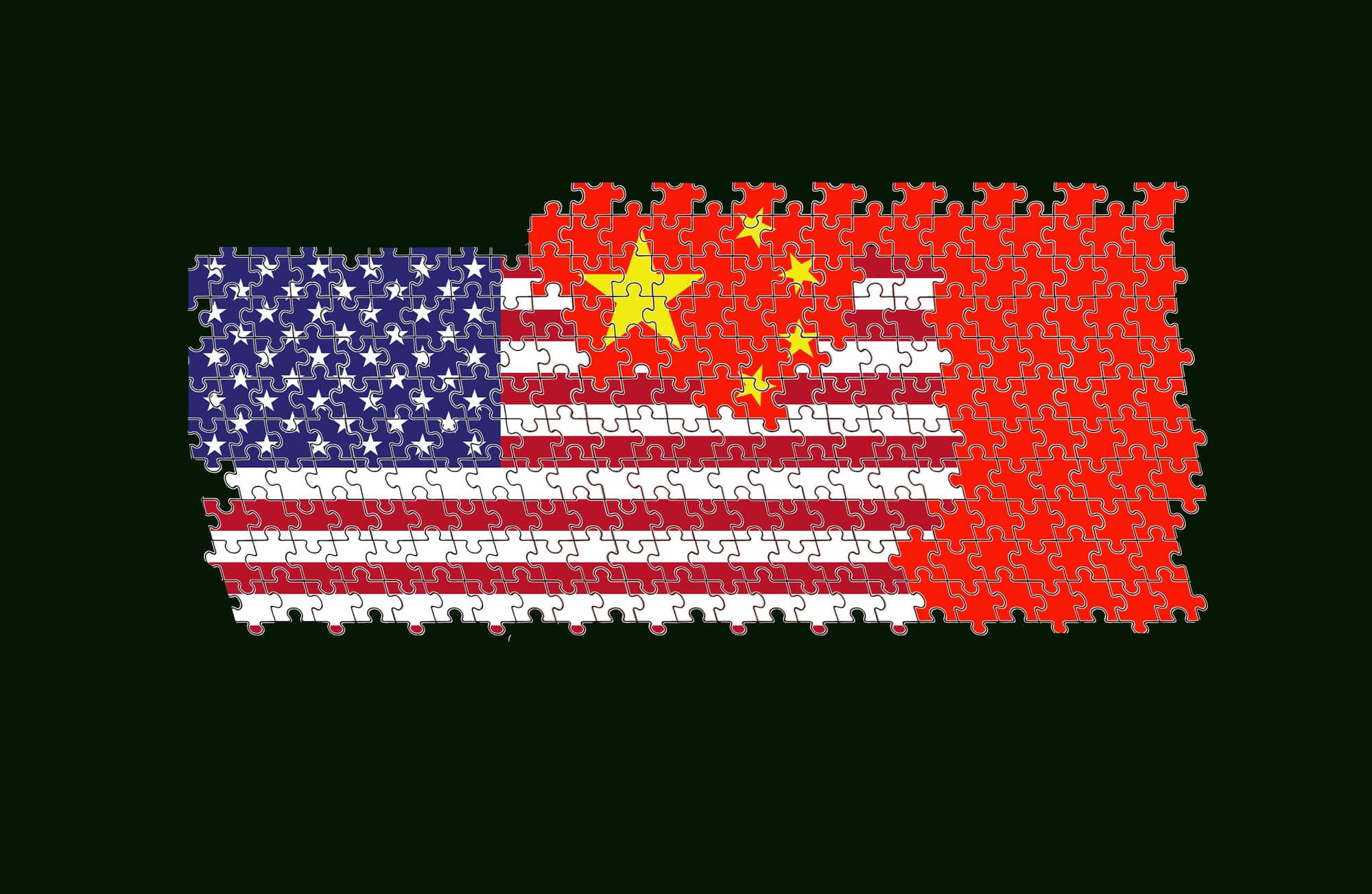
From trade frictions to security flashpoints, the new year ahead promises a mix of continuity and potential volatility in U.S.-China relations. While Beijing’s growth in relative power—economic, technological, and military—continues, it is not aimed at “taking over the world.” Instead, it reflects a pragmatic pursuit of stability and influence in Asia. Washington would benefit from strategic empathy, recognizing China’s core concerns to avoid counterproductive escalations that could harm both nations in the long-term.
With that said, here’s what to be on the lookout for in Sino-American relations in 2026.
A hallmark of the U.S.-China rivalry since Donald Trump first took office in 2017, the current round of trade war enters 2026 on shaky ground following the one-year truce brokered in October 2025 during Presidents Trump and Xi’s meeting in Busan, South Korea. This agreement paused escalating tariffs—peaking at 145% on some Chinese goods and 125% on American products earlier in 2025—and committed China to resuming purchases of American soybeans (twelve million tons by year’s end—though American farmers are apparently in need of another bailout) while easing rare earth export curbs. In return, Washington suspended expansions of export controls on advanced tech affiliates.
Bilateral trade, which plummeted 44% year-on-year to $324 billion in the first nine months of 2025, could stabilize if the truce holds, benefiting U.S. farmers and manufacturers reliant on Chinese components.
Yet, fractures are already apparent. No formal written agreement has materialized two months post-summit, leaving commitments vague, vulnerable to misinterpretation, and doing little to dissipate the regime uncertainty plaguing the planning of businesses.
Beijing, focused on resilience, has diversified exports and boosted domestic consumption, reducing reliance on the U.S. market. If the truce unravels, expect tit-for-tat measures, but China’s strategic patience could expose U.S. domestic pressures, pushing Trump toward concessions to avoid economic fallout ahead of midterms.
Longer-term, this dynamic underscores the counterproductive nature of Washington’s escalations. The growth of Beijing’s relative power in Asia is virtually inevitable, but alienating the region with trade wars only accelerates this process, harming American competitiveness without altering the regional balance.
While tensions have decreased over the past year, particularly when measured against the trade and economic categories, security remains the most dangerous and volatile arena, with Taiwan and the South China Sea as perennial hotspots. And while improvements have been made, things have been a mixed bag.
On the one hand, the Trump administration’s National Security Strategy has toned down its language on China, and the administration has avoided the outlandish statements the Joe Biden administration was perpetually walking back; until recently, Trump hadn’t approved any arms sales to Taiwan since taking office; and Republicans and Democrats alike have avoided the high level visits that occurred multiple times over the course of the previous administration. At the same time, Beijing has kept its objections to U.S. naval operations in its area pro forma and has continued to signal its desire to work with Washington to keep disputes over conflicting maritime claims beneath the threshold.
On the other, frankly less promising, hand, there have been plenty of causes for concern on both sides. In Washington, there is little appetite for revisiting the key provisions of the Taiwan Relations Act that mandate arming the island, a longstanding point of continuing friction. U.S. troops are still present on Taiwan and the offshore islands, some of which are within sight of the mainland; having spent the previous several years busily clarifying commitments to allies such as the Philippines regarding their claims to sandy spits in the South China Sea, clashes that could draw Washington into direct conflict with Beijing have continued. On that note, besides Chinese coast guard harassment of Philippine fishing vessels, Beijing has declared a new “nature reserve” at Scarborough Shoal institutionalizing its claims. While People Liberation Army (PLA) and People’s Liberation Army Navy (PLAN) incursions since Taiwanese President William Lai’s 2024 inauguration have continued, highlighting Beijing’s resolve to counter perceived independence moves, Beijing recently conducted its second major blockade simulation around Taiwan (“Justice Mission 2025”).
Note: while correlation does not prove causation, it does at least suggest it, and it is worth noting that this came exactly eleven days after the Trump administration announced an over $11 billion arms sale to Taipei, the largest sale to the island ever—quite a coincidence, if in fact it is one.
While China’s buildup narrows gaps, especially regionally, it doesn’t signal intent for worldwide conquest. Beijing prioritizes deterring U.S. intervention in Taiwan, not challenging America globally.
Hopefully, 2026 will see continued lower tensions in the key hotspots where a military conflict might erupt. Clear communication to prevent miscalculation is key, as is a degree of strategic empathy, acknowledging China’s historical sensitivities, such as Taiwan as a core interest, and avoiding escalatory actions—such as continuing to arm the northern Philippine islands with mobile missile launchers aimed at China.
Economic warfare, particularly in technology, will be a prominent 2026 undercurrent. The Busan truce temporarily halted expansions of U.S. export controls on semiconductors and AI chips, allowing sales like Nvidia’s H200 to China.
Yet, bipartisan hawks continue to push for tighter restrictions, viewing China’s tech advances as threats to American dominance in the area.
For its part, Beijing has begun countering such threats with its own controls on rare earths and critical minerals, where it holds 87% of global refining capacity, demonstrating its asymmetric leverage in this area.
Such tit-for-tat exchanges are counterproductive: U.S. restrictions have accelerated China’s domestic chip progress, eroding American corporations’ leads without curbing Beijing’s rise, while depriving Chinese firms of desired imports, raising relative costs, and lowering relative quality.
Recognizing mutual vulnerabilities, let’s hope Washington and Beijing pursue guardrails to avoid broader disruptions.
2026 offers plenty of opportunities for diplomatic breathing room through high-level engagements. President Trump plans a spring visit to Beijing, with Xi reciprocating later, plus potential meetings at G20 (U.S.-hosted) and APEC (China-hosted in Shenzhen).
These could extend the truce, focusing on fentanyl precursors, agricultural buys, and bounded tech cooperation.
Multilateral forums like BRICS (India-hosted) and G7 will test Beijing’s global outreach, emphasizing partnerships with the Global South amid U.S. tariffs.
Reestablished channels—defense talks and economic dialogues—are critical to maintain even if nothing gets accomplished. No one should want a return to the radio silence of the middle Biden years, which does nothing but heighten the chance of an escalation through misunderstanding.
Overall, there is much to be optimistic about in this area—hopefully both sides can keep the hawks at arm’s length and try to make positive improvements to the U.S.-China relationship, which is still near its post-Cold War nadir.
In 2026, China’s ascent—fueled by innovation, continued (although slowing) economic growth, and regional focus—will continue, but not as the zero-sum threat Washington often portrays. Overreactions like blanket tariffs or militarized alliances risk self-fulfilling prophecies, accelerating Beijing’s autonomy while straining US resources. Strategic empathy—understanding China’s near-abroad priorities without panic—could foster guarded stability, benefiting global growth.
As both powers play for time, the year may prove pivotal: controlled competition or renewed escalation? The choice lies more in Washington’s hands than it admits. Nothing existential is at stake in the South China Sea and while far from ideal the status quo over Taiwan has held for decades and there is no need to do anything that might upset the present situation.