
Allies and clients have frequently entangled their great power patrons in needless geopolitical crises and sometimes even bloody wars. The tragic events leading to World War I in 1914 are a classic example. Serbia helped drag Czarist Russia into that bloody maelstrom and Austria-Hungary did the same to Wilhelmine Germany. Similar dangers exist today in the international system.
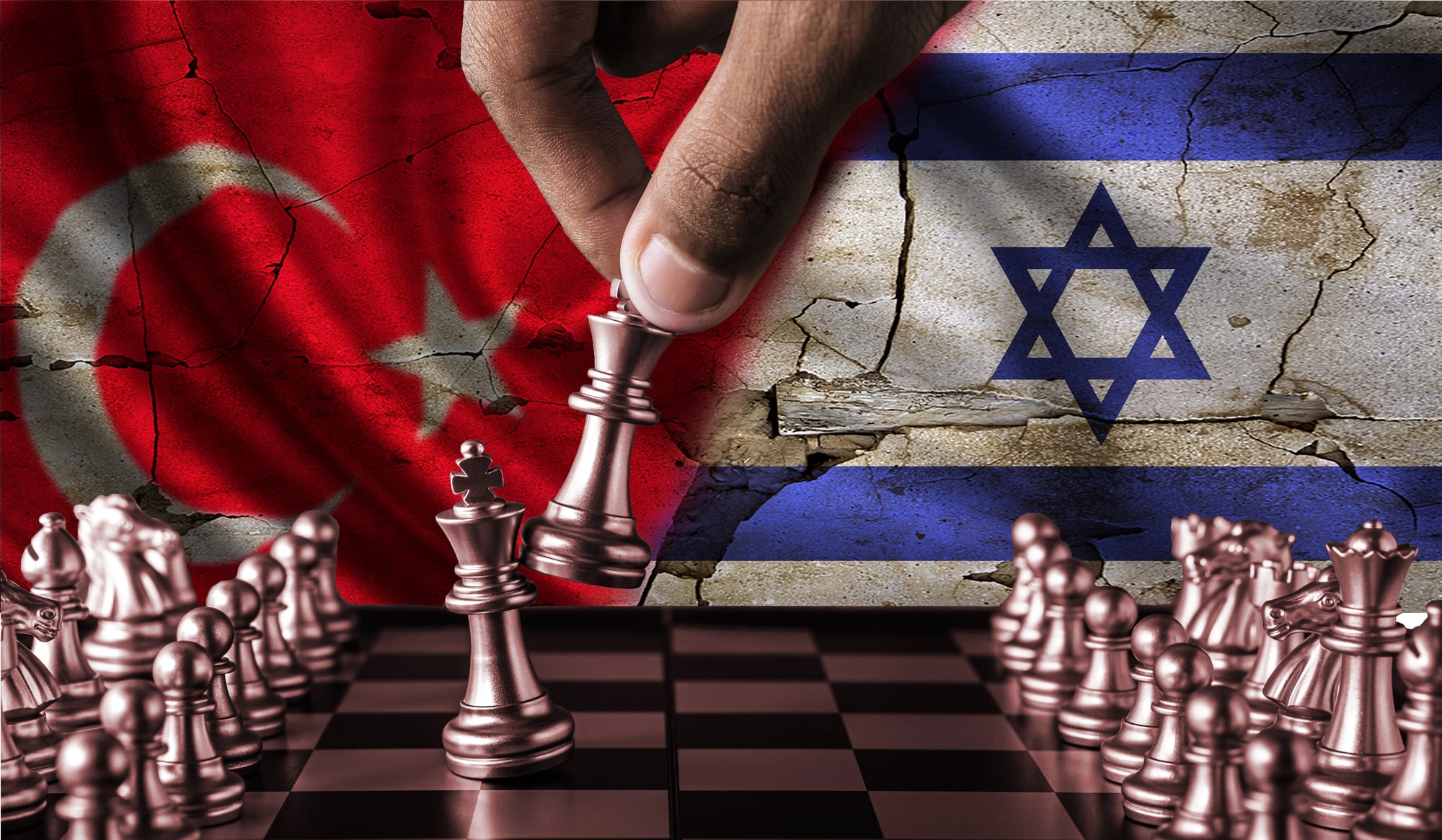
Two of Washington’s current most odious and dangerous “loose cannon” allies are Israel and Turkey. U.S. administrations have funded and armed both countries for decades and routinely excused outrageous acts that their clients have committed. Even worse from the standpoint of America’s best interests and purported values, the respective governments have increasingly competitive political and strategic objectives. Such growing animosity could bring them to blows, with the United States being caught in the middle of their feud.
Israel arguably has become the single most brutal and disruptive player in the Middle East. Tel Aviv has pursued its aggressive agenda against multiple Islamic targets. Over the past several years, Israel’s top priority has been to attack opponents in Gaza, Lebanon, and Iran, and the negative effects on regional and even global stability are devastating.
Brutal actions that Israeli security forces have taken against Palestinian fighters and civilians in Gaza have led to plausible allegations of outright genocide. Credible estimates from a variety of international sources indicate that more than 70,000 Palestinian civilians, including more than 20,000 children, have perished at the hands of those security forces since October 7, 2023. An additional 44,000 children have been injured. Moreover, Tel Aviv’s fighters have apparently targeted journalists for assassination in an effort to cover up their responsibility for such atrocities.
The war in Gaza is not the only case in which Tel Aviv’s actions should be a shameful embarrassment to U.S. officials. Israeli strikes on Iran’s air defenses in the spring of 2025 helped pressure the second Trump administration to launch B-2 bomber assaults on Tehran’s nuclear installations. More recently, Tel Aviv’s actions, including missile strikes against Iran and assassinating Iranian leaders, triggered a wider U.S.-led war against Iran.
In addition to its direct acts of aggression against Iran, Tel Aviv expanded and intensified its coercive military presence in Lebanon. The latest measures amount to a de facto Israeli annexation of Lebanese territory south of the Zahrani River.
Israel and Turkey have been notorious violators of both international law and human rights for decades. Their current actions are not a new phenomenon.
An especially blatant instance of territorial aggression was Turkey’s invasion of Cyprus and subsequent seizure of more than one-third of the island in 1974. Indeed, Turkey, a NATO member, has committed blatant acts of aggression against three neighbors, Cyprus, Iraq, and Syria, to secure illicit territorial gains over the decades. Ankara also has received toleration and excuse-making from the United States that is similar to what Israel has enjoyed for such chronic misconduct.
However, the mounting tensions between Tel Aviv and Ankara may soon compel Washington to make some tough choices about which ally should have priority. The clash of regional strategic objectives between Turkey and Israel has been rising since the overthrow of longtime Syrian ruler Bashar al Assad in December 2024. Ankara and Tel Aviv have maneuvered to control the successor regime of Ahmad al-Shaara. Writing in the May 2025 issue of Foreign Affairs, Middle East scholars David Makovsky and Simone Sandmehr noted that Israel and Turkey had taken advantage of the power vacuum in Syria by establishing presences there—”and have already begun to butt heads.”
The authors contended that “Turkey has emerged as the dominant military power in Syria.” However, they pointed out, “Israel also wants more influence in Syria and does not trust that Ankara won’t exploit the power vacuum to support a new wave of Islamic militants under Ankara’s control.” Makovsky and Sandmehr concluded that “Israeli leaders viewed Assad’s ouster as a strategic windfall and are racing to take advantage of his removal by establishing buffer zones and informal spheres of influence in southern Syria.”
The power struggle between Ankara and Tel Aviv has intensified in the period since the Makovsky-Sandmehr article appeared. Israel has boosted its military presence in southern Syria, and Turkey effectively eliminated the autonomous Kurdish stronghold in northern Syria—with Washington’s tacit approval. Overall relations between Ankara and Tel Aviv have grown increasingly tense and acrimonious.
One of the most important challenges for any great power is to never let the actions of a nonessential ally or client undermine the great power’s own best interests. The United States has violated that rule repeatedly with respect to both Israel and Turkey. Tel Aviv’s maneuvers to draw the United States into a war with Iran have created disastrous results for the American people. Even from the narrow standpoint of the Trump administration’s global foreign policy, that conflict has been damaging. Among the negative effects, Washington’s expenditure of weapons puts a severe drain on the U.S. arsenal. Replenishing the weapons that Israel itself has used exacerbates the problem. Various NATO allies, and another U.S. client, Ukraine, are increasingly vocal in their worries and complaints about lack of missiles.
Discontented American taxpayers could legitimately respond that their country should not be involved in the Ukraine war or any of the other armed conflicts. However, absent an unlikely radical change in Washington’s grand strategy toward greater realism and restraint, those soaring costs will continue to be an unpleasant reality.
Matters are likely to become even worse if Israel and Turkey wage war. Washington would then face the prospect of two foreign clients that U.S. leaders consider important assets creating a massive disruption in an already volatile, extremely dangerous region. Trump administration policymakers need to take immediate steps to avoid that nightmare. The United States must not risk suffering a fate similar to that of Czarist Russia or Wilhelmine Germany.