It’s hard to enjoy the writings of Franz Kafka, though in some of his story telling we find a reflection of the contemporary or perhaps a dirty glass panel into the past. In his book, The Trial, we experience a bureaucracy of inhumanity through the eyes of an unnamed man. He is arrested and prosecuted for an unspecified crime, taken on a journey where he has no rights or agency and is one in many victims of an oppressive system. To live in a world where one does not know or understand the law, and where the layers of administration are so great one is not even considered human, no longer seems a fiction. Then again, it did not then either for some places of the world.
When a fiction writer gives us these portraits we understand the context by which to view them, even if there is a similarity to our world. The story becomes allegory or even imitator of life. Many Soviet writers depicted the harsh incompetence and relentless misery found beneath the tyranny of the communist regime of Russia. There is no joy or satisfaction for the characters, let alone reader. These stories act as both warning and record. The truth of a reality, that even some today crave, so long as they are the managers and elites, not the peasantry and worker.
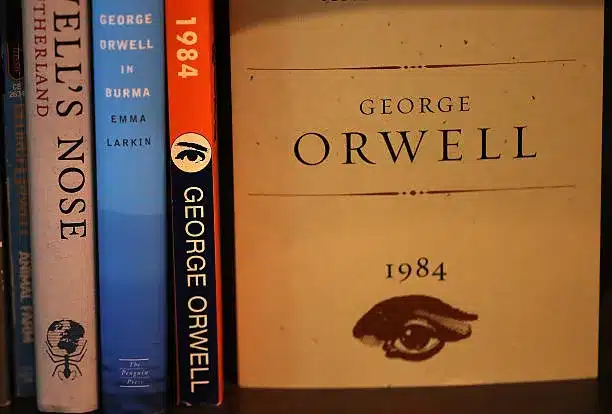
George Orwell sought to experience the world among the blades of grass and by knowing the people, common and real of the world. He was a child of the British empire, and in his youth joined the imperial service to know how it was administered. He hated imperialism because of it. In his time spent in the mines and factories of Wigan Pier, he came to know an England so close, but far from the aristocracy of rule and academic abstracts of illusory delusions. He felt in his hand the whip while in Burma imposing empire on the natives, his fingers and skin had been thick with coal and dirt in the Britain of the common person.
While fighting as an adventurer in Spain, he saw first hand the violence of war and the putridness of ideologies. In fighting the fascists, his comrades the Anarchists, Socialists, Syndicalists and whatever other left-wing reactionaries formed at the time, exhibited hypocrisy. Giving him a tasteful hatred of politics. These experiences culminated into his writings, Animal Farm and 1984. In this day we see how claimed principles and values are exchanged brutally in the need to ‘win’, or get revenge. There never was principles, just political struggle for power.
When Animal Farm was first published in 1945, during the war, it was received with modesty. Few publishers wanted to have anything to do with a book criticising their soviet allies. Ukrainian dissidents came across the book and requested to have it translated. Orwell granted them the rights for free and soon the book spread among the Eastern European territories. The US military authorities however confiscated copies and handed them over to their Soviet allies, along with thousands of Soviet and non-Soviet citizens, whose fates were shared with the copies of Animal Farm. To be destroyed.
It was most likely Orwell who first coined the term Cold War, and it was only once the former allies fixed their positions and settled into a frosty arrangement of belligerency that his writings became fashionable among the apparent liberal West. Other writers penned their warnings about the police state and authoritarian dangers, such as Ray Bradbury and his Fahrenheit 451 or Phillip K Dick’s Minority Report. Bradbury’s book warning about the destruction of books and words, much like Orwell did in 1984. While Dick introduced us to the concept of pre-crime. Where our intentions, thoughts and words can be used to predict whether we are criminals and threats to the State.
In the years before World War Two, when fascism was a brilliant idea to academics and intellectuals, books supposed a vision of the future when central planners and genius minds could steer and control society into a united vision. Just as others tinkered or fell in love with communism, those who benefited from state planning, wanted more of it. So long as others died while toiling over the shovels or choked in the factories, the proletarian dream was in fact a nightmare. Not in their fictions however, when minds revel in abstracts and make believe realities, the consequences are far from them. Many academics imagine such a world while their limp wrists and soft hands avoid the blistering necessity to make their plans come true.
After the second world war it was hard for those in the liberal West to make a serious argument for totalitarianism. When H G Wells wrote The Shape of Things To Come, the black shirts of Europe and America were intriguing and a counter balance to internationalist communism of the Bolshevik’s or the unfocused nature of liberalism. To be read after the war, most understood it to be a book of it’s time. Fashions change, even ideologically. It seems that fashion sense has returned.
The trend for dystopian fiction carried on into the late twentieth century, turning into a popular young adult genre up into the 2010s. And, just as the term young adult was retired to be the now all encompassing “child”, dystopian fiction has disappeared as a popular genre. Books warning us about the rise of police and surveillance states to the destruction of individual liberty became a fashionable dignity to be dropped. Passe to concern one self with the rights of others and self.
It’s cliché to claim the present is a reflection of the past fictions, to use terms like Orwellian or invoke Kafka. They are useful tools, even for those who have not read them, but still understand the gist of the concept. The trade off made when critical thinking and reason is dropped for comfort and dependency, is that we no longer have choices or even agency. Instead we are ruled by agencies, and governed as subjects and not as those who are supposed to have power over the government.
It turns out it was all a lie, like most stories we tell ourselves, just a myth to satiate an inability or unwillingness to change. Hannah Arendt, the historian and philosopher in her extensive research and writings on the subject concluded that authoritarian rule comes about when there is an erosion of freedom in the pursuit of stability, predictability and comfort. There is also a need in authoritarian systems to be in a struggle, to have an enemy. Whether this is racial, class or external, it’s a necessity to justify a powerful state and to constantly strip away freedoms.
Maybe people gave up on reading dystopia’s because a lot of them stopped seeing them as a bad place to be. Or, they only need to look into the screens of their devices, while they still can, to see feeds reminding them of the current outlawed words, actions or items. Or, to watch police killings, extrajudicial executions or forever wars. The fictions did try to warn us, and give us the language and concepts to frame an awareness and understanding of where things generally lead. Now as we leave our homes to be monitored by cameras, our messages read and our everything controlled, it’s called normal and apparently ‘the price to pay to live in a free society’. An Orwellian expression if their ever was one.
As I wrote in my previous blog on cinema, the story can still be told. Just as it may now, in the pages of unread or forgotten books and short stories. Surely the future is not for the robots to consume our literature and to devise thoughts and understandings of what could have been, to dream of electric liberty and dissent. Even Peter Thiel and Alex Carp refereed to fiction for their technocratic corporation, Palantir. It’s unlikely when Tolkien wrote his books which gave these men their surveillance and police state regime’s name, he could understand how far humanity would decay with it’s critical thinking and wisdom into an unheroic journey of dependency and obedience.
As is the case in fictional writings, all great villains need to believe that they are the good guy. That their ambition is the greater good, it’s for the betterment of all. At least, they claim or, or maybe originally did once believe. In reality, it’s less like this. The truth is, power and coercive institutions attract those with the worse kind of ambition. They are rewarded for it. We don’t need to open the pages of a fiction any more to read dystopia, or imagine the nightmare. We were wide awake when the blood dripped over the pages that tried to warn us all.