
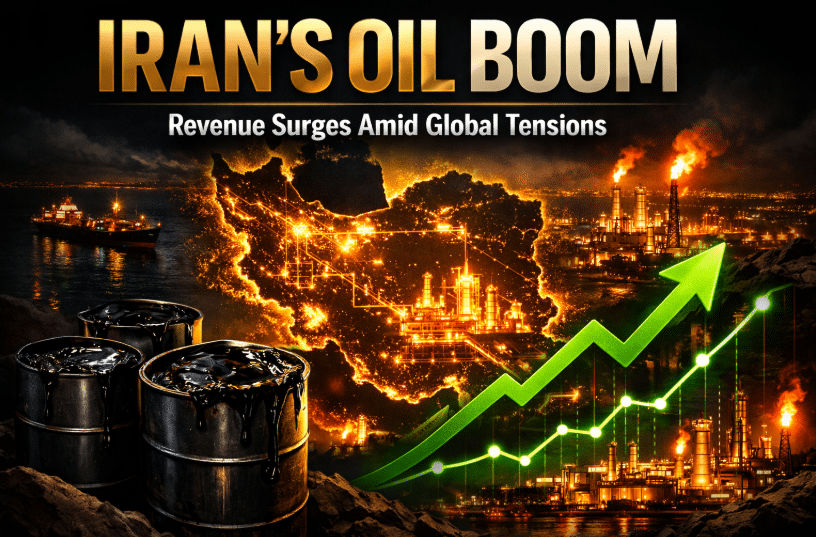
Since the US and Israeli surprise attack on Iran, Tehran has continued to export oil that is selling at significantly higher prices.
According to an analysis by The Economist, nearly all of the oil tankers currently exiting the Persian Gulf are linked to Iran. After the surprise attack on February 28, Tehran closed the Strait of Hormuz to US and Israeli-linked shipping. The restrictions include preventing Washington’s Gulf Arab allies from exporting oil.
While most Gulf countries’ oil exports have dropped to zero, The Economist spoke with a source familiar with the Iranian account who explained that Tehran’s oil exports have remained stable or increased since the start of the conflict.
The White House has not targeted Iranian oil tankers to prevent global oil prices from spiking. However, oil prices have increased, and Iranian oil profits have doubled in the past month.
On Monday, Trump renewed his threat to attack Iranian energy infrastructure if Tehran does not immediately reopen the Strait of Hormuz.
Economists are predicting the war against Iran to have significant consequences for the American economy, including tens of thousands of lost jobs and inflation of over 4%.
The energy crisis will also have global consequences, as about 15% of the world’s oil supply comes from the Gulf. South Korean President Lee Jae Myung said that the energy crisis is “worse than you think,” and it keeps him awake at night.