
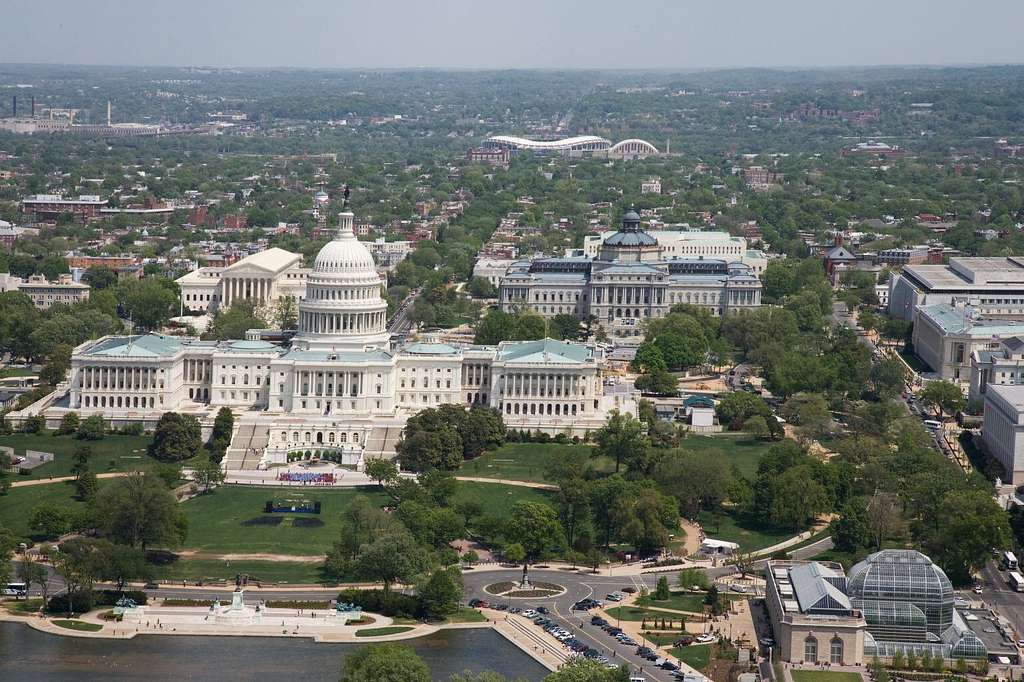
The Senate on Tuesday failed to advance a War Powers Resolution that would direct President Trump to end hostilities against Iran that haven’t been authorized by Congress and prevent the president from restarting the full-scale war against the Islamic Republic.
A motion to discharge the resolution out of the Senate Foreign Affairs Committee failed on a 47-48 vote, with four Republicans joining most Democrats in supporting the bill. Sen. Jon Fetterman (PA) was the only Democrat to oppose the effort, and he also voted against all eight previous efforts to advance the legislation.
The Republicans who voted in favor of the bill include Senators Rand Paul (KY), Lisa Murkowski (AK), Susan Collins (ME), and Bill Cassidy (LA), who all voted in support of a previous procedural step to advance a War Powers Resolution, which passed the Senate in a vote of 50-47.
In both votes, if all senators had been present, it would likely have been a 50-50 tie, which could have been broken by Vice President JD Vance, who previously cast a tie-breaking vote to kill a Venezuela War Powers Resolution.
The War Powers Resolution that failed in the Senate on Tuesday was a joint resolution, meaning it could be vetoed by President Trump. But a War Powers Resolution that has passed the House is a concurrent resolution, which cannot be vetoed, and is the specific type of legislation Congress is meant to use under the 1973 War Powers Act to reassert the Constitution, which gives Congress, not the Executive, the authority to declare war.
Section 5(c) of the 1973 War Powers Act states that “at any time that United States Armed Forces are engaged in hostilities outside the territory of the United States, its possessions and territories without a declaration of war or specific statutory authorization, such forces shall be removed by the President if the Congress so directs by concurrent resolution.”
It’s unclear when the Senate might take up the House’s concurrent resolution, as the US and Iran announced they had reached a Memorandum of Understanding to end the conflict, which will be formally signed on Friday, though it’s unclear whether the agreement will hold.
This article was originally featured at Antiwar.com and is republished with permission.