
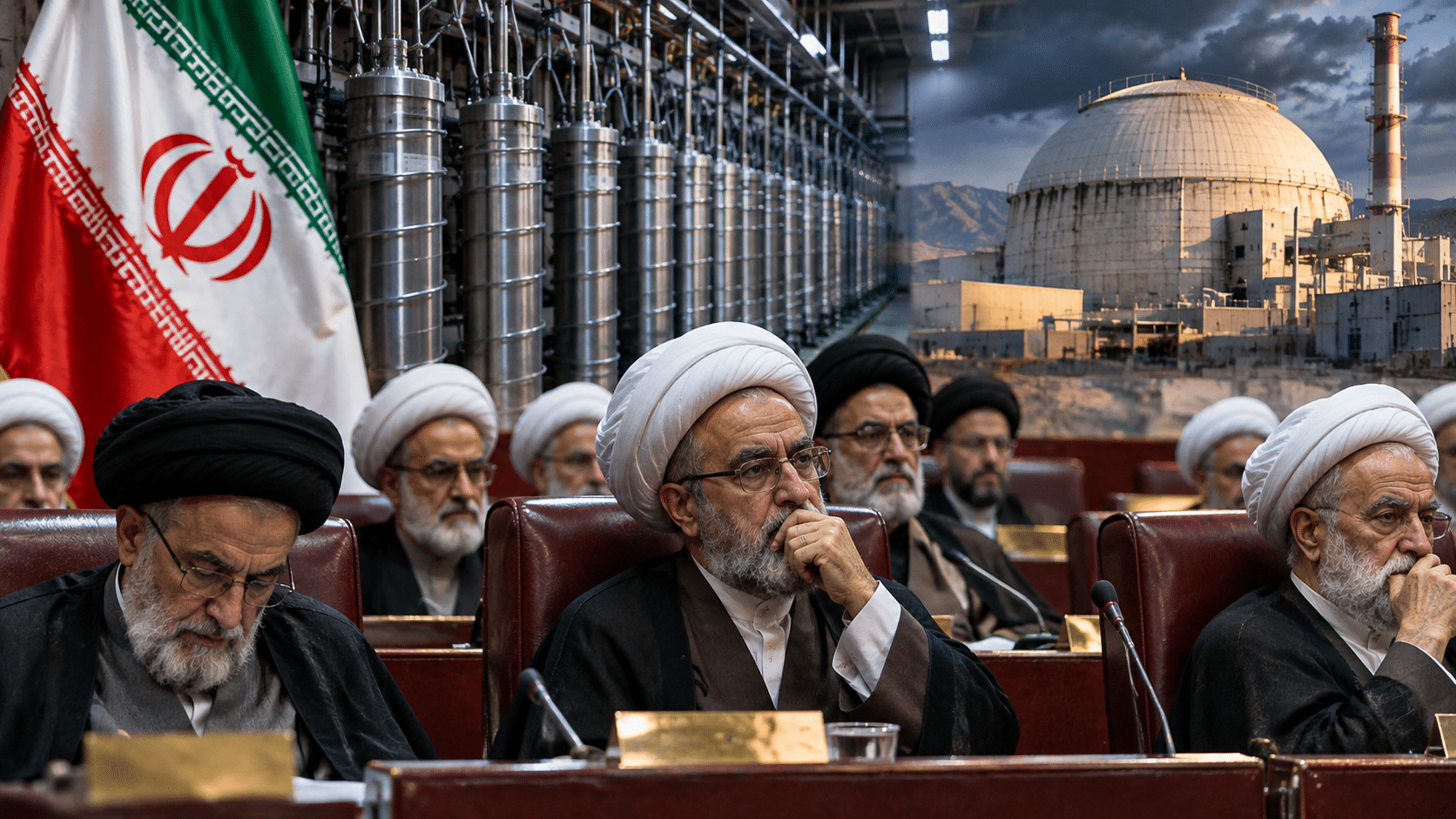
Iran’s highest-ranking clerical body issued a statement saying that Tehran should consider withdrawing from the Nuclear Non-Proliferation Treaty.
Iran’s Assembly of Experts said Thursday that considering withdrawing from the NPT is an “unavoidable necessity” because of aggression from the US and Israel. The clerical body also called for reviewing Iran’s defense doctrine and strengthening its military deterrence.
While the US and Israel have claimed for decades that Iran was on the verge of obtaining a nuclear weapon, the international nuclear watchdog has not detected any nuclear weapons program in the Islamic Republic
In 2015, Iran signed the Joint Comprehensive Plan of Action (JCPOA) that placed additional inspections and restrictions on the Islamic Republic’s civilian nuclear program in exchange for the lifting of sanctions on Iran.
Three years later, President Donald Trump withdrew from the JCPOA and reimposed sanctions on Iran. Even after the sanctions were put in place, the International Atomic Energy Agency continued to certify that Iran was not working on a nuclear weapon.
After Trump returned to the White House in 2025, Iran entered into negotiations with the US aimed at establishing a nuclear agreement to replace the JCPOA. Following several months of progress, Israel attacked Iran in June, derailing negotiations.
Washington and Tehran resumed negotiations in early 2026, but talks ended when the US and Israel launched a surprise attack on Iran.
Nuclear talks between the US and Iran are currently stalled. Tehran is demanding that Washington comply with seven conditions before talks on the Islamic Republic’s nuclear program resume.
Even if the US meets those conditions, the two sides remain far apart on the nuclear issue. Trump has demanded Iran make more concessions than it did under the JCPOA, including the abolition of the Islamic Republic’s uranium enrichment program and for Tehran to transfer its stockpile of highly enriched uranium.
Iran has about 1,000 pounds of uranium enriched to 60% U-235, well short of weapons-grade (90%.
Iranian officials have refused to export the country’s enriched uranium, including to allies, but have offered to downblend its stockpile of highly enriched uranium to a level suitable for use as nuclear fuel. Tehran has also refused to eliminate its enrichment program, arguing it is key to Iran’s sovereignty.