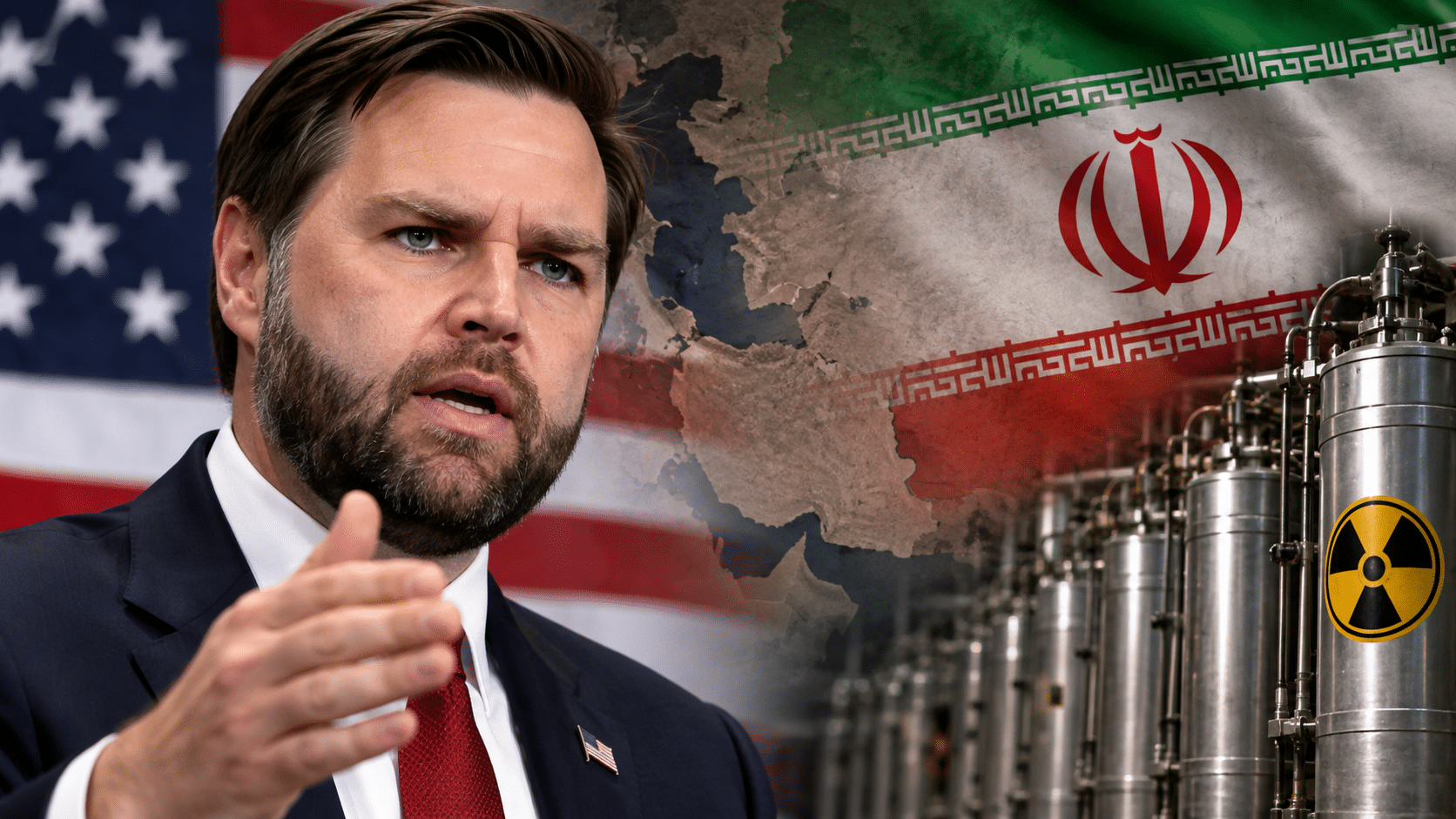
Vice President JD Vance said in an interview that Iran must agree to meaningful reductions in its uranium enrichment capabilities. The statement appears to be a shift in policy, as Washington has demanded that Tehran completely eliminate its enrichment program.
“If you don’t want a nuclear weapon, then why do you need 60% enriched fuel? And if you want to show commitment to not building a nuclear weapon, don’t build highly enriched fuel. That’s a very basic threshold issue,” Vance said. “I think if they want to show a commitment to not building a nuclear weapon, they would do something meaningful on their enrichment capacity.”
The statement signals a shift in the US demands for Iran. Previously, President Donald Trump and other top US officials called for the complete elimination of Iran’s uranium enrichment capabilities, arguing it is part of a nuclear weapons program.
However, the shift might not be enough to meet Iran’s current demands and reignite talks. Tehran is currently demanding that the US return to its commitments under the June Memorandum of Understanding before nuclear negotiations resume.
“Vance’s comments are Washington’s ideas and requests. Americans are free to make requests and have ideas, but they are at odds with Iran’s demands,” a senior Iranian official told Reuters.
In 2015, Iran signed an international nuclear pact with a number of other states, including the US. The Joint Comprehensive Plan of Action (JCPOA) limited Iran’s enrichment capabilities by limiting its number of centrifuges and capping uranium enrichment at 3.67%.
While Iran was in compliance with the JCPOA, President Donald Trump withdrew from the agreement in 2018, arguing it was a bad deal because its nuclear restrictions were insufficient and it failed to address Iran’s missile program and support for regional allies.
In response to the US reimposing sanctions that had been lifted under the JCPOA, Iran began gradually exceeding the deal’s enrichment limits in 2019. Tehran later increased enrichment to 20% following the assassination of nuclear scientist Mohsen Fakhrizadeh and to 60% after the 2021 sabotage attack on the Natanz nuclear facility, which Iran blamed on Israel.
Iranian officials have offered to downblend its stockpile of 60% enriched uranium to a level that it can be used as nuclear fuel as part of an agreement to end the war. Washington has demanded that Tehran turn over its stockpile of enriched uranium, which Trump refers to as nuclear dust.