

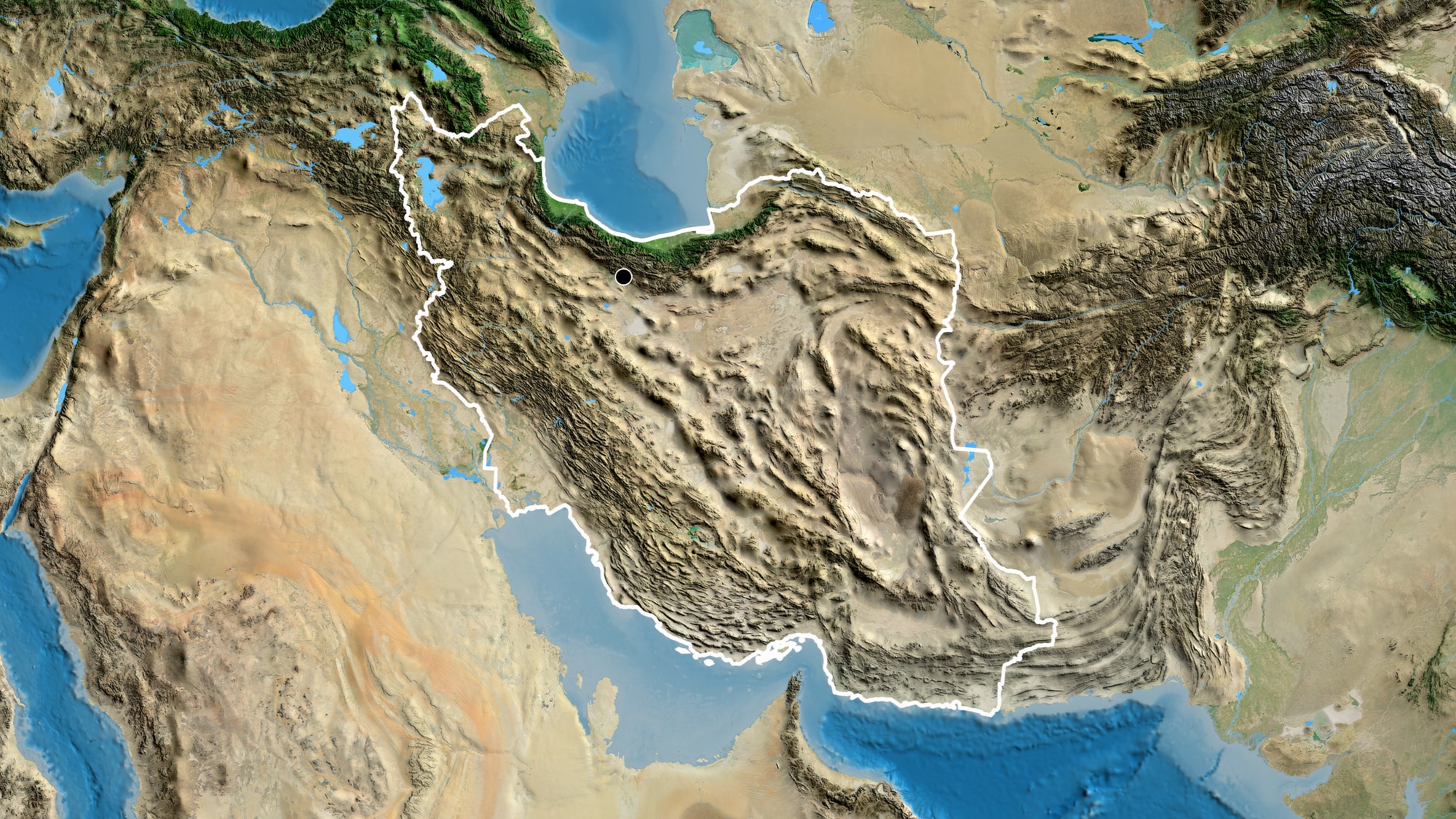
A troubling convergence has emerged among Western think tanks, Israeli politicians, and exiled opposition figures advocating for the partition of Iran along ethnic and sectarian lines. This strategy represents a dangerous escalation from traditional regime change toward what can only be described as regime destruction, a policy shift that would benefit Israeli regional ambitions while catastrophically destabilizing the Middle East and creating humanitarian disasters that would dwarf the Syrian refugee crisis.
Iran’s demographic reality forms the pretext for these proposals. Persians constitute between 51 and 61% of the population, while Azerbaijanis comprise 16 to 24%, Kurds represent 7 to 10%, with smaller populations of Arabs, Baloch, Lurs, and Turkmen rounding out the nation’s ethnic composition. Rather than viewing this diversity as a national strength, Balkanization advocates frame it as a strategic vulnerability ripe for exploitation.
The Foundation for Defense of Democracies, a rabid neoconservative organization, has positioned itself at the forefront of this campaign. Analyst Brenda Shaffer has explicitly promoted Iran’s fragmentation comparable to Yugoslavia’s violent collapse, while maintaining undisclosed financial ties to Azerbaijan’s state oil company SOCAR. Her advocacy centers on promoting secession of Iranian Azerbaijan, revealing fundamental misunderstanding of Iranian internal dynamics. Both Supreme Leader Ayatollah Ali Khamenei and President Massoud Pezeshkian are Azerbaijani, thoroughly undermining narratives of Persian ethnic hegemony driving separatist sentiment.
Media outlets have amplified these calls with alarming explicitness. In June 2025, The Jerusalem Post editorial board urged formation of a “Middle East coalition for Iran’s partition,” proposing “security guarantees to Sunni, Kurdish and Balochi minority regions willing to break away.” The editorial advocated federalization or complete partition, explicitly comparing Iran’s potential dismemberment to Yugoslavia’s breakup. The Wall Street Journal similarly published arguments that a fractured Iran could frustrate Russian and Chinese interests while reducing threats to Israel, downplaying catastrophic risks.
Israeli political circles have demonstrated institutional support for partition. In 2023, thirty-two members of Parliament signed a declaration calling for Iran’s disintegration into six parts, advocating territorial separation from Tehran to Iranian Azerbaijan, merger of Iranian Kurdistan with Iraqi Kurdish regions, independence for Ahwaz, and alignment of Baluchistan with Pakistan. Though most lawmakers later rescinded signatures following backlash, the episode exposed significant appetite for fragmentation strategies within Israeli political establishment.
The ideological foundation for these proposals traces directly to the 1982 Yinon Plan, a strategic memorandum by Israeli journalist Oded Yinon advocating division of Middle Eastern states along ethnic and sectarian lines. The plan explicitly stated Israel must effect “the division of the whole area into small states by the dissolution of all existing Arab states,” operating on the premise that smaller states are weaker states and therefore easier to dominate. While the original document focused primarily on Arab states, contemporary partition advocacy has extrapolated these principles to Iran, effectively creating a Yinon Plan for the Iranosphere.
This represents the logical culmination of a strategy that has already produced catastrophic results across the region. Iraq’s 2003 invasion and subsequent sectarian fragmentation created hundreds of thousands of civilian deaths, millions of refugees, and the rise of ISIS rather than the democratic transformation promised. Syria’s fragmentation generated over half a million deaths and displaced half the pre-war population. Libya’s post-intervention collapse created ungoverned spaces exploited by terrorist networks and human traffickers. The pattern is consistent: balkanization produces chaos, humanitarian catastrophe, and conditions favoring extremist groups rather than stability or democracy.
For Iran specifically, partition would serve exclusively Israeli strategic interests while harming American national security. Israel seeks to leave Iran fragmented and dotted by warring statelets incapable of posing coherent challenge to greater Israeli regional ambitions. A broken Iran cannot develop nuclear capabilities, cannot support resistance movements, cannot project power beyond its borders. The United States has no corresponding interest in such outcomes. Iranian fragmentation would create massive refugee flows destabilizing neighboring states and requiring international humanitarian intervention. It would generate ungoverned territories exploited by terrorist organizations.
Turkey will never tolerate Western support for Kurdish separatism in Iran given its decades-long struggle with the Kurdistan Workers’ Party. Pakistan, already facing a Baloch insurgency movement, would view Western meddling in Iranian Balochistan as direct threat to its territorial integrity. Russia and China, both managing ethnic minority regions, would interpret Iran partition as validating their darkest suspicions about Western intentions, accelerating formation of anti-Western coalitions and hardening domestic crackdowns.
American efforts against Iran have already demonstrated the futility of maximum pressure approaches. Decades of sanctions have not produced regime change but rather entrenched hardliners and strengthened nationalist resistance. Covert operations including assassinations of nuclear scientists, Stuxnet cyberattacks, and support for exile groups have failed to alter Iranian strategic calculations. Direct military strikes destroyed facilities temporarily rebuilt within years. The historical record shows Iranian society rallies around the flag when facing external aggression rather than fragmenting along ethnic lines.
Iranian nationalism represents a powerful unifying force transcending ethnic divisions. Iran claims status as one of the world’s oldest continuous civilizations, with national identity predating modern ethnic categories. Unlike Iraq or Syria where borders reflected colonial cartography, Iran constitutes a historically integrated entity where internal diversity has coexisted with strong national consciousness for millennia.
The alternative to destructive partition fantasies requires sober policy recognizing previous failures. The United States needs fundamental strategic reorientation away from Middle Eastern interventions toward addressing genuine national security priorities. Border security in the Western Hemisphere, managing peaceful co-existence China, and rebuilding domestic infrastructure represent core American interests unrelated to fragmenting Iran.
Non-interventionism and restraint acknowledge that Iranian political evolution must emerge from internal dynamics rather than external manipulation. The lessons from Iraq, Syria, and Libya are unambiguous. Military intervention and support for fragmentation produce humanitarian catastrophes, empower extremist factions, and create conditions requiring prolonged American involvement rather than enabling withdrawal. The Middle East does not need another failed state generating refugee crises and terrorist safe havens. The American people deserve foreign policy serving national interests rather than outsourcing strategic decision-making to regional allies pursuing incompatible objectives.
Iran’s partition would not take the country off the geopolitical chessboard as advocates claim. It would set that board on fire, creating unpredictable cascades of violence, displacement, and great power competition in one of the world’s most volatile regions. The humanitarian costs would be staggering, the strategic consequences counterproductive, and the benefits accruing exclusively to Israel rather than the United States or the Iranian people themselves.
A responsible approach recognizes Iran’s ninety million citizens deserve to determine their own political future, but such transformation cannot be imposed through external fragmentation. The path forward requires restraint, non-interventionism, and acknowledgment that decades of sanctions, covert operations, and military threats have consistently failed while strengthening the very regime they aimed to weaken.