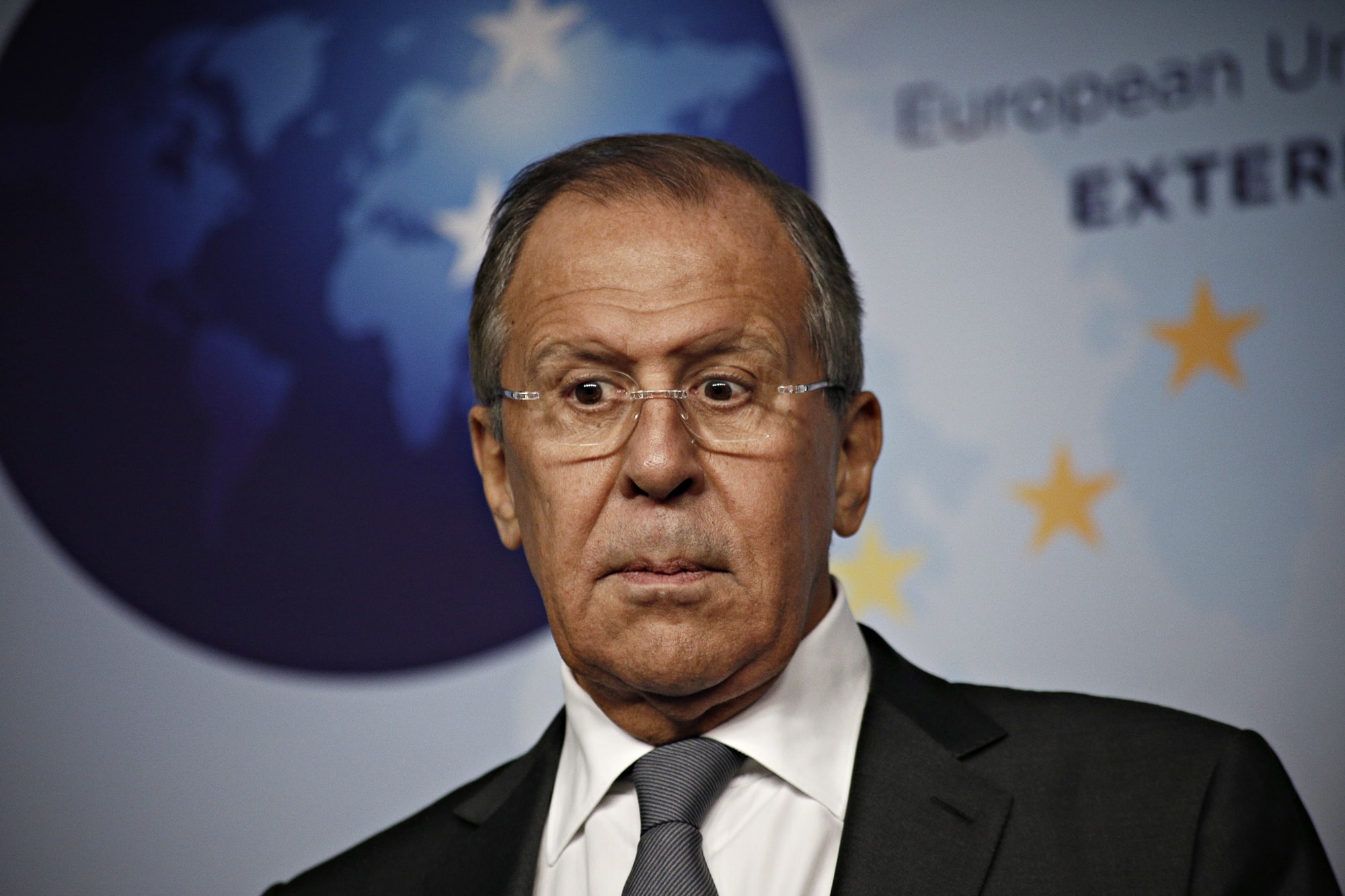
In February 2026, Russian Foreign Minister Sergey Lavrov accused the United States of “not being ready to fulfill agreements” reached during alleged Trump-Putin talks in Alaska in August 2025. The accusation fits a pattern. During a July 2020 conference on the Open Skies Treaty, Russian Deputy Foreign Minister Sergey Ryabkov told TASS that Russia does not view the United States “as a partner who is able to negotiate.”
The charge that Washington cannot be relied upon to honor its commitments has become a recurring theme in Russian diplomacy and increasingly resonates beyond Moscow. Over the past two decades, the United States has withdrawn from a remarkable number of international agreements, raising questions about American credibility, the future of multilateral cooperation, and whether the United States can be treated as a reliable partner on the international stage.
The pattern began in earnest in 2001 when President George W. Bush withdrew the United States from the Anti-Ballistic Missile Treaty, a 1972 arms control accord with the Soviet Union that had been in force for three decades. The withdrawal, citing purported risks of nuclear blackmail from rogue states, led Russia to declare it would no longer abide by the START II treaty. Russian President Vladimir Putin ordered a buildup of Russia’s nuclear capabilities designed to counterbalance American missile defense systems.
In May 2018, the administration withdrew from the Joint Comprehensive Plan of Action, the Iran nuclear deal negotiated by the Barack Obama administration alongside the United Kingdom, France, Germany, Russia, and China. European allies stayed in the agreement and ignored Washington’s requests to reimpose sanctions on Tehran. Iran responded by resuming uranium enrichment.
In August 2019, the United States formally exited the Intermediate-Range Nuclear Forces Treaty, a Reagan-era arms control pact with Russia. In May 2020, Secretary of State Mike Pompeo announced the United States would withdraw from the Open Skies Treaty, a thirty-four nation confidence-building measure that permitted unarmed reconnaissance flights over member states’ territories. The withdrawal became effective November 2020 despite opposition from NATO allies and members of Congress who argued the administration had violated legal requirements for notification.
The consequences of serial withdrawal extend far beyond specific agreements. Each exit signals to allies and adversaries whether the United States honors commitments.
The arms control exits have been particularly destabilizing. Russian Foreign Minister Lavrov explicitly cited the pattern when responding to American demands, noting Russia “tried to resolve American concerns about the INF Treaty, but its initiatives were rejected, and now it sees a repetition of the same pattern.” The collapse of the INF Treaty, ABM Treaty, and Open Skies Treaty has left only New START as a remaining pillar of U.S.-Russia arms control.
The pattern of withdrawal has accelerated the shift from American-led multilateralism toward alternative arrangements. BRICS expanded dramatically in 2024, adding Egypt, Ethiopia, Iran, and the United Arab Emirates to its original five members. The eleven-nation bloc now represents 45% of the world’s population and more than a quarter of global GDP. More than thirty countries have expressed interest in joining, with thirteen admitted as partner countries at the October 2024 Kazan summit.
According to Carnegie Endowment analysis, Iran views BRICS as “both a geopolitical and economic counterweight to Western dominance.” As one of the world’s most sanctioned nations, Tehran sees the bloc as a hedge against American pressure. Supreme Leader Ayatollah Ali Khamenei stated in January 2025 that “one of our problems today is being dependent on the dollar.”
Russia has used BRICS to demonstrate it is not isolated despite Western sanctions. The Kazan summit advanced BRICS Pay, a blockchain-based payment system designed to reduce dependence on the U.S. dollar and SWIFT network. While de-dollarization remains largely rhetorical, bilateral trade in dollars has declined as sanctions proliferate.
The Shanghai Cooperation Organization has similarly grown to encompass Russia, China, India, Pakistan, Iran, and Central Asian states representing nearly half the world’s population. Originally focused on regional security, the SCO now positions itself as a platform for advancing multipolarity and resisting Western hegemony.
These organizations explicitly frame themselves as alternatives to Western-dominated institutions. When the United States exits agreements or wields sanctions as its primary tool, it provides recruitment messages about American unreliability.
Rebuilding credibility requires several principles. Consistency matters more than perfection. Even flawed agreements provide value if they create predictable frameworks. Constant exits signal American commitments are provisional. Consultation with allies reduces diplomatic costs. The Open Skies and JCPOA exits were particularly damaging because they occurred over partner objections.
The pattern of withdrawal creates expectations that American commitments are temporary, that multilateral frameworks will be abandoned when convenient, and that alternative arrangements are necessary hedges against American unreliability.
Russian officials now explicitly cite American withdrawal patterns when dismissing proposals. Chinese officials point to exits when arguing Washington cannot be trusted. European allies hedge by developing autonomous capabilities in case American security guarantees prove as durable as climate commitments.
The emerging world will not be one of American primacy sustained by multilateral institutions. It will be a multipolar world of rival blocs, competing currencies, and fragmented governance where the United States must be compelled to compete in. As long as the United States remains what Russian diplomats have called “agreement incapable,” every abandoned treaty and broken commitment will feed the gravitational pull toward a multipolar order that Washington can no longer prevent.