Not distracted by the war on Iran, on March 3, President Donald Trump, once again, warned that Cuba was in its “last moments.” The next day, he said, “It may be a friendly takeover. It may not be a friendly takeover. It wouldn’t matter because they are down to, as they say, fumes” before admitting that the United States has caused a humanitarian disaster in Cuba.
Trump’s rhetoric has continued to escalate. On March 17, Trump said, “I do believe I will be having the honor of taking Cuba. Taking Cuba. I mean, whether I free it, take it. I think I can do anything I want with it. They’re a very weakened nation right now.” The Trump administration is reportedly pursuing a policy of removing President Miguel Díaz-Canel from power while keeping in place his government. They have communicated to Cuba that no deal can be negotiated while he is leader.
The U.S. has cut Cuba off. The Secretary-General of the United Nations has said that he is “extremely concerned about the humanitarian situation in Cuba” and warned that it “will worsen, if not collapse,” if the U.S. does not ease its chokehold. But as the humanitarian catastrophe unfolds, while the world largely watches on, there are three enduring American myths about Cuba that need to be obliterated.
The Trump administration has cut Cuba off from its energy lifeline: “THERE WILL BE NO MORE OIL OR MONEY GOING TO CUBA – ZERO!,” Trump pronounced. “I strongly suggest they make a deal, BEFORE IT IS TOO LATE.” With that threat, Trump declared a “national emergency” and signed an executive order imposing tariffs on any country that sends oil to Cuba. “Now there is going to be a real blockade. Nothing is getting in. No more oil is coming,” the U.S. Charge d’Affairs in the U.S. Embassy in Havan told his staff.
And, with the exception of a trickle of aid from Mexico and the promise of a drop of aid from Canada, nothing is getting in. “There’s no oil, there’s no money, there’s no anything,” Trump boasted. There is no longer enough oil in Cuba to guarantee your car, generator or hot water will run. There is not enough electricity to keep the lights on. Classes have been cancelled at many schools, and many hospitals have cut services. Tourism, the economic lifeblood of Cuba, is drying up. Cuba has announced that international airlines can no longer refuel there due to fuel shortages. On Monday, a “complete disconnection” caused a blackout across all of Cuba.
The American embargo has gotten so successfully out of hand that, after the leaders of Cuba’s Caribbean neighbors expressed alarm over the suffering of Cubans, the U.S. has relented a little and now says it will loosen some restrictions and let some Venezuelan oil into Cuba.
Foundational to the American embargo on Cuba are three myths that need to be undermined. The hostility to Fidel Castro and Cuba has been going on longer than expressed in the official narrative. The hostility was not originally about communism. And the intent of the embargo has always been to starve the Cuban people.
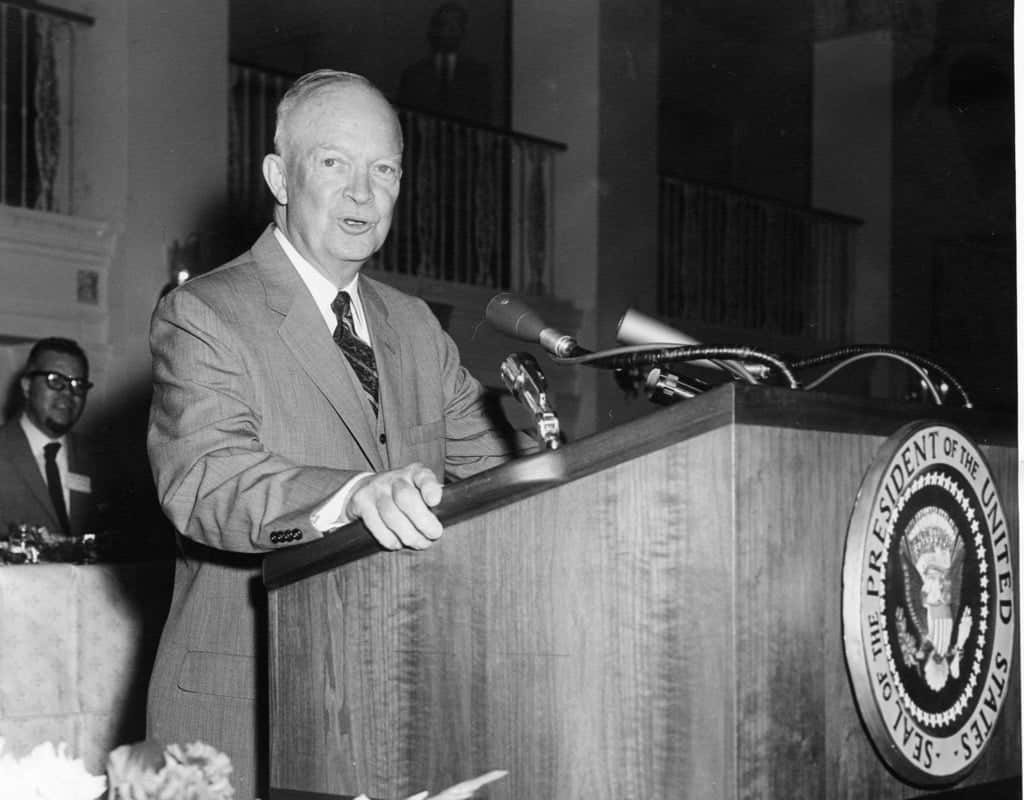
The hostility toward Cuba stretches back two years and one administration further than told in the official narrative. Though the embargo, the Bay of Pigs and Operation Mongoose’s determination to assassinate Castro are all attributed to John F. Kennedy, they all need to be deposited in President Dwight D Eisenhower’s foreign policy account.
Though it would be Kennedy who would water the seed that locked Cuba down, the seed was planted two years earlier by Eisenhower who, on January 25, 1960, suggested the U.S. Navy “quarantine” Cuba. Eight months later, he banned all U.S. exports to Cuba except food and medicine. It would be left to Kennedy to implement the full embargo, and Lyndon Johnson to include food and medicine. In the official narrative, the embargo is associated with Kennedy, but its origins are older, going back to the very beginning of the story. Castro overthrew the Batista dictatorship on January 1, 1959. He was sworn in as prime minister on February 16, 1959. Already by January of the next year, Eisenhower had proposed the embargo.
Like the embargo, Kennedy and the Bay of Pigs are forever linked in the official narrative. But that too stretches back to the Eisenhower years. Right from the start, in the earliest days after the revolution, the CIA had nominated its operative Jake Esterline, who had helped carry out the coup against Guatemala’s Jacobo Árbenz, to plan the Bay of Pigs invasion. The CIA plan to invade Cuba is dated December 6, 1960. Kennedy would not be inaugurated until forty-five days later.
Castro’s death sentence was also signed in Washington much earlier than recorded in the official narrative. It was October 1959, according to CIA expert John Prados, that Eisenhower “approved measures” that led to the “secret war,” included grooming opposition leaders in Cuba and encouraging raids by Cuban exiles on Cuba from the United States. Eisenhower had already ordered a covert action on Castro by March 17, 1960.
But the decision to assassinate Castro goes back even earlier than that. “[K]ey officials in the Eisenhower administration reached…a clear determination to bring about Castro’s demise” by the summer of 1959, only months after Castro came to power, according to William LeoGrande and Peter Kornblum in their book, Back Channel to Cuba. Overthrowing Castro was the official secret policy of the United States by October. On November 5, according to LeoGrande and Kornblum, that plan was approved by Eisenhower. On December 11, 1959, according to CIA expert Tim Weiner, Allen Dulles, Eisenhower’s CIA director, gave the go-ahead for Castro’s “elimination.” Dulles changed “elimination” to “removal from Cuba.” Stephen Kinzer reports that on May 13, 1960, after being briefed by Dulles, Eisenhower ordered Castro “sawed off.”
All of this took place earlier than told in the official narrative and long before Kennedy authorized Operation Mongoose, which, headed by his brother, Attorney General Robert Kennedy, and run by the experienced and notorious CIA operative Edward Lansdale, made assassinating Castro “the top priority in the United States Government.” Robert Kennedy told Lansdale and the Operation Mongoose team that “all else is secondary—no time, money, effort, or manpower is to be spared.”
The second myth is that hostility toward Cuba was born out of the requirement to keep communism out of the hemisphere. But Washington was hostile to Castro before Castro was a communist. When the U.S. placed Castro in its crosshairs, he was neither aligned with the Soviet Union nor openly communist at all. At this time, Castro’s program of social reforms was neither radical nor communist. In America, América: A New History of the New World, Greg Grandin records that “[t]he CIA called Castro’s agenda ‘the common stock of Latin American reformist ideas’: land reform, housing, health care, education, control over natural resources, and national sovereignty.”
In the early years of the Cuban revolution, Castro sought friendly relations with the United States. What the U.S. opposed was not communism in its backyard, but an alternative political and economic model in its backyard that could prove attractive to other countries in the hemisphere.
To preserve its hemispheric hegemony, the U.S. has erased any attractive alternative that could encourage other countries in America’s backyard to copy what Noam Chomsky has called Cuba’s “successful defiance.” The alternative the U.S. has feared most are forms of nationalism in which the leader defiantly nationalizes land and resources so the wealth benefits, not a foreign power, but the people who live on that land. It was Castro’s nationalistic policies and agrarian reforms that put him in the United States’ sites.
Castro nationalized land, redistributing it from large farms—including American owned farms—to the Cubans. Grandin says that when the large American oil companies refused to process oil sent to Cuba by the Soviet Union, Castro nationalized their refineries too.
The problem with Castro wasn’t communism, it was a model of government that offered an attractive alternative to the American model and American hegemony. As internal State Department documents had said about Arbenz in Guatemala half a decade earlier, the concern was the contagious “example of independence of the US that Guatemala might offer to nationalists throughout Latin America,” and that that example “might spread through the example of nationalism and social reform.” That is why Eisenhower called his embargo a “quarantine.”
The U.S. had this concern about Castro from the first minutes. Observing Castro after the revolution but before he had even been sworn in as leader, Grandin records CIA operative Esterline, soon to be of the Bay of Pigs, warning that Castro was “something different, something more impressive.” He said a “chain reaction was occurring all over Latin America after Castro came to power” and described “a new and powerful force…at work in the hemisphere.”
Communist or not, the contagious alternative had to be erased. And as far back as it goes, the embargo that was meant to erase it always had as its deliberate intent the starvation of the Cuban people. That is the third truth.
When Eisenhower first proposed his quarantine of Cuba, he adopted the policy, he said, because “If they are hungry, they will throw Castro out.” Explaining how sanctions would work, Eisenhower’s assistant secretary of state for Latin America said, as Grandin reports, that the sanctions were intended to bring down “real wages, to bring about hunger, desperation and overthrow of government.” The embargo was a deliberate policy of bringing about regime change through hunger. And it still is. On February 16, Trump told reporters that Cuba “should absolutely make a deal, because it’s really a humanitarian threat.”
The official American narrative on its Cuba policy is a myth. To alter the narrative from mythology to history so policy decisions can responsibly be made, three truths need to be told. American hostility to Cuba has been going on longer than commonly believed. That hostility was not originally about communism. And the intent of the embargo has always been to bring about regime change by starving the Cuban people.