

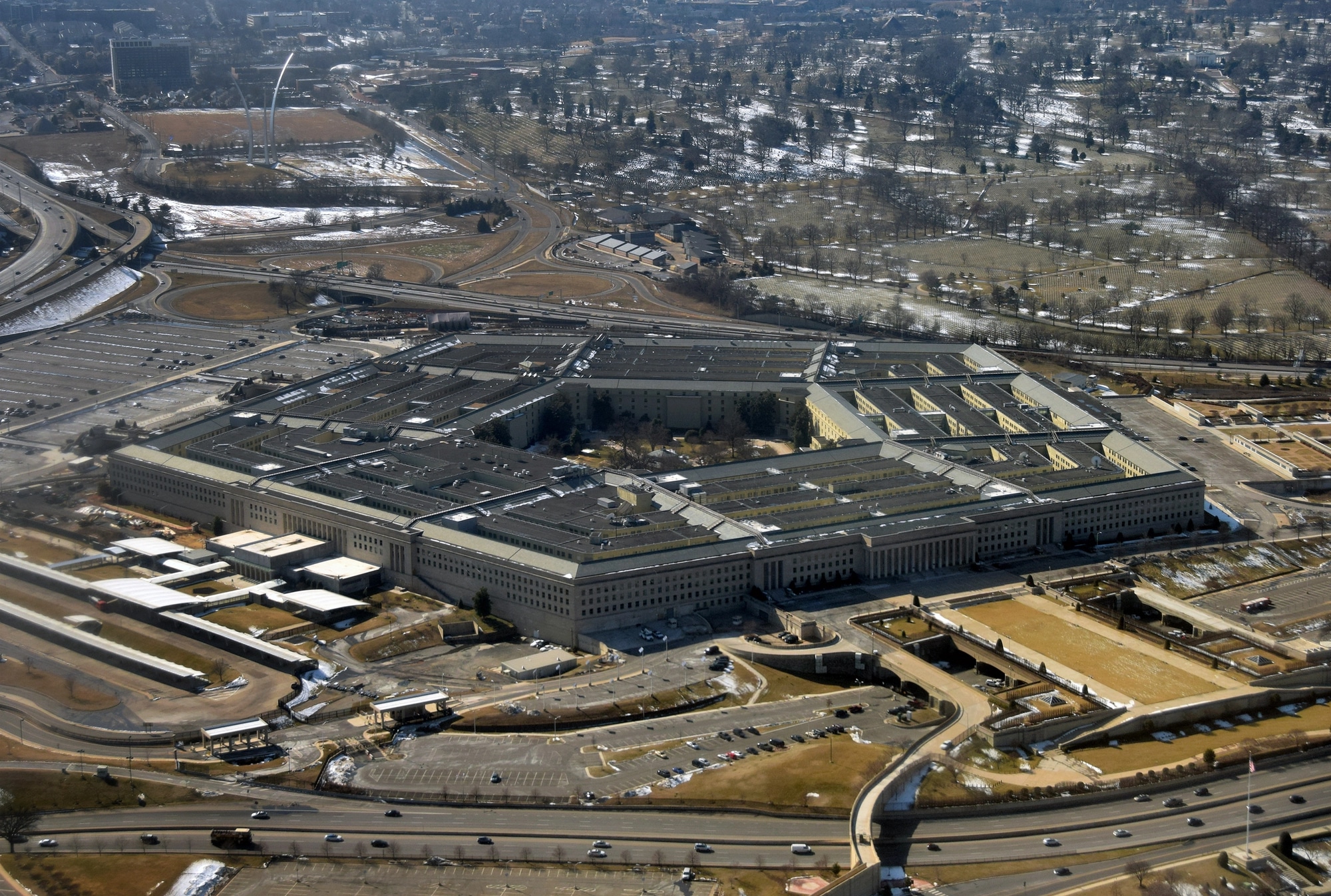
For anyone who has been paying attention to the metastasizing national debt and the fiscal recklessness that has defined Washington for the past two decades, the latest proposal from the Trump administration can be met only by a mixture of disgust and grim predictability. Indeed, at a time of record debt and deficits the White House has floated a $1.5 trillion military budget for fiscal year 2027—a proposal more likely than not to find its way into the next National Defense Authorization Act (NDAA).
It is a prospect that should terrify every American taxpayer.
For context, the most recent NDAA was already approaching a trillion dollars. This was supplemented when the Pentagon subsequently received additional funds tucked into the so-called “Big Beautiful Bill”—the 2025 reconciliation package that rammed through hundreds of billions in new military spending.
Of course, even these enormous headline figures fail to capture the full cost of America’s national-security state. They exclude the routine maintenance of the nuclear stockpile under the Department of Energy and the ever-expanding obligations of veterans’ benefits administered by the Department of Veterans Affairs. Together, these categories add hundreds of billions more each year.
If the next NDAA truly reaches $1.5 trillion, total military-related spending—including nuclear maintenance and veterans’ care—would approach $3 trillion annually. That is a wartime-level share of GDP, far exceeding that of any other nation on earth. It amounts to billions of dollars every day, hundreds of millions every hour, spent on planes, bombs, bases, and contractors.
And for what?
Not the defense of the American homeland, which geopolitical developments and geography have long made the safest great power in recorded history. Rather, this staggering sum sustains a global empire of bases, endless interventions, and the perpetual search for the next “threat” to justify the last.
The waste is staggering even before considering the human and strategic costs. This money does not vanish into abstraction; it flows directly into the coffers of defense contractors. A relatively small investment in campaign contributions, think-tank funding, and revolving-door employment reliably yields enormous returns. Lockheed Martin, Raytheon, Boeing, and their peers have transformed the procurement process into a self-perpetuating machine.
Meanwhile, the average American bears the cost through the hidden tax of inflation, higher prices at the grocery store, at the gas pump, and across the economy. The dollar itself is steadily debased to finance this profligacy. The Federal Reserve’s balance sheet expansion is not an accident; it is the inevitable consequence of a government unwilling to choose between guns and butter, and instead committed to financing both through monetary expansion.
Worse still, this immense military apparatus is not merely wasteful: it is counterproductive. Its very existence invites intervention, fosters blowback, and entangles the United States in conflicts that have little to do with genuine national defense. Each drone strike, regime-change operation, and “humanitarian” bombing campaign helps generate the next generation of enemies, who in turn justify further spending.
At home, the consequences are equally corrosive. The vast flows of money and authority into the national-security state have contributed to the militarization of local police, the expansion of surveillance, and an executive branch increasingly indifferent to constitutional limits.
What was ostensibly created to safeguard liberty now stands as one of its greatest threats.
The tactical absurdities enabled by this system are almost beyond parody. American forces routinely destroy $30,000 drones with $2 million missiles, a practice treated as business as usual rather than the fiscal and strategic folly it plainly is. In a rational system, cost-effectiveness would be paramount. In ours, it is an afterthought.
The fiscal implications are no less alarming. Meaningful reductions in military spending rarely occur; Higgs’s ratchet turns in only one direction. If $1.5 trillion becomes the new baseline, the federal deficit—already near $2 trillion annually—will grow even larger. The national debt, now exceeding $39 trillion, will continue its relentless climb.
Interest payments alone have already surpassed $1 trillion per year and are projected to rise dramatically in the coming decade. Every additional dollar borrowed to fund military expansion must ultimately be repaid, through higher taxes, further inflation, or default. The Congressional Budget Office projects debt reaching roughly 120% of GDP within a decade, with interest consuming an ever-larger share of federal revenue. Layering on hundreds of billions in additional annual defense spending will only accelerate this trajectory.
This is not defense; it is insane militarism. The republic envisioned by the Founders has given way to something closer to a garrison state, one that struggles to secure its own borders while projecting power across the globe on behalf of its clients.
The American people deserve better. They deserve a foreign policy grounded in peace, commerce, and honest friendship with all nations, entangling alliances with none. They deserve a military oriented toward the defense of the homeland, not the enrichment of contractors or the ambitions of ideologues and bureaucracies.
Until Washington confronts the fiscal and moral bankruptcy of its imperial project, the debt will continue to mount, inflation will continue to erode living standards, and the republic will continue its drift toward insolvency and authoritarianism.
A $1.5 trillion military budget is not a sign of strength. It is a symptom of decline. The time to reject it, and the interventionist consensus that sustains it, is now.