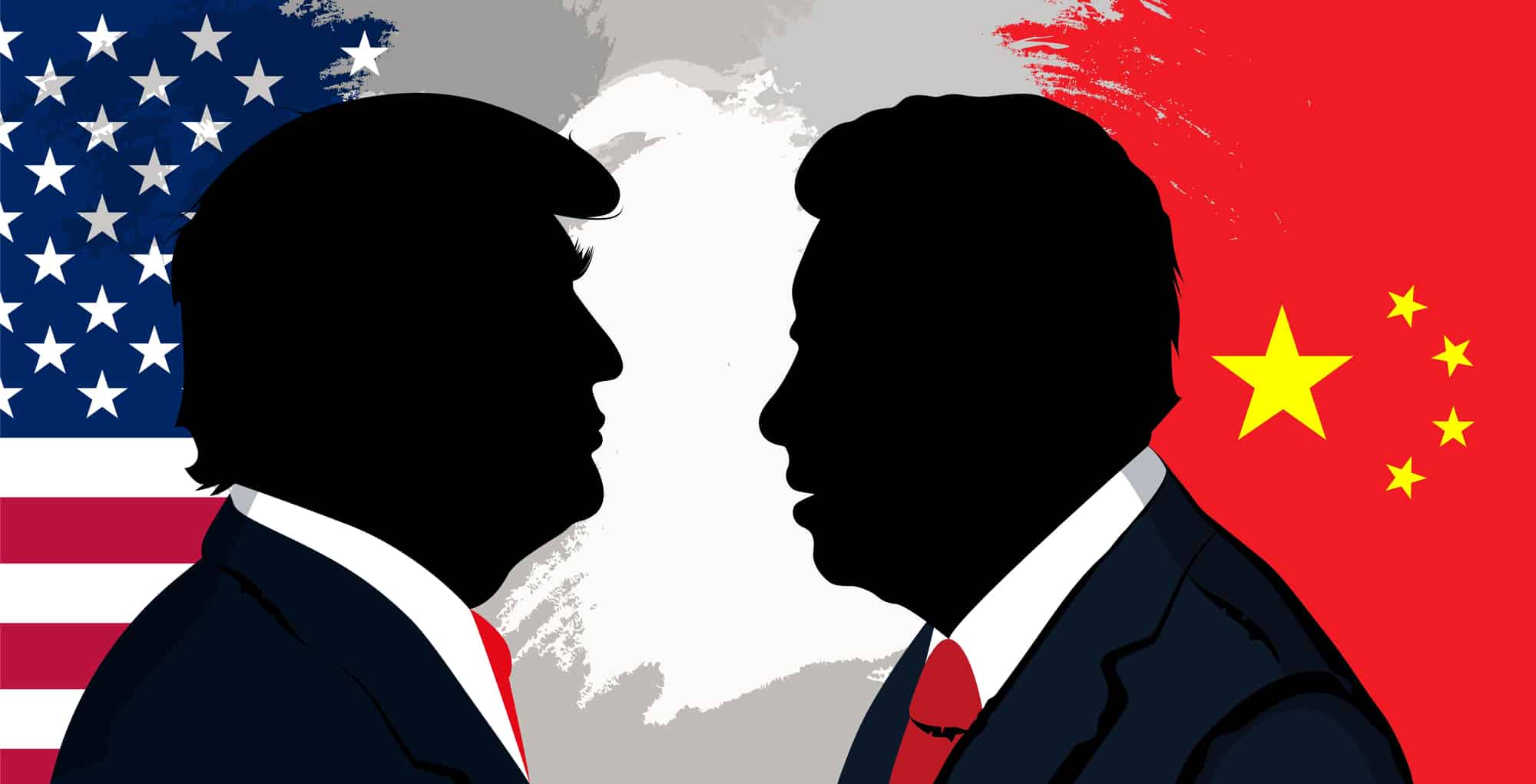
When President Donald Trump arrived in Beijing yesterday for his summit with Xi Jinping, much of the American foreign policy establishment framed the meeting through the familiar lens of “great power competition.” Analysts will scrutinize every handshake, communiqué, and trade announcement for signs that Washington is either “standing up” to China or “conceding” ground to its principal rival.
But the more important reality is that the summit will likely underscore just how much the balance of leverage has shifted over the past several years—and how little appetite Beijing has for rescuing Washington from the consequences of its own strategic blunders.
The prevailing assumption in Washington remains that China is an aggressive revisionist power poised to overturn the international order through military expansion and economic coercion. Yet the actual picture is considerably more complicated. Beijing’s posture today looks less like that of a state eager for global confrontation and more like that of a rising commercial empire patiently exploiting American overextension.
That overextension is now impossible to ignore.
Washington’s latest entanglement in Iran has once again demonstrated the limits of American power projection. Years of interventionism, sanctions escalation, proxy commitments, and military signaling have produced precisely what critics of U.S. foreign policy long warned about: another unstable regional crisis with no clear off-ramp and no coherent strategic objective.
And notably, China has shown almost no interest in helping Washington navigate the mess.
Despite endless warnings from hawks that Beijing and Tehran are inseparable strategic partners, China’s actual behavior has been far more restrained and transactional. Beijing benefits from Iranian energy flows and prefers regional stability, but it has little reason to actively bail out an American foreign policy establishment that helped create the crisis in the first place. From Beijing’s perspective, every additional dollar and hour Washington spends bogged down in the Middle East is a dollar and hour not spent in East Asia.
That reality carries profound implications for Taiwan.
For years, American policymakers have insisted that Washington could effectively deter—or if necessary defeat—a Chinese effort to forcibly reunify Taiwan with the mainland. Yet recent events reveal how implausible that confidence increasingly appears. If the United States struggles to maintain readiness, logistics, and political cohesion while managing comparatively limited Middle Eastern operations thousands of miles from China, what exactly convinces anyone that it could successfully wage and sustain a high-intensity conflict directly off the Chinese coast?
The uncomfortable truth is that Beijing likely sees America’s Iran difficulties not as a warning, but as confirmation of long-standing Chinese assumptions about U.S. decline and strategic exhaustion.
China, meanwhile, has continued strengthening the areas that matter most in long-term competition: trade, industrial capacity, and monetary influence.
Over the past year especially, Beijing has deepened commercial ties throughout the Global South while accelerating efforts to denominate trade outside the dollar system. None of this means the dollar is about to collapse tomorrow, as breathless commentators sometimes claim. But it does mean that Washington’s ability to weaponize the global financial system is gradually eroding at the margins.
That erosion matters because American coercive power increasingly depends less on productive economic strength and more on financial leverage, sanctions architecture, and control of chokepoints. China understands this perfectly, which is why it has spent years systematically reducing vulnerabilities while building leverage of its own.
Perhaps nowhere is that leverage more obvious than in rare earths processing.
Washington often speaks as though China’s dominance in rare earth supply chains is merely an unfortunate market distortion that can easily be corrected with sufficient industrial policy. In reality, Beijing possesses something far more significant: a near-stranglehold on the processing infrastructure necessary to convert raw materials into usable industrial inputs for advanced manufacturing, electronics, defense systems, and green technologies.
This gives China a remarkably effective whip hand.
Even modest Chinese export restrictions over the past year have demonstrated how fragile Western supply chains remain. Despite years of rhetoric about “reshoring” and “de-risking,” the United States still lacks the capacity to rapidly replace China’s processing ecosystem. Building mines is difficult enough. Replicating decades of accumulated industrial infrastructure, refining expertise, environmental tolerance, and integrated supply chains is another matter entirely.
This reality may help explain why the Trump-Xi summit will likely focus less on ideological confrontation and more on managed coexistence.
Speculation about some form of institutionalized “Board of Trade” arrangement, floated by Michael Froman at the Council on Foreign Relations, may sound fanciful at first glance, but it fits the emerging logic of the relationship. Neither side appears genuinely interested in comprehensive economic decoupling because neither side can actually afford it. The likely trajectory instead is selective compartmentalization, with tariffs and controls in sectors deemed strategic, combined with continued deep integration elsewhere.
Ironically, such arrangements would represent a tacit admission that decades of maximalist rhetoric from Washington about fundamentally remaking China’s economic system have failed.
And that failure may be the central story to watch in Beijing.
For all the alarmism surrounding the so-called “China threat,” the summit may ultimately reveal something much simpler. Beijing increasingly believes time is on its side, while Washington appears trapped between military overextension abroad, industrial weakness at home, and a foreign policy establishment still struggling to distinguish genuine national interests from ideological crusades.
Trump may well secure commercial deals, soybean purchases, aircraft orders, or even the outline of some new trade-management framework—but beneath the symbolism and spectacle, the larger reality will remain unchanged.
China does not appear eager for war with the United States.
It simply appears increasingly confident that it can outlast it.