
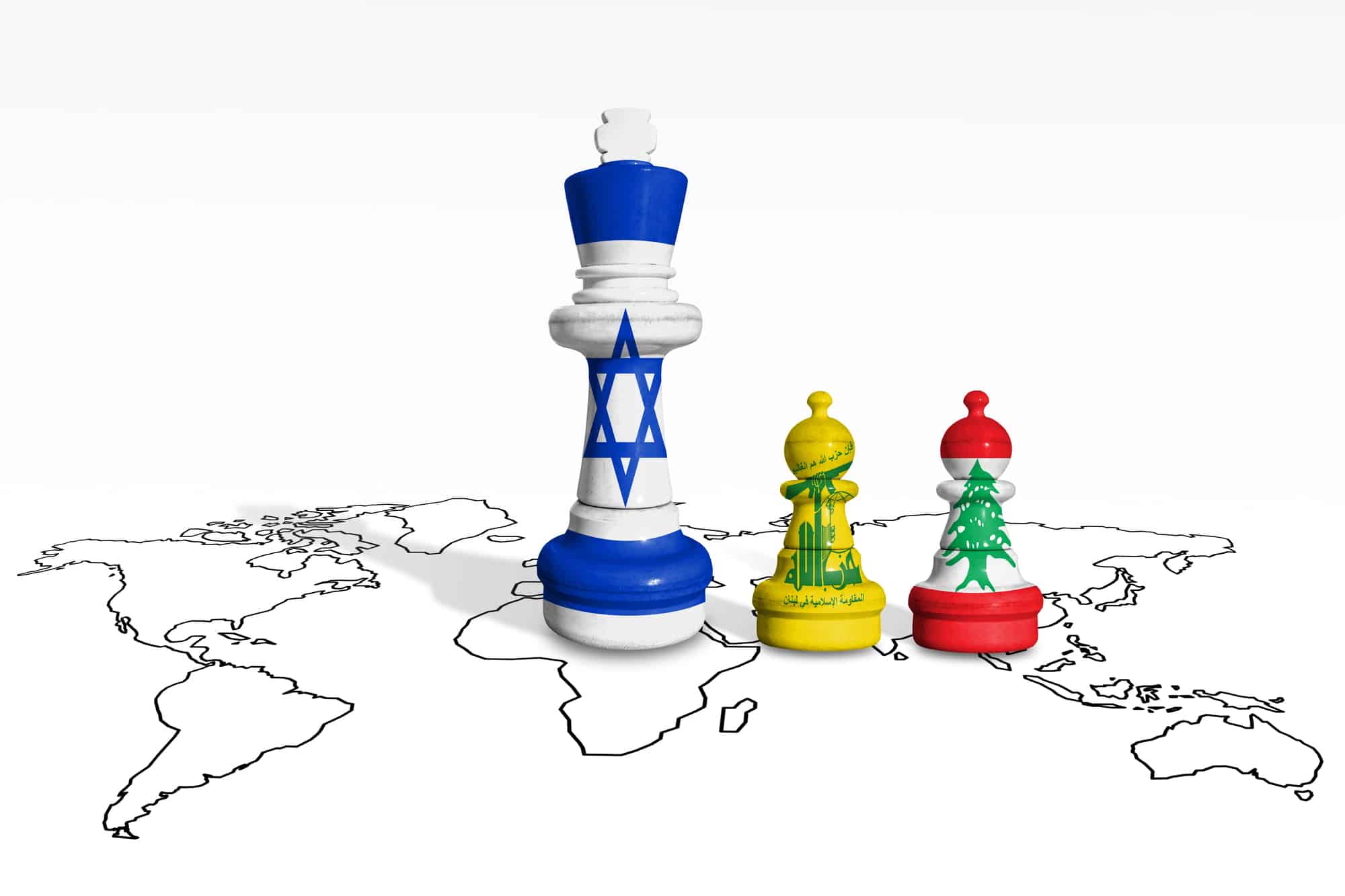
Israel’s latest war on Lebanon is now threatening to unravel the fragile understanding that Washington and Tehran reached to halt their 2026 confrontation. Under the interim agreement that Pakistan mediated, the United States and Iran declared a permanent end to military operations on every front, Lebanon included. Israel, not a party to the pact, refused to comply. Prime Minister Benjamin Netanyahu announced on June 15 that his forces “will stay in the Lebanon security buffer zone for as long as necessary,” and nine days later Defense Minister Israel Katz declared the military would not pull out even if the United States demanded it. On June 18, Israel demarcated an expanded occupation zone in defiance of the pact, and its warplanes kept striking Lebanese towns even as the ceasefire supposedly held.
None of this is new. Israel has crossed into Lebanon so many times since 1948 that the incursions blur together, and beneath the shifting security rationales runs a constant thread of territorial and water ambition. Zionist planners eyed the Litani River before Israel even existed, recognizing that a state in an arid land would need water it did not have. The Coton Project, submitted to American mediator Eric Johnston in 1954, sought to divert more than half the Litani’s flow into Israel, and Prime Minister David Ben-Gurion insisted for decades that the river marked Israel’s northern border, arguing that the water sources on which the state depended must not lie beyond its frontiers. The Litani, which runs within a few miles of the border, has served as the dividing line of nearly every Israeli occupation since—a coincidence too consistent to be accidental.
The pattern set in early. In October 1948 Israeli troops seized fifteen southern villages and, at Hula, herded civilians into a building and killed dozens. Withdrawal followed under an armistice, establishing a rhythm Israel would repeat for generations: invade, occupy, then retreat under pressure while keeping a foothold. In 1968 commandos landed at Beirut’s airport and destroyed more than a dozen civilian airliners to punish Lebanon for guerrillas it could not control, drawing a unanimous United Nations condemnation. In 1973 Israeli commandos, working with Mossad, assassinated three PLO leaders in the heart of the Lebanese capital.
Then came the ground invasions. Operation Litani in 1978 pushed to the river, killed well over a thousand Lebanese and Palestinians, most of them civilians, and displaced as many as 250,000 people before Israel handed a border strip not to Lebanon’s army but to a client militia. Four years later, Prime Minister Menachem Begin and Defense Minister Ariel Sharon launched Operation Peace for Galilee, a full invasion that besieged Beirut for some ten weeks.
Its darkest hour came at the Sabra and Shatila camps, where Israeli forces ringed the perimeter and fired flares while allied Phalangist militiamen slaughtered hundreds of Palestinian civilians—by some estimates several thousand. Israel’s own Kahan Commission found the state indirectly responsible and held Sharon personally responsible, forcing him to resign as defense minister. Sharon’s larger “grand design“—the plan documented by Ze’ev Schiff and Ehud Ya’ari to install a compliant government in Beirut and fold Lebanon into Israel’s orbit—collapsed with the assassination of its chosen president, Bashir Gemayel.
The invasion birthed Hezbollah, and the wars kept coming. Israel occupied southern Lebanon for eighteen years, losing more than 1,200 soldiers while turning a small militia into a national resistance movement. In 1993 and 1996 it adopted a strategy of driving civilians north to pressure Beirut, and during Operation Grapes of Wrath its artillery struck a United Nations compound at Qana packed with refugees, killing more than a 100. A UN inquiry found it unlikely the strike was an accident.
Human Rights Watch had already described the earlier campaign as calculated direct attacks on purely civilian targets. Israel withdrew in 2000, then returned in 2006 for a 34-day war that killed some 1,200 hundred Lebanese and flattened Beirut’s suburbs under what Israeli officers themselves later called the Dahiyeh Doctrine—the deliberate destruction of civilian infrastructure to punish a host population. A commission of inquiry called the government’s conduct a story of “very serious failings.”
The current catastrophe follows the same script at greater scale. After the 2024 pager attacks and the killing of Hassan Nasrallah, a ceasefire in November 2024 was supposed to end the fighting, yet UN monitors logged more than 10,000 Israeli violations. When Israel and the United States opened their war on Iran in February 2026 and Hezbollah answered, Israel invaded again on March 16. This time its leaders dropped the pretense. Katz vowed to demolish border villages and hold Lebanese land up to the Litani, while Finance Minister Bezalel Smotrich openly called for annexation.
By June, Israel had emptied a zone amounting to nearly a fifth of Lebanon, displaced more than a million people, and killed thousands, with more than 600,000 residents barred from returning, in Katz’s words, “until the safety and security of northern Israeli residents are guaranteed.” Netanyahu boasted that his forces had crossed the Litani—the deepest Israeli incursion in a quarter century—as the military circulated footage of the first tank across the river.
A state that invades the same neighbor across eight decades, covets its water and land, punishes its civilians as a matter of doctrine, and then defies its own superpower sponsor is not behaving like a normal nation. It is behaving like a rogue one. Washington has spent those decades underwriting the behavior, supplying the aircraft, bombs, and diplomatic cover that make each new occupation possible. The honest response to a partner that treats American requests as optional is to stop financing and eventually break ties with it. The United States should end military aid to Israel and begin economically decoupling from it, and the wider international community should treat a serial occupier the way it treats other states that seize territory by force, with isolation rather than embrace.
What the record shows plainly is a conflict that no invasion has ever resolved. Each war has deepened the next, and the 2026 occupation, more explicit about permanence than anything since 1982, looks set to do the same.