
As Washington celebrates tactical wins against Islamic State affiliates in Nigeria, Americans should demand policymakers pause. What began as advisory support, intelligence sharing, and targeted strikes now risks expanding across the Lake Chad Basin. Americans should watch closely for the familiar signs of mission creep: initial “capacity building” evolving into direct involvement, with vague goals, shifting objectives, and no clear exit.
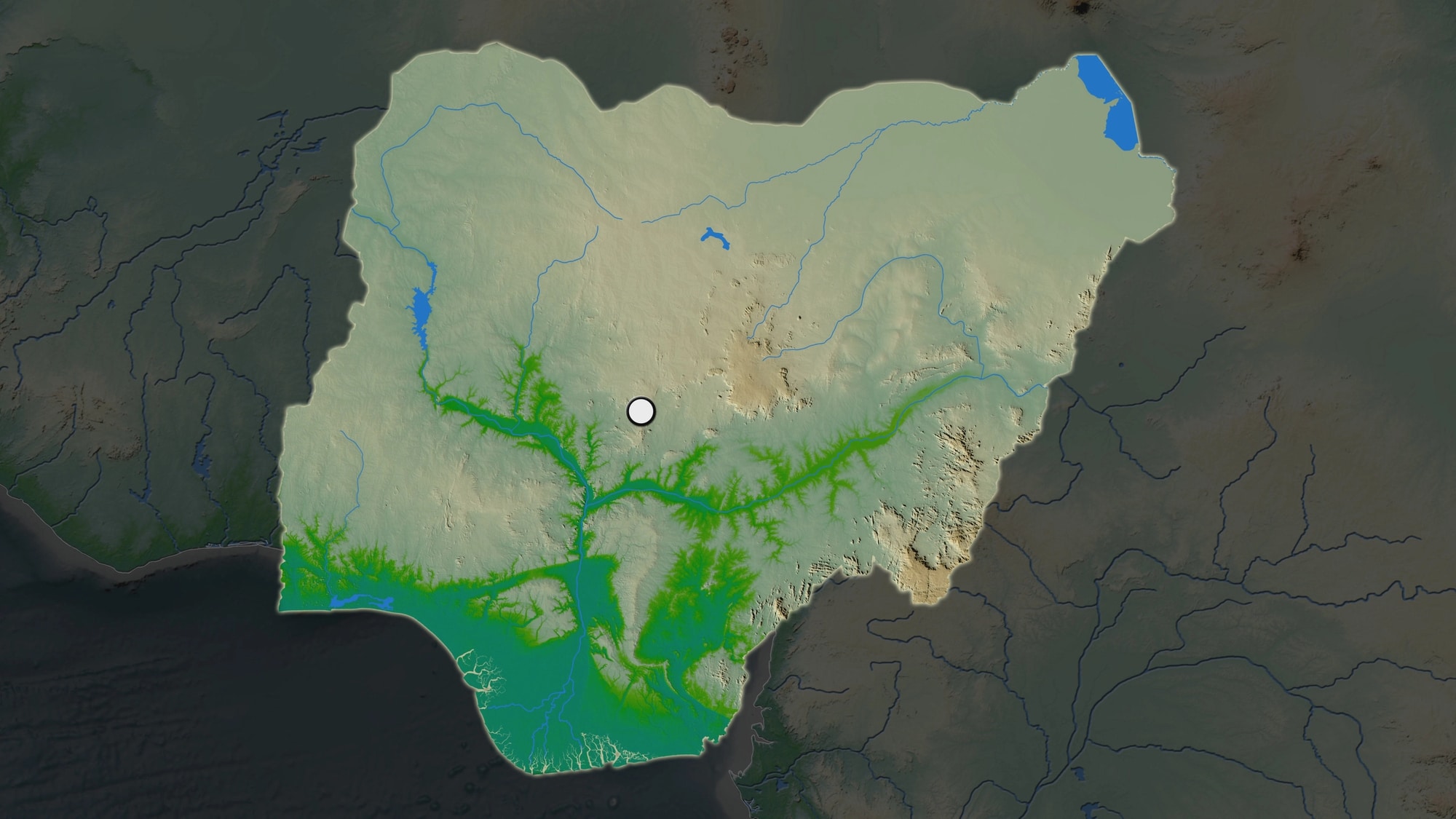
The Lake Chad region—spanning Nigeria, Niger, Chad, and Cameroon—has long been a theater of instability. At its core is the insurgency linked to Boko Haram, which emerged in northeastern Nigeria in the early 2000s. Open war against the government in Lagos commenced in 2009, and the group’s subsequent brutal campaign of violence, abductions, and territorial control drew global attention, particularly after the 2014 kidnapping of the Chibok schoolgirls. A major faction later pledged allegiance to ISIS, becoming the Islamic State West Africa Province (ISWAP). More adaptive and internationally connected than its parent organization, ISWAP has exploited porous borders, the islands of Lake Chad, and longstanding local grievances to sustain its cross-border insurgency.
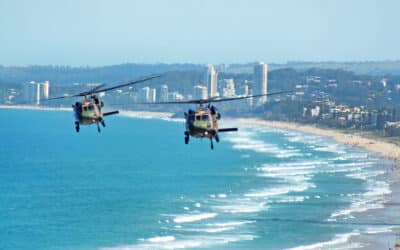
American involvement in the region dates back years through training programs, intelligence sharing, and logistical support for the Multinational Joint Task Force (MNJTF). But American involvement has gradually expanded. In December 2025, apparently on Christmas, the United States conducted airstrikes in northwestern Nigeria against suspected ISIS-linked militants, framed by the Trump administration as a response to violence against Christian communities. By May 2026, joint U.S.-Nigerian operations in the northeast included strikes that killed senior ISWAP leaders, including an alleged high-value target described as a global ISIS coordinator. According to AFRICOM, limited American troop deployments supported intelligence and advisory missions before a partial withdrawal in July 2026.
Such apparent ease and success belies the danger and pointlessness of such “deeper engagement.” Northeast Nigeria—the epicenter of the Boko Haram and ISWAP insurgency—has seen jihadist governance attempts, attacks on military installations, and repeated civilian kidnappings. Tactical progress is measured in destroyed camps and militant leaders eliminated. Yet insurgent organizations adapt, recruit locally, exploit weak governance, and continue operating across an immense and difficult terrain.
Elsewhere in Nigeria, where Washington is also involved, the security situation is also bleak but differs substantially in the details. The northwest is dominated by criminal banditry involving kidnapping for ransom, cattle rustling, and village raids, overlapping with the Islamic State Sahel Province (ISSP). Meanwhile, north-central Nigeria presents yet another challenge, where farmer-herder conflicts fueled by resource scarcity, ethnic tensions, and climate pressures resist military solutions altogether. Treating Nigeria as a single terrorism problem flattens these distinctions and invites strategic overreach.
Expanding similar involvement into Chad or Cameroon would encounter even greater complexity. Both countries face cross-border ISWAP incursions, but each possesses distinct political systems, military capabilities, ethnic dynamics, and internal security challenges. Cameroon contends with jihadist violence alongside domestic separatist pressures, while Chad remains a critical regional military actor despite its own political instability—to say nothing of Mali, Niger, or Burkina Faso. Although militants move fluidly across borders, local alliances, governance structures, and economic realities vary widely. A one-size-fits-all American approach would likely reproduce Nigeria’s frustrations on a broader regional scale.
And frustrations abound. After roughly seventeen years of Nigerian counterinsurgency efforts, supported to varying degrees by American training, intelligence, equipment, humanitarian assistance, and now direct military action, the conflict remains unresolved. Violence surged again in parts of 2025, producing hundreds of attacks, thousands of casualties, and continuing mass abductions. ISWAP and Boko Haram factions still assault military outposts, control rural areas, and exploit Lake Chad’s geography for logistics and sanctuary—the same is true of ISSP in the northwest. Nigerian forces continue to claim operational successes, yet resilient insurgent networks, steady recruitment and weapons flows, weak governance, corruption, and cycles of retaliation persist. Millions remain displaced, while humanitarian needs continue to grow.
This is not solely a failure of local partners. It reflects the inherent limitations of external military intervention in deeply rooted political and social conflicts. American assistance has at times degraded terrorist capabilities and produced valuable intelligence successes. But it has not addressed the underlying drivers of instability: endemic poverty, corruption, weak state institutions, climate-induced competition over shrinking resources, and youth radicalization, to say nothing of the problems of the colonial borders of places like Nigeria. Indeed, prolonged foreign military involvement can itself fuel narratives of outside interference, undermine local legitimacy, and create long-term dependencies.
The financial costs deserve equal scrutiny. Since Boko Haram emerged as an insurgency in the late 2000s, the United States has committed billions of dollars in humanitarian aid, security assistance, training, intelligence support, and military operations throughout Nigeria and the broader Lake Chad Basin. While the precise cost of military activities is difficult to isolate within AFRICOM’s broader budget, a conservative estimate places America’s total commitment at roughly $8 billion over the course of the conflict.
That figure understates the true cost. Opportunity costs matter. Had that same $8 billion instead been invested in U.S. Treasury securities earning a modest 2% annual return, it would today be worth approximately $11.2 billion, more than $3.2 billion in additional value generated without risking a single American service member, expanding another overseas military commitment—or accidentally killing innocent Nigerians. Those resources could have strengthened America’s own communities, reduced federal borrowing, or financed pressing domestic priorities. The real cost of intervention is not merely what is spent, but what those resources could have become had they remained invested in the American people.
And those who would opine that “it’s just a few billion,” are exactly the kind who eventually get the country $40 trillion dollars in debt, with no end in sight—as the old saw goes, “a billion here, a billion there, and pretty soon you’re talking about real money!”
Americans should also expect to hear a familiar refrain from the hawks in defense of these indefensible policies: if the United States doesn’t do it, China or Russia will fill the vacuum. This argument has become a reflexive feature of nearly every debate over overseas intervention. It shifts the burden of proof away from advocates of military expansion and onto skeptics, who are expected to explain why Washington should not intervene virtually everywhere. Yet influence is not an end in itself. The relevant question is whether American security or prosperity is materially improved by maintaining another open-ended military commitment in a region whose conflicts are fundamentally local in origin. If seventeen years of engagement have failed to stabilize even a single state in the Lake Chad Basin, policymakers should explain why simply extending the same strategy promises a different outcome.
Nor is the alternative simply abandonment. Regional institutions already exist, including the Multinational Joint Task Force and the Lake Chad Basin Commission. Durable security will depend far more on political reform, accountable governance, economic development, and African-led regional cooperation than on an expanding American military footprint. The United States can support these efforts diplomatically and economically without assuming responsibility for managing another seemingly endless counterinsurgency campaign.
Americans should urge restraint as pressure builds for expanded operations in Chad, Cameroon, or elsewhere in the region. History shows how advisory missions quietly evolve into raids, permanent bases, and open-ended commitments. Congress and the public should demand clear objectives, measurable definitions of success, credible exit strategies, and honest assessments of whether deeper involvement truly advances American national security or merely perpetuates the post-9/11 habit of searching for the next battlefield.
The Lake Chad Basin is unquestionably a humanitarian tragedy. It is also a cautionary tale about confusing military activity with strategic success. Seventeen years of American assistance, training, intelligence cooperation, and increasingly direct military action have not produced a decisive outcome. That record should make policymakers more skeptical, not more ambitious. Before another advisory mission quietly becomes another generation-long commitment, Americans should ask a simple question: if today’s strategy has not worked after nearly two decades, why should expanding it suddenly produce a different result?