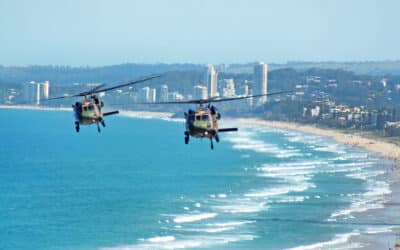

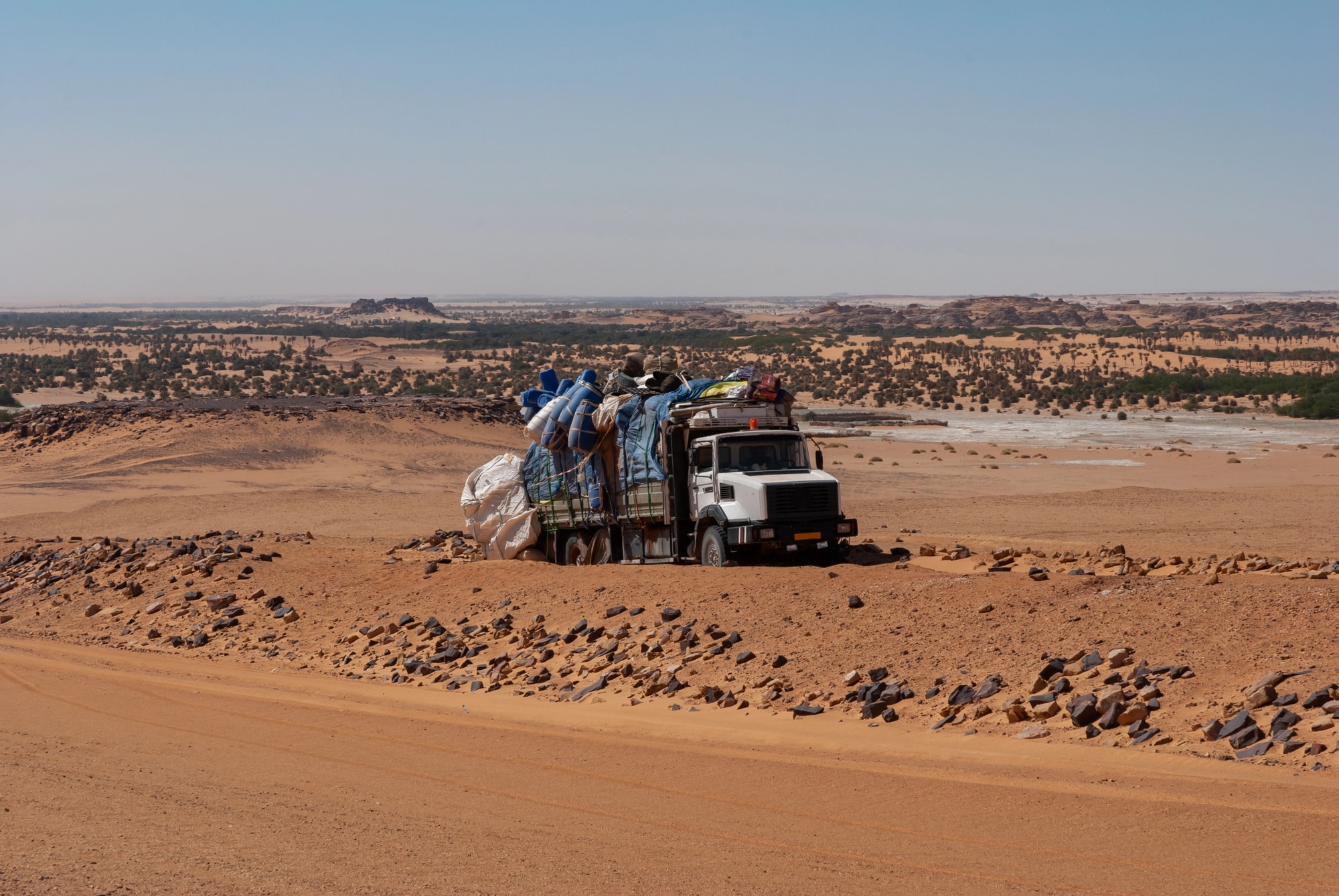
For nearly twenty-five years, Washington has quietly expanded America’s Global War on Terror across Africa. Today, U.S. military activities stretch from the Horn of Africa through the Sahel to the Atlantic coast, encompassing intelligence bases, drone operations, special operations deployments, partner-force training, logistical support, surveillance missions, and recurring multinational exercises.
Yet if the objective has been to produce a more secure region, the strategic picture is difficult to reconcile with the investment.
To understand why, begin with a map.
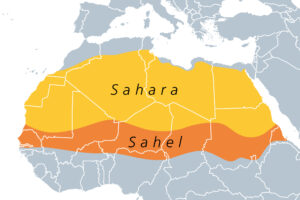 The central Sahel and Lake Chad Basin now form one of the world’s largest interconnected conflict systems. In eastern Mali, northern Burkina Faso, western Niger, and increasingly northwestern Nigeria, al-Qaeda’s Jama’at Nusrat al-Islam wal-Muslimin (JNIM) and the Islamic State Sahel Province (ISSP, formerly ISGS) compete for territory and influence. Around Lake Chad, in northeastern Nigeria, western Chad, southeastern Niger, and Cameroon’s Far North, Boko Haram and its offshoot, the Islamic State West Africa Province (ISWAP), continue their own brutal insurgency.
Northern Chad remains vulnerable to armed rebel movements operating near Libya, while Sudan’s catastrophic civil war spills instability westward, with credible reports from the United Nations, Amnesty International, and Human Rights Watch identifying eastern Chad as a transit corridor for aid to the RSF. To the east lie Ethiopia’s ready-to-explode internal tensions, Tigrayans and Amhara militias, to say nothing of neighboring Eritrea. And then there is Somalia, Washington’s decades-long struggle against al-Shabaab going as well as it always has, with multiple breakaway provinces, terrorist groups, and resistance from outlying states as the government in Mogadishu attempts to exert more control.
In short, this is not one war but an interconnected system of weak states, insurgencies, refugee flows, illicit trafficking, cross-border violence, and outside intervention.
While the roots of these conflicts are largely local—colonial borders that ignored ethnic realities, weak governance, corruption, underdevelopment, religious and communal divisions, and governments unable to project authority into remote regions—Washington’s needless interventions have repeatedly deepened them and, in some cases, transformed localized crises into regional ones.
No intervention better illustrates this than NATO’s 2011 war in Libya. Often overshadowed by the Iraq War and the broader post-9/11 Terror Wars, the Libya intervention ranks among the most consequential strategic blunders of the past quarter century. The overthrow of Muammar Gaddafi did not simply remove a dictator; it shattered one of North Africa’s strongest security states and unleashed consequences that continue to reverberate across the Sahel.
Thousands of Tuareg fighters who had served in Gaddafi’s security forces returned to Mali carrying heavy weapons looted from Libyan arsenals. Arms flowed across porous borders into the hands of insurgents, criminal networks, and jihadist organizations. Existing rebellions became more capable, new militant groups found fertile ground, and the Malian state rapidly lost control of much of its northern territory. With Washington’s backing, France intervened in 2013 to halt the jihadist advance, but what began as an effort to contain a crisis in northern Mali gradually evolved into a far broader Washington counterterrorism architecture stretching across the Sahel and Lake Chad Basin.
Libya dramatically intensified the region’s underlying political fractures, internationalized them, and gave Washington yet another justification for expanding military involvement. A continent already struggling with fragile institutions, a challenging topography, climate challenges, and unresolved political conflicts became the newest frontier in America’s seemingly endless Global War on Terror.
Washington established drone bases in Niger, intelligence hubs, advisory missions, logistical support, surveillance operations, recurring exercises such as Flintlock, and regional operations such as Juniper Shield. American aircraft transported French forces into Mali and refueled French combat aircraft while U.S. advisers worked alongside African partners across the region. It called its approach a “light footprint.”
A question that never seems to be raised is whether this architecture has produced strategic success.
The answer is unambiguous: after nearly twenty-five years, violence has spread geographically rather than contracted. Millions remain displaced. Millions more live under the authority of Boko Haram, ISWAP, JNIM, or various of the Islamic State’s affiliates. For all its pronouncements of tactical victories—this leader or that lieutenant killed—no strategic analysis of Washington’s activities can honestly furnish anything but a negative grade.
So why does the strategy continue?
The answer lies in institutional incentives and grand strategy.
Military organizations naturally recommend military solutions. The Pentagon excels at surveillance, intelligence, partner-force assistance, and kinetic operations. While these cannot create legitimate political institutions, reduce corruption, reconcile ethnic grievances, or build functioning states, they are readily available and impressive in appearance. Thus, they are what is reached for.
Public choice theory helps explain the remarkable continuity of the policy. For presidents, the incentives are obviously asymmetric. Ending a mission creates concentrated political risk: if violence later worsens, responsibility is obvious. Continuing an inherited mission distributes responsibility across bureaucracies and administrations. Meanwhile, combatant commands justify their budgets, contractors retain contracts, intelligence agencies preserve overseas access, and members of Congress rarely receive political rewards for arguing that America’s military footprint should shrink.
No conspiracy is required: people respond to incentives.
More recently, great-power competition has supplied an additional rationale. As Russia expanded its presence in Mali, Burkina Faso, and Niger through Wagner, and later Africa Corps, many argued that American withdrawal would simply hand Africa to Moscow.
Yet Russia’s experience illustrates the limits of external military sponsorship as much as America’s. Moscow largely replaced Western security assistance in parts of the central Sahel, but insurgent violence has continued to expand, suggesting that changing external patrons does not by itself resolve fundamentally local political crises.
For its part, China makes no attempt to follow in the wasteful and counterproductive example of either.
Africa is not a military problem waiting for an American, or other, military solution. It is a continent confronting extraordinarily complex political, ethnic, religious, and economic challenges that no foreign army is capable of engineering away.
Even if one believed Washington possessed the moral authority to intervene indefinitely, which I do not, it is difficult if not entirely impossible to identify evidence from the past quarter century suggesting that another round of intelligence sharing, advisory missions, drone surveillance, or special operations will finally succeed where previous iterations have not.
The burden of proof should no longer rest with those questioning intervention.
It should rest with those proposing yet another version of a strategy whose geographic reach has expanded far more consistently than its strategic success.