

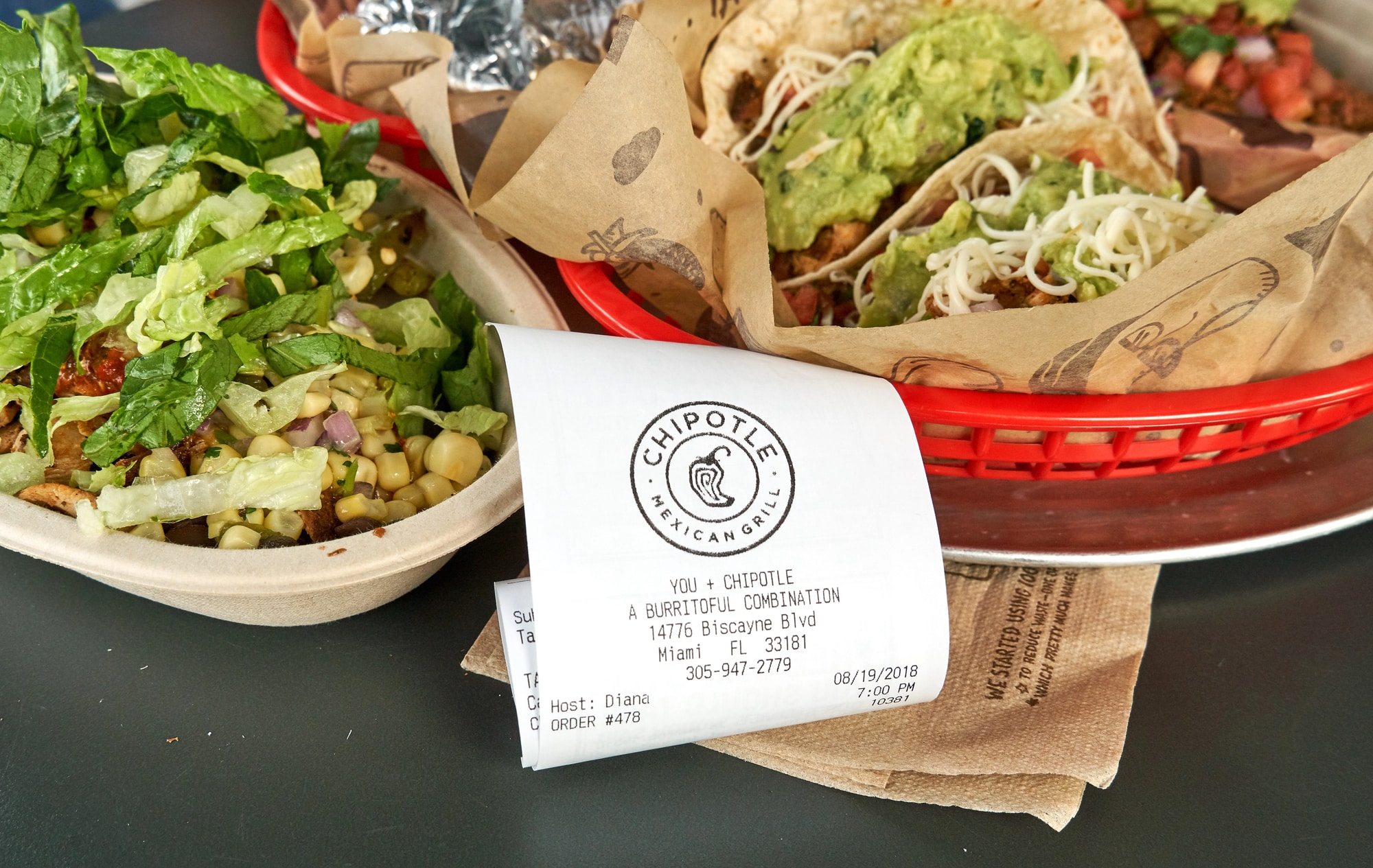
Grocery prices are insane. They’re still rising. Addressing this problem should be the number one priority of every elected leader. End the stupid foreign wars and focus on this issue. It’s one of the main reasons socialists are gaining power.
— Matt Walsh (@MattWalshBlog) August 3, 2026
If you want to know why the youth is suddenly so enamored with socialism, look how the self-proclaimed defenders of the free market have been lying to Zoomers with their preaching of what I’ve labeled the “libertarian prosperity gospel.”
While the “democratic socialists” are winning Democratic primaries across the nation while saying they sympathize with the youth’s economic woes in the unaffordability crisis (an unfortunate euphemism for inflation), prominent conservatives and libertarians are busy telling Millennials and Zoomers they’ve never had it so good, and to buy less avocado toast and lattes and more Ramen noodles. Congressman Dan Crenshaw (R-TX), who lost his primary, replied on August 5 about the “$20 burrito” social media surge:
Just hearing about this dumb $20 burrito debate so just thought I’d make the losers on social media angry before going to bed.
Stop whining, get a job, eat Ramen like the rest of us did in college, on a budget with 4 roommates.
The market doesn’t care what you think something…
— Dan Crenshaw (@DanCrenshawTX) August 6, 2026
Of course, not long ago Crenshaw was criticizing the Joe Biden administration for asking people to change their eating habits to overcome inflation.
Beltway libertarians have been only modestly more helpful to the rising costs of living in America during the $20 burrito controversy. Reason magazine pointed out that the cost of living is rising because of inflation. What they didn’t explain was that inflation is wage theft, and it leaves wages always struggling to keep up with inflation-caused price increases through the Cantillon Effect. Wages have not kept up with price increases for the majority of Americans when it comes to necessities like food and housing. Wages have just hit a new post-war all-time low as measured in percentage of GDP; wages have fallen to under 41.2% of GDP from their all-time high in 1970 of 51.8%. Today, that’s a $3.4 trillion difference in the $32.3 trillion U.S. economy. And it’s no coincidence that in 1971 President Richard Nixon closed the gold window, severing the dollar from gold and ushering in the age of inflation.
Reason magazine has been on the vanguard of the libertarian prosperity gospel, claiming that the kids today have it better than ever and should stop whining about prices. For example, last October Reason ran a column by John Stossel claiming that “Today, Americans actually spend a smaller percentage of our money on food, clothing, and housing than we used to, according to Bureau of Labor Statistics survey data.” I explained back then for the Libertarian Institute why every claim in that statement was, as Michael Malice has said of the legacy media, “accurate but deceptive” by using the Boomer generation as a baseline (data from before the United States went off the gold standard and the age of inflation began), by using “inflation adjustments” that undercount inflation compared to the CPI (instead using a “chained-CPI,” a GDP deflator or the PCI deflator), and by using “averages” rather than “medians.”
Stossel was able to imply—but not state explicitly—that American workers have enjoyed regular economic progress across every generation. The “chained CPI” used by Stossel’s source undercounts cumulative inflation at 30% less than the ordinary CPI-U since the United States left the gold standard in 1971. Stossel’s column was a textbook example of the last of the three kinds of lies Mark Twain once outlined: lies, damned lies, and statistics.
The reality is that after the incredible economic progress enjoyed by the Silent, Greatest, and Boomer generations under a gold standard, economic progress has been glacial for Gen X, Millennials, and Zoomers with a fiat dollar.
One of the few libertarians not tolerating any of the statistical lies is former Reagan administration Budget Director David Stockman. Stockman opposes state welfare and socialism, of course, but noted in a recent column that economic progress had largely halted for the younger generations because inflation has robbed working people and gifted that booty to the rich. Moreover, he has stressed this is a result of government policy, not natural free markets:
“…it’s an equally grave sin for agencies of the state to artificially tilt the scales on behalf of the already rich…Yet that is unmistakably the consequence of Keynesian monetary policy…There is absolutely no reason to believe that under a regime of sound money and honest financial markets that the gap between the tippy-top and bottom half of American households would have doubled.”
Young people struggling in the middle class and the working poor know they are being robbed, but they don’t understand who is robbing them. The left tells them it’s the rich capitalists who are robbing them while conservatives tell younger people to eat more Raman while buttressing the lie of ever-increasing prosperity for the middle class with more misleading statistics.
And then the rightwing wonders why they are losing the youth!
John Stossel’s claim that “Americans actually spend a smaller percentage of our money on food” is a myth, unless you baseline the data on the senior citizen set. The U.S. Department of Agriculture noted that while there was a swift decline of family spending on food until 1997, since then prices have roughly stabilized as a percentage of disposable family income.
While the Bureau of Labor Statistics has reported that price inflation for food has matched the overall Consumer Price Index for the past year of about 3.5%, real median wages still have not even recovered from 2020 peaks. Moreover, U.S. median wage increases have not kept up over the past year with the CPI. Young people are being financially squeezed by food prices today in a way their much better off parents and grandparents do not understand.
One enduring myth is that Zoomers are financially irresponsible because they just eat out at restaurants all the time. But a Bank of America survey found that Zoomers were much less likely to eat out than their Gen X and Millennial parents, and tend to spend less on food outside the home.
Chelsea Follett of the Cato Institute chronicled in the “Human Progress” project:
“In 1950, an average U.S. worker worked 1,984 hours a year, or about 38 hours a week. In 2015, an average American worker worked 1,767 hours, or about 34 hours a week. That means that the average U.S. worker had 217 more hours for leisure or other pursuits in 2015 than in 1950. That is about 9 days of extra time.”
The data by Follett is technically accurate, but leads to an absolutely false conclusion. Despite the above, American families are working an average of about an additional four hundred hours more every year than they were in 1950. That’s ten weeks more work full-time for one family member.
So how can one claim that young people both work more, and another claim that on average young people work less, both be true?
Here, by using “average worker” and baselining her data in the Boomer generation, Follett at Human Progress is not accounting for the massive change in family work structure with the rise of two-income families since 1950. As the peer-reviewed scholarly report “Time for Children, Trends in the Employment Patterns of Parents 1967-2009” explained:
“…approximately two-thirds of children were in homes with a nonworking parent in the late 1960s, only around one-third were at the beginning of the 21st century…Total annual parental work hours increased by 16 percent (from 2663 to 3092 hours) between 1967 and 2009 for the average child in a two-parent family and by 35 percent (938 to 1262 hours) for the average child in a single-parent family.”
What happened is that more women entered the workforce, often with “mother’s hours,” decreasing the “average” per worker, but increasing the overall recorded hours worked per family. If you have a community of four people working forty hours per week, and you add a mother from one of the four families to the workforce who works twenty hours per week, the average decreases from forty hours to 37.5 with that fifth worker, even though four out of five people are still working forty hours and the total hours worked among the four families has increased by twenty hours. The median worker, the person in the middle of the middle, doesn’t change: The median is forty hours per week in the first scenario with four people as well as in the scenario with the mom entering the workforce. Just because the average decreases doesn’t mean most people are working less. And in America today, young families are not working less, but more.
The U.S. Bureau of Labor Statistics has likewise reported in 2022 that individual Millennials work about the same number of hours as their Gen X parents. The idea that the younger generations aren’t making as much money because they’re lazy and not working is a myth spread by people peddling badly misleading statistics.
Voice of America News reported in November 2019:
“The size of the average house has more than doubled since the 1950s. In 2019, the average size of a new single-family home was 240 square meters (2,584 square feet), according to the National Association of Homebuilders…so perhaps it’s no surprise that houses built in the United States are among the most expansive on the planet.”
Again with the above, we see the employment of an “average” to create a distorted view of reality trying to explain away exorbitant housing prices as simply a result of bigger houses. But it’s highly misleading. And that’s not the only distortion being used to excuse the stratospheric housing prices.
The VOA report, based on the National Association of Homebuilders, is not counting all houses in America, just the newly-constructed ones that are single family homes (and not even new duplexes or multi-unit apartment buildings). Nobody denies there are a lot of new McMansions getting put up for the rich, who have done well for themselves in the economy in recent decades. But if you measure all houses, even the average shrinks to 32.3 1,809 sq. ft. The U.S. Census Bureau’s American Housing Survey says the median U.S. housing size is only 1,500 sq. ft. That’s probably 200 sq. ft. more than the median in 1970, about the size of one modest 13’x15’ bedroom. But that has almost nothing to do with the massive increases in housing prices over-and-above the Consumer Price Index since interest rates were massively suppressed by the Federal Reserve Bank in the year 2000.
The hard reality for young families today is that—despite having higher education levels than their parents and grandparents and working more hours—they are far less likely to own a home (more than 50% of people aged 25-35 owned their own home in 1980, down to 35% in 2024) and more likely to live with their parents and have a roommate than previous generations. A Federal Reserve Bank working paper demonstrated that every generation since the boomer generation has been more dependent upon their parents for living arrangements than the one before it.
And none of this is because the kids are buying $20 burritos.
Organizations like Human Progress are created by billionaires to brag about the progress of free market capitalism, and they dutifully concoct statistics to show how America’s free enterprise system is making everyone richer, even when America doesn’t really have that free market system any more.
Crony capitalism, where politically-favored corporations are subsidized by the government, is America’s current economic system. This crony economic system used to be called fascism.
The goal of these misleading statistics is to inspire ignorant reactionary dopes on the Internet to back Republicans in November, and to generate fear of “democratic socialism” under New York City Mayor Zohran Mandami. Government-owned industries, the definition of socialism, is at a global all-time low despite President Donald Trump having the federal government buy up stock in some thirty private companies (something Barack Obama couldn’t get done with an electoral mandate for a “public option” on health care).
These conservatives and libertarians don’t realize they are discrediting the free market today by telling the struggling middle class “That’s the way capitalism and markets work, with the rich getting all the gains.” They’re doing all the recruiting for the socialists.