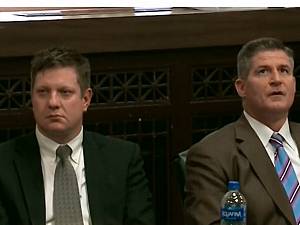
Chicago cop Jason Van Dyke was found guilty this afternoon of second-degree murder in the shooting death of Laquan McDonald in 2014. McDonald’s death was an abrupt encounter that tore at open wounds between Chicago’s government and its community.
At the time of the deadly encounter, McDonald, then 17, was high on PCP and armed with a small knife. Police had been called out on the evening of October 20, 2014, because a suspect (later identified as McDonald) was allegedly breaking into vehicles parked in a lot.
Van Dyke was a late arrival to the confrontation. Before he got there, McDonald had reportedly swung his knife at one witness, who had called 911. Then, as police attempted to corral McDonald while still in their vehicles, he stabbed one of the cars in the tire and hit it in the windshield with his knife.
McDonald eventually fled to a Burger King parking lot and then into a nearby street, which is where Van Dyke and his partner arrived. When Van Dyke exited his police car, he pulled out his gun and opened fire on McDonald almost immediately, though the other officers on the scene didn’t even have their guns drawn. He emptied his gun into McDonald, shooting him 16 times.