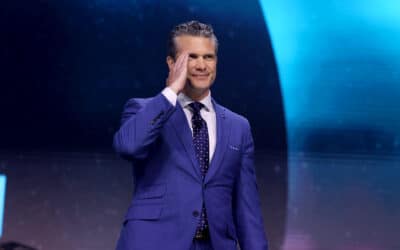

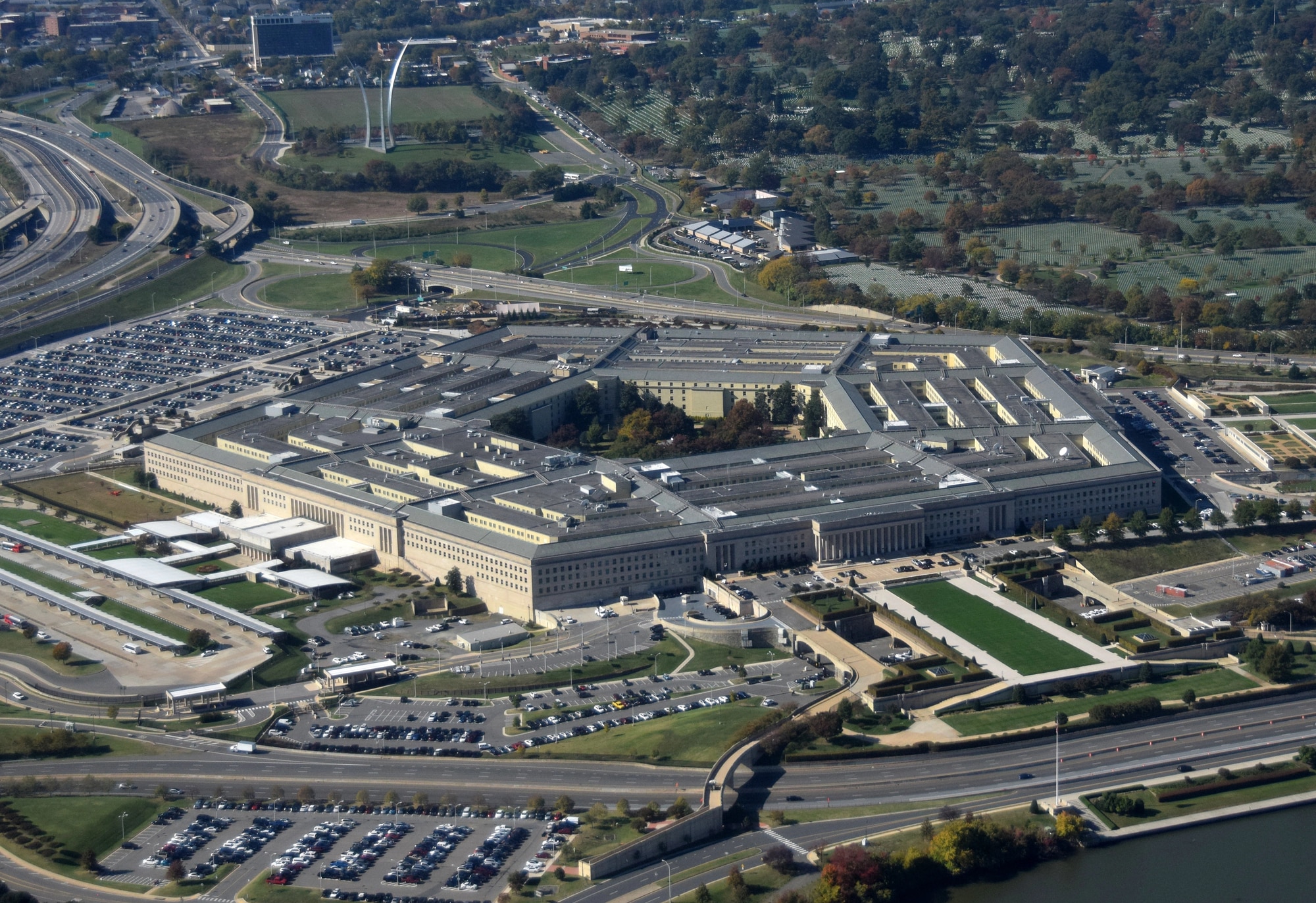
The Pentagon reached into its attic this month and pulled out one of the most romanticized names in American espionage. On November 12, the department announced that Secretary of War Pete Hegseth had signed a memorandum elevating the civilian office that oversees special operations and handing it a famous title. Hegseth celebrated in four words:
The OSS is back.
— Pete Hegseth (@PeteHegseth) November 12, 2026
The memo, dated November 2, does less than the breathless headlines suggest. It establishes no new spy agency and leaves the CIA untouched. Instead, it gives the existing Assistant Secretary of War for Special Operations and Low Intensity Conflict a secondary title as head of the Office of Strategic Services. The office will reportedly receive at least $45 million a year, seventy-five civilian positions and twenty-five military personnel. Aaron Mehta of Breaking Defense notes that the memo grants the office “Code 2” precedence, placing it on par with the military department secretaries. Hegseth wrote that “resourcing for SOF remains behind current operational and force posture,” and he declared, “It is time for a bold, foundational change.”
Derrick Anderson, a former Green Beret and Georgetown trained lawyer whom the Senate confirmed in December 2025, runs the elevated office. Making the name permanent and creating an Under Secretary of Strategic Services still requires Congressional approval. On November 17, Senator Ted Budd (R-NC) introduced the Office of Strategic Services Act of 2026, which would create that post and add two hundred positions. “By elevating special operations leadership to the same level as a military service,” Budd said, “my legislation would finally give operators a direct voice in advocating for operational needs.”
The branding exercise invites a closer look at the original agency in question. Franklin Roosevelt created the OSS by military order on June 13, 1942, according to the National Archives timeline, and placed it under the Joint Chiefs of Staff. Its director, William “Wild Bill” Donovan, was a Medal of Honor recipient and Wall Street lawyer who borrowed heavily from British intelligence and sabotage services. His agency fused research, espionage, counterintelligence, sabotage, propaganda and support for guerrillas behind enemy lines. CIA historian Michael Warner credits OSS scholars with having “virtually invented the discipline of nondepartmental strategic intelligence analysis.” In his official history, Warner adds, “About 7,500 OSS employees served overseas, and about 4,500 were women (with 900 of them serving in overseas postings).”
The roster reads like a Hollywood casting sheet. Julia Child, Arthur Schlesinger Jr., director John Ford, catcher Moe Berg and actor Sterling Hayden all served, as did four future CIA directors: Allen Dulles, Richard Helms, William Colby, and William Casey. That glamour explains the nostalgia. However, the historical record shows a darker side of the OSS that the nostalgia leaves out.
OSS Research and Development chief Stanley Lovell used narcotics agent George Hunter White to test concentrated marijuana. White dosed unwitting subjects, including New York gangster August Del Gracio, with a cigarette laced with the extract. Journalist John Marks later documented that CIA chemist Sidney Gottlieb recruited White for MKUltra, where White surreptitiously dosed many of his victims with LSD, according to the National Security Archive.
Per biographer Nicholas Dawidoff, Berg attended a December 18, 1944 lecture by German physicist Werner Heisenberg in Zurich carrying a pistol, under orders to kill him if he heard “indisputable evidence that a German bomb was near completion.” The Michigan Today account says Donovan gave that order through Samuel Goudsmit. Heisenberg gave no such indication, so Berg’s pistol stayed in his pocket. Meanwhile, Soviet agents penetrated the organization, including Donovan’s own assistant, Duncan Lee, whom the Venona decrypts and courier Elizabeth Bentley identified as a Soviet source.
The OSS alumni carried those habits into the Cold War. As CIA director, Dulles oversaw PBSuccess, the 1954 operation that toppled Guatemala’s President Jacobo Árbenz after U.S. President Dwight Eisenhower authorized it in August 1953. OSS veteran Kermit Roosevelt Jr. directed the 1953 CIA operation against Iranian Prime Minister Mohammad Mossadegh, in collaboration with Britain.
William Colby later headed the Vietnam “pacification” effort from 1968 to 1971, which included the Phoenix program he supervised. In prepared testimony, Colby put the number of suspected members of the Vietcong infrastructure killed under Phoenix from 1968 through May 1971 at 20,587. Although those operations belonged to the CIA, not the wartime OSS, they grew from the same faith that clever men operating in the shadows could destabilize foreign countries on the cheap.
The irony is that Washington once understood the danger of letting shadowy intelligence agencies accumulate too much power. As the war ended, Walter Wolf III writes, “The Army and the FBI in particular organized a PR campaign, leaking false allegations” that the OSS would gain power at home, and one reporter branded it “the American Gestapo.” President Harry Truman told the Bureau of the Budget to proceed with “the dissolution of Donovan’s outfit even if Donovan did not like it,” and his Executive Order 9621 terminated the agency on October 1, 1945. Its remnants were eventually incorporated into the CIA in 1947. Warner concludes that “In CIA and USSOCOM, the US Government fulfilled General Donovan’s vision.”
The OSS’s legacy on American intelligence operations should give policymakers pause. The Deer Team that trained about fifty of Ho Chi Minh’s guerrillas to fight Japan in 1945 armed a future adversary. The coup in Tehran fed decades of blowback, and the United States has now fought a war against Iran since February 2026. That conflict may be turning into a frozen conflict of naval blockade, sanctions and limited U.S. strikes.
No amount of retro insignia, expanded Pentagon billets, or covert bravado can substitute for a coherent grand strategy. Rather than indulging fantasies of secret agents and special operators solving deep political disputes from the shadows, the United States must embrace a restrained foreign policy grounded in realism and non-intervention.