
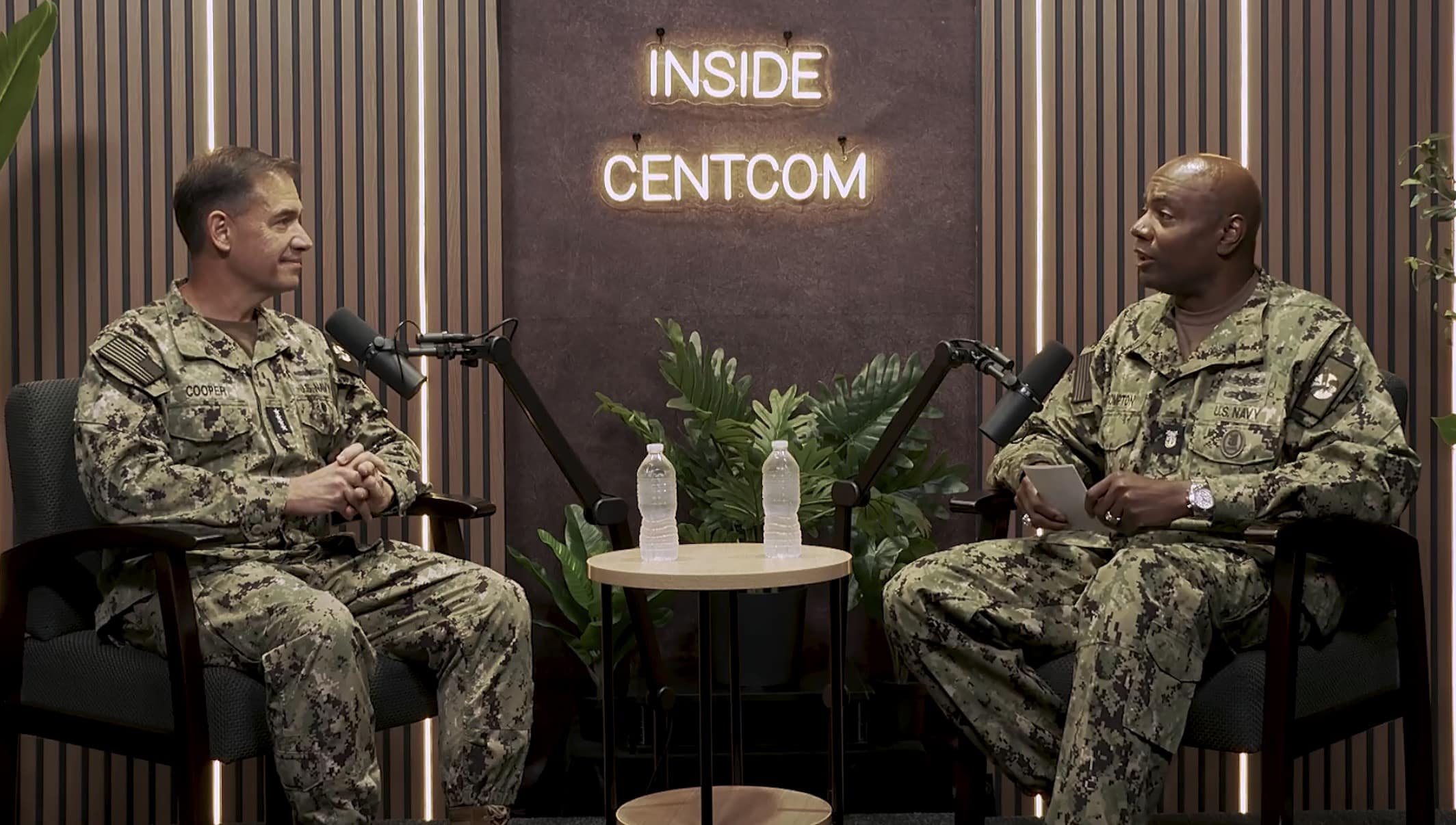
Stiff, awkward, low-energy—no, I’m not Donald Trump describing Jeb Bush. I’m talking about the recently released INSIDE CENTCOM podcast featuring Fleet Master Chief Lateef Compton and Admiral Brad Cooper.
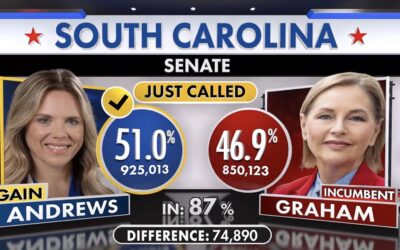
After the Republicans lost both the U.S. House and Senate on November 3, Vice President J.D. Vance outlined the biggest reason the Republicans lost: “The reason we lost is the war. If you’d like to argue it was worth it, that losing the Senate for the next 6 years was worth it, then do so.”
In a piece from Reuters that discusses Vance’s post-motem, it also notes how Cooper had presented options to restart military operations in Iran just last week.
A day after Vance’s statement on Twitter/X, the first episode of INSIDE CENTCOM was released and amongst discussions of free-throw competitions, favorite NFL teams, and French fry stealing there is one big topic largely missing: discussions on the war in Iran.
What makes the situation all the more stunning is that CENTCOM previously produced a podcast, CENTCAST, between January and June 2023. Even though it only produced fourteen episodes, three episodes were focused on Iran—including the Iran hostage crisis, the Tanker War, and missed diplomatic opportunities—and even the dangers of potential war with the country.
One of the most enlightening episodes was released on March 28, 2023, entitled “Iran-US Relations, 1988–1992, A Missed Opportunity.”
In just the first four minutes, podcast guest and author John Ghazvinian describes Ayatollah Ali Khamenei as “pragmatic” and a “political operator,” and President Akbar Hashemi Rafsanjani as someone being “enamored with the idea of improving relations with the United States.”
A description of the episode on CENTCOM’s website outlines how “John describes what could have been, what the Middle East might look like today had the US administration brought Iran in from the cold, and how both sides viewed a possible diplomatic reengagement during a critical period.”
Just three years ago, official CENTCOM podcasts were discussing the dangers of military escalation between Iran and the United States in an episode that is very reminiscent of the 2007 Trita Parsi book Treacherous Alliance: The Secret Dealings of Israel, Iran, and the United States. So what changed between then and now?
Another question is, who does this appeal to? As Admiral Brad Cooper describes having “never met a French fry I didn’t like,” the United States is embroiled in the most unpopular war in American history.
According to a polling analysis published by Responsible Statecraft, no war had lower starting support than the Iranian conflict, not even the Vietnam war.
Current statistics do not reflect overwhelming support: 65% of Americans disapproved of Trump’s handling of military action in Iran, twenty-three Americans have died with 865 wounded, and the estimated cost of war is reaching $47 billion.
Ordinary Iranians have felt the pain too. Through the April 8 ceasefire, roughly 1,460 Iranian civilians had been killed. Between February 28 and March 23, American and Israeli strikes had also damaged sixty hospitals or medical centers, forty-four schools, and 129 residential buildings.
Of course, there is also the strike on the school in Minab during the opening hours of Operation Epic Fury which killed 156 people, including 120 children, according to Iranian authorities. Footage from the adjacent military compound showed what appeared to be a U.S.-manufactured Tomahawk missile, as the Trump administration has yet to publicly acknowledge responsibility for the incident.
The last publicly listed media conference call with Admiral Cooper was on May 4, 2026 and he also testified before the Senate Armed Services Committee on May 14. Instead of facing questions from journalists and the American public, we are now greeted with friendly podcasts about the Cincinnati Bengals and how Cooper would like to be the owner of a bar on the beach.
Some have argued the podcast circuit is what propelled Donald Trump to victory in the 2024 election after appearing on The Joe Rogan Experience and Theo Von’s show, among others.
In 2026, podcasts may also become a lasting memory of the Trump administration—and not for the better. While Americans seek answers about the war in Iran, the admiral overseeing it is discussing French fries and his favorite football team.
Podcasts may have helped Trump win the White House, but they cannot explain away the consequences of a war that Americans never wanted in the first place.