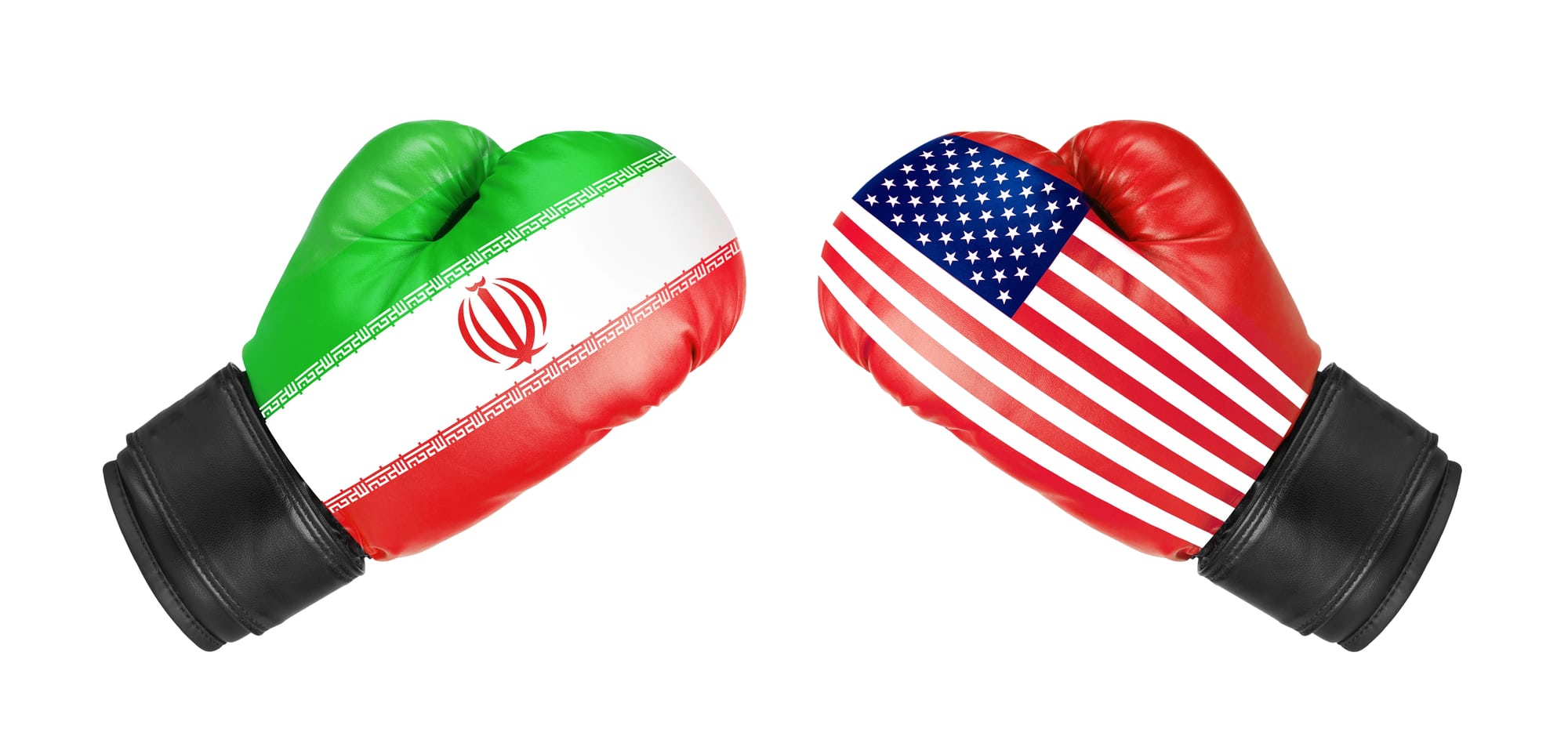
Iran has an “inalienable right” to enrich uranium for civilian use, Iran’s foreign minister, Abbas Araghchi, told the U.S. delegation with frustration in the final round of talks before the bombs started to fall on Iran.
And the United States has an “inalienable right” to stop you, Trump’s special envoy Steve Witkoff answered with hubris.
Araghchi is right; Witkoff is wrong. Though the U.S. and its partners have presented the public with a war that was caused by Iran’s refusal to compromise on its civilian nuclear program, as a signatory to the Nuclear Non-Proliferation Treaty, Iran has “the inalienable right to a civilian program that uses nuclear energy for peaceful purposes.”
That Iran was enriching uranium for peaceful purposes has been verified by the multiple consecutive International Atomic Energy Agency (IAEA) reports that followed the JCPOA nuclear agreement with Iran and by the 2022 U.S. Department of Defense Nuclear Posture Review and, most recently, by the 2025 U.S. Annual Threat Assessment.
Despite their “inalienable right,” Iran made the major concession of negotiating significant limitations on its nuclear program that could have met U.S. redlines. Instead, the negotiations were interrupted by bombs falling on Iran in an attack that was neither necessitated by the immediate need to defend against an attack nor sanctioned by the Security Council. Negotiations on Iran’s legal nuclear program were answered by an illegal war.
Though the United States seems to have been willing to negotiate if negotiation meant Iran capitulating to its demands, they seem to have been unwilling to negotiate, not only on guarantees against a nuclear weapons program, but on the demand that Iran give up its enrichment program entirely. It was the American demand that Iran could not enrich uranium to any level for the next ten years that finally triggered Araghchi’s frustrated cry that Iran has the “inalienable right” to enrich uranium for civilian use.
Iran offered the Americans a compromise that could have been received by the U.S. as, what former Iranian nuclear negotiator and Ambassador Seyed Hossein Mousavian called in an email correspondence, “a historical JCPOA PLUS deal.” But Washington said no.
There is a long tradition of the U.S. passing up on peace plans and saying no, including in Afghanistan, Iraq, Libya, Syria and Ukraine.
There were reportedly three areas in which Iran was unwilling to sufficiently capitulate to American demands. The first was zero enrichment. The U.S. demanded no enrichment for the next ten years. Axios reports that, in its place, the “U.S. offered Iran free nuclear fuel for a civilian nuclear program.” When Iran refused, the U.S. said it was “a big tell.”
Had the U.S. sent diplomats with a historical understanding of the issue they were negotiating, they would have known that there were other interpretations. Iran has always made clear that they would not accept a situation like the one offered because of bitter historical experience.
On more than one occasion in the past, when Iran relied on others to provide its enriched uranium, the U.S. exercised its power to block it and deprive Iran of enriched uranium. When Iran began its nuclear program, they were only enriching uranium to the 3.5% required by its power reactors to produce energy. For the 19.5% enriched uranium needed for medical isotopes for imaging and treating cancer and kidney disease, Iran relied on an agreement with Argentina to supply it. When the uranium was used up, Iran requested that the IAEA help it purchase more under that body’s supervision, which Iran has the right to do as a signatory to the NPT. But the United States and Europe put up roadblocks and prevented the purchase.
Two decades later, Iran again agreed in principle to a nuclear fuel swap that would send their low enriched uranium out of country to be returned as 19.5% enriched uranium for medical use. But it was a trick. The U.S. wanted all Iran’s uranium to be sent out at once before any uranium would be sent back much later. The U.S. was trying to empty Iran of its uranium. When Iran offered a counterproposal of sending out smaller batches of low enriched uranium while receiving simultaneous small batches of uranium for medicinal use, the U.S. ignored the offer and the deal died.
When, one more time, Brazil and Turkey tried to broker a deal with similar simultaneous swaps, Iran agreed, but the U.S. ignored it and reprimanded Brazil and Turkey. On another occasion, when Iran turned to France for enriched uranium, the U.S. pressured them not to provide it.
Iran has learned that relying on others to provide enriched uranium leaves them vulnerable to the United States cutting them off and leaving them with none. Hence the vow that Iran would never again yield their right to enrich their own uranium for civilian purposes.
But Iran was willing to negotiate a deal that would ensure that there could never be a path for that low enriched uranium to become the highly enriched 85% uranium needed for a nuclear weapon. They offered layered options. Mousavian catalogued them for me:
“Iran had accepted coercion verification by the IAEA, to resolve all technical ambiguities, zero stockpile, dilute high-level enrichment, reduce enrichment level to below 5%, suspend the enrichment for some years and even to go for a regional consortium.”
There were three options on the table. In the first, Iran was willing to put itself under maximum inspections, to convert its stockpile of 60% enriched uranium, and cap its enrichment at the 3.67% needed for a civilian energy program.
In the second, Iran was willing to limit their role in the enrichment cycle by becoming a member of a nuclear enrichment consortium. The consortium could include Saudi Arabia, the United Arab Emirates, and perhaps others. Enrichment would be capped at the 3.67% required for civilian use and monitored by the IAEA. Most importantly, a consortium would allow Iran to enrich uranium but deny it access to the full enrichment process by distributing various roles in the process across different member states.
There are also reports that Iran proposed suspending enrichment for three to five years and then joining the regional consortium.
In the most recent, according to Oman’s foreign minister, Badr Albusaidi, who was mediating the most recent talks between Iran and the United States, Iran “agreed not to stockpile excess nuclear material that could be used to build a bomb.” Since Iran would use all of its low enriched uranium for civilian purposes, leaving none to stockpile for any further use, that would ensure “that Iran will never ever have the nuclear material that will create a bomb.” Albusaidi clarified that that meant “there would be zero accumulation, zero stockpiling and full verification…by the IAEA.”
The pathway to a bomb was closed and a deal was “within our reach” when the bombs fell on Iran.
The other two areas of Iranian intransigence were over their program of military national defense. The United States insisted that Iran negotiate on its short and intermediate range ballistic missile program, but Iran refused. “We cannot continue to live in a world where these people not only possess missiles but the ability to make 100 of them a month,” an American official told Axios. Iran’s missiles are crucial to its national defense and possessing them is entirely legal. Every nation has a defense program, and at least thirty-one, including some that are potentially hostile to Iran, include ballistic missiles in that program, including the U.S. and several of its allies and partners, including Bahrain, Saudi Arabia, Egypt, the United Arab Emirates, the United Kingdom, France, Greece, Israel, Poland, Romania, Turkey, and Ukraine. There is no legal argument for compelling Iran to end its missile program and no legal reason to go to war to force them to do so.
The final reason was Iran’s refusal to address its network of proxies. Stripping Iran of its ballistic missiles and its partners is stripping Iran of any ability to defend itself. And, again, there is nothing illegal in Iran supporting regional partners. And they are not the only one, as the training and financing of the Mujahideen-e-Khalq (MEK), a dissident Iranian opposition group, shows, to support proxy forces.
“A peace deal is within our reach if we just allow diplomacy the space it needs to get there,” the Omani foreign minister said. But the United States did not allow the diplomatic space and opted, instead, for a war that violates the United Nations charter and hastens the death of international law.