
Modern wars have a peculiar discipline: they are carefully organized to happen far from the capitals that authorize them. Decision-making remains insulated, prosperity remains intact, and political life continues uninterrupted—while destruction, instability, and escalation are exported to allied territory. The war in Ukraine follows this pattern with brutal clarity.
Europe is not watching this war from a safe distance. It is hosting it. Economically, politically, strategically, Europe is the space where risk accumulates and consequences materialize. Critical energy infrastructure “rupture” here. Industries relocate from here. Social cohesion strains here. Meanwhile, the strategic center of gravity that frames the conflict remains geographically and materially protected. This is a deliberate feature of American alliance design.
For decades, Europeans were encouraged to believe that integration into NATO meant security, and that strategic dependency was the price of stability. Ukraine exposes the inversion of that bargain. Europe’s role is not primarily to be defended, but to serve as the terrain on which confrontations unfold—close enough to matter, distant enough to be expendable. The war does not shield Europe from danger; it situates Europe inside it.
This is a realist diagnosis. Power operates through geography, leverage, and asymmetry. The Ukraine war demonstrates that Europe remains structurally positioned as a buffer between competing great powers—absorbing shocks, financing escalation, and internalizing costs while strategic insulation is maintained elsewhere. What is presented as collective defense increasingly resembles collective exposure.
The question this war forces upon Europe is therefore not whether Ukraine can be defended indefinitely, but whether Europe can continue to exist as a strategic actor at all. The conflict marks a threshold: the moment when Europe’s long-standing belief in delegated security collides with the material reality of delegated risk. And that collision suggests an uncomfortable conclusion—the war in Ukraine may be the closing chapter of its strategic autonomy.
Every major war has a visible trigger and an invisible logic. The invasion of Ukraine is routinely framed through the first, borders crossed, norms violated, red lines breached. But those explanations describe events, not structure. To understand why this war unfolded where it did, why it escalated when it did, and why Europe now bears costs that far exceed its strategic agency, one must return to an older, colder framework: geography as power.
At the beginning of the twentieth century, British geographer Halford Mackinder articulated what remains one of the most durable insights in strategic thought: global power does not primarily flow from ideology or morality, but from control over space, resources, and connectivity. His “Heartland” theory argued that the vast Eurasian landmass—the “World-Island”—was the decisive prize of global politics. Whoever dominated its core would possess unmatched strategic depth, industrial capacity, and resilience against maritime blockade.
Mackinder’s formulation is often treated today as a historical curiosity, invoked in think-tank seminars and then politely set aside. In practice, it has never been abandoned. It has merely been operationalised under different names.
From the perspective of U.S. grand strategy, the single most destabilizing outcome is not a a self-sufficient Eurasia. A continent-scale system combining European industrial capacity, Russian raw materials, and integrated transport corridors would be able to operate largely outside U.S. economic and security leverage. It would not need American energy, American capital markets, or American military protection. It could price commodities independently, trade in alternative currencies, and develop security architectures not subordinated to Washington.
This is the strategic nightmare that has shaped U.S. policy—consistently and across administrations—since 1945.
Germany occupies the pivotal position in this logic. It sits at the western edge of the Eurasian landmass, possesses world-class industrial and technological capacity, and historically oscillated between Atlantic alignment and eastern integration. When connected economically to Russia’s energy and resources, Germany becomes the anchor of a continental system that can neither be coerced easily nor isolated cheaply.
Preventing that outcome has been a constant objective. It predates NATO expansion. It predates the European Union. It even predates the Cold War in its current form. What changes over time are the instruments, not the goal.
The enforcement of the Heartland constraint does not require overt domination. It relies on layered mechanisms that appear, on the surface, benign or even protective.
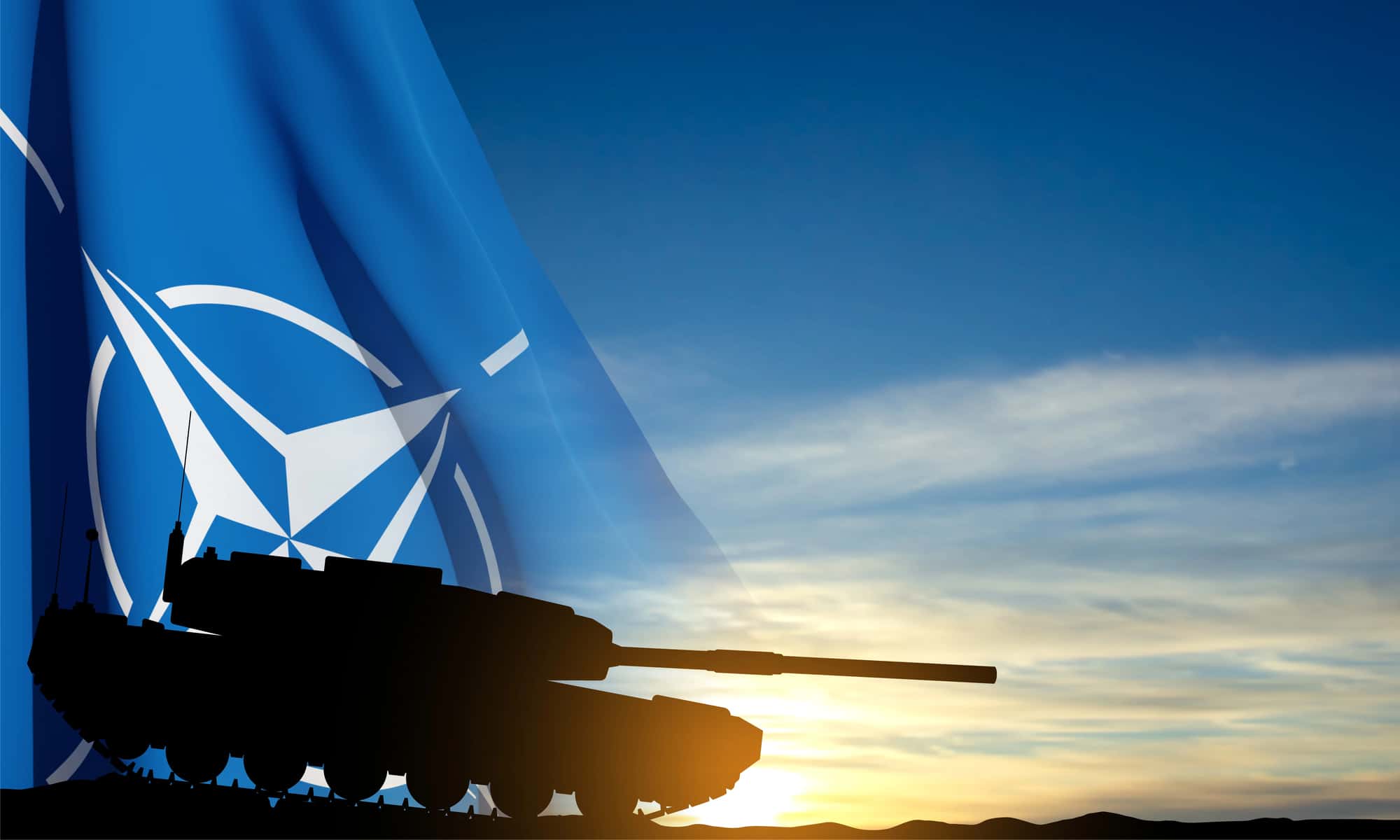
The first layer is security architecture. NATO’s expansion eastward is routinely presented as a defensive response to Russian aggression, real or imagined. Structurally, it does something else: it locks Central and Eastern Europe into a security framework in which strategic decisions are externalized. Military planning, escalation thresholds, and deterrence posture are set in Washington, not Berlin, Paris, or Brussels. Europe hosts the risk; the United States manages the ladder of escalation.
The second layer is economic alignment. European integration was encouraged so long as it remained intra-European and Atlantic-compatible. What was never tolerated was integration that altered Europe’s external dependencies. Energy is the clearest example. Russian gas was not merely cheap; it was structurally stabilizing for European industry. It enabled long-term planning, competitive manufacturing, and a degree of strategic autonomy. That made it unacceptable for American strategists.
The third layer is political disciplining. European leaders who framed security in continental rather than Atlantic terms were marginalized, pressured, or replaced. Strategic autonomy was permitted as rhetoric, never as policy. When France spoke of a Europe “from Lisbon to Vladivostok,” it was indulged as poetry, not allowed as practice.
Ukraine sits at the intersection of all three layers. It is not only a border state; it is a hinge. Its alignment determines whether Europe’s eastern frontier is a bridge or a barrier. As long as Ukraine remained neutral or economically linked east and west, it preserved the possibility of Eurasian integration. Once it was locked into a zero-sum alignment, that possibility vanished.
This is why Ukraine could never be treated as Finland was during the Cold War. Neutrality would have been stabilizing. Stability, in this context, was the problem.
The destruction of the Nord Stream pipelines should be understood within this framework. The public debate obsessively fixated on attribution—who placed the explosives, who authorized the operation, who covered it up. Strategically, these questions are secondary. What matters is that Europe’s most important energy corridor was eliminated in a way that made reversal politically and materially impossible.
The pipelines embodied the very integration the Heartland logic forbids: German industry directly linked to Russian resources through infrastructure outside U.S. control. Their removal locked Europe into higher-cost energy markets, accelerated industrial relocation, and ensured long-term dependency on American NLG suppliers.
The absence of a European response—not only retaliation, but even a serious investigation untainted by obstruction or evidence suppression—was more than hesitation. It was an acknowledgment of hierarchy. In any political order where the destruction of critical infrastructure triggers no sovereign reaction, the relationship cannot credibly be described as a partnership. It is an administered dependency—a managed vassalage disguised as alliance.
The Ukraine war did not create Europe’s strategic dependency. It revealed its depth.
Economically, Europe has absorbed shocks that would be politically intolerable in the United States: energy inflation, industrial decline, and fiscal strain from sustained military support. Socially, it has normalized a permanent state of insecurity, with leaders openly discussing sacrifice while offering no credible pathway to resolution. Politically, it has narrowed the space for dissent, framing strategic questions as moral tests, or outright sanctioning critical voices like Jaques Baud, a former intelligence analyst in the Swiss army.
Most importantly, Europe has surrendered authorship over the war’s trajectory. Escalation decisions, red lines, and end-state definitions are shaped in the United States. European states are expected to align, finance, and endure. This it is role allocation, noting more.
From a realist perspective, the outcome is predictable. Europe emerges more militarized but less sovereign, more exposed but less influential. Germany remains constrained. Eurasian integration is rendered politically radioactive for a generation.
Europe did not lose a war in Ukraine. It lost something quieter and more final: the ability to decide what wars it would risk, on what terms, and for what ends. No treaty recorded this loss. No summit declared it. It occurred through alignment, compliance, and silence—through a sequence of decisions that were individually defensible and collectively irreversible.
The war in Ukraine functioned as disclosure, not transformation—it laid bare an order that had been in place all along.
Geography set the frame. Europe occupies the western edge of the Eurasian landmass, adjacent to the world’s largest resource base and historically vulnerable to great-power confrontation. That reality never disappeared. It was merely managed—first through Cold War structures, later through the illusion that integration had replaced power politics.
Infrastructure made the logic concrete. The destruction of Nord Stream was a strategic foreclosure. It removed the material basis for European autonomy at the moment it mattered most. With one act, the option of a continent anchored in industrial self-sufficiency and energy predictability was eliminated. Europe absorbed the loss without retaliation, confirming that control over its economic arteries no longer resided within its own political system, but on the other side of the Atlantic.
Politics completed the transformation. European elites escalated rhetorically and institutionally while their societies remained unconvinced. War was normalized without consent, sacrifice demanded without authorship. The result was quiet withdrawal—a legitimacy gap that widened as the costs mounted and the horizon remained undefined. European democracies entered a condition of strategic exposure without the unifying force of a democratic mandate.
Law, once Europe’s signature instrument, did not constrain this process. It was reshaped to serve it. Norms were absolutized or ignored, depending on alignment. Negotiation became suspect. Consistency gave way to expedience. In abandoning its legalist posture, Europe surrendered the last domain in which it exercised influence disproportionate to its raw power.
None of this required a conspiracy. It required only continuity. The same strategic imperatives that shaped the post-war Atlantic order—preventing Eurasian integration, constraining German autonomy, insulating American power from continental risk, in other words, “keep America in, Russia out and Germany down”—operated as they always have. Ukraine was the catalyst, not the cause. It was the moment when latent structures asserted themselves openly.
What remains is a continent that hosts escalation without commanding it, finances confrontation without defining victory, and internalizes costs without shaping outcomes. It continues to speak the language of values while operating within a hierarchy that no longer requires its consent.
This is why Ukraine functions as a death knell rather than a turning point. Not because Europe collapses, but because it accepts a role from which there is no easy return. Strategic autonomy does not vanish in a single moment. It erodes until it becomes unthinkable.
When historians reconstruct this period, they may note that Europe did not fall apart under pressure. It held together. It aligned. It endured. And in doing so, it quietly exited the stage as an author of its own destiny.
The war will end. Europe’s dependence may not.