
The United States can conjure trillions of dollars from thin air through the magic of the Federal Reserve’s printing press. What it cannot conjure into existence are the missiles, interceptors, and precision munitions that modern warfare devours at a pace Washington never prepared for. The Iran conflict has laid bare a truth that defense analysts have warned about for years. America’s military industrial base has atrophied into a hollow shell incapable of sustaining the imperial ambitions that politicians in both parties continue to pursue.
Operation Epic Fury burned through roughly $3.7 billion in just the first one hundred hours of combat, nearly $900 million per day. By day six, the bill had climbed to $11.3 billion, the vast majority spent on munitions replacement that was never budgeted. These are not abstractions on a spreadsheet. They represent a physical reality that no amount of deficit spending can overcome. The factories capable of producing these weapons operate at a trickle compared to what the military demands.
Under Secretary of Defense for Acquisition and Sustainment Michael Duffey acknowledged the depth of the problem at a March 4, 2026, hearing before the House Armed Services Committee titled “Speed to Scale: Revitalizing the Defense Industrial Base”:
“Over the last thirty years, our defense industrial base consolidated and atrophied. Skilled talent left the workforce…excessive regulation pushed small businesses, startups, and private capital out of the defense business, and inconsistent demand signals discouraged prime contractors from investing in production capacity.”
Three decades of post-Cold War consolidation shrank the prime contractor pool from dozens of aerospace and defense companies down to a handful of giants. Sub-tier supplier diversity evaporated. Contractors learned to maintain only enough production capacity to fill existing government orders and nothing more. The result is a defense industrial base configured for peacetime that now faces the demands of potential multi-front warfare.
The warnings came years ago from those paying attention. Seth Jones of the Center for Strategic and International Studies wrote in his landmark 2023 report “Empty Bins in a Wartime Environment” that “the U.S. defense industrial base is not adequately prepared for the international security environment that now exists. The United States would likely run out of some munitions, such as long-range, precision-guided munitions, in less than one week in a Taiwan Strait conflict.”
The Brookings Institute cautioned that “surge capacity is limited, and bottlenecks, sometimes hidden ones, could seriously constrict the nation’s ability to build lots more weapons quickly in a time of conflict.”
The Center for a New American Security’s Becca Wasser and Philip Sheers warned in their April 2025 report “From Production Lines to Front Lines” of a chasm “between defense strategy and defense industrial reality” and that “decades of underinvestment, slow production timelines, and unpredictable demand signals have left defense manufacturing struggling to deliver at the speed and scale required for 21st-century warfare.”
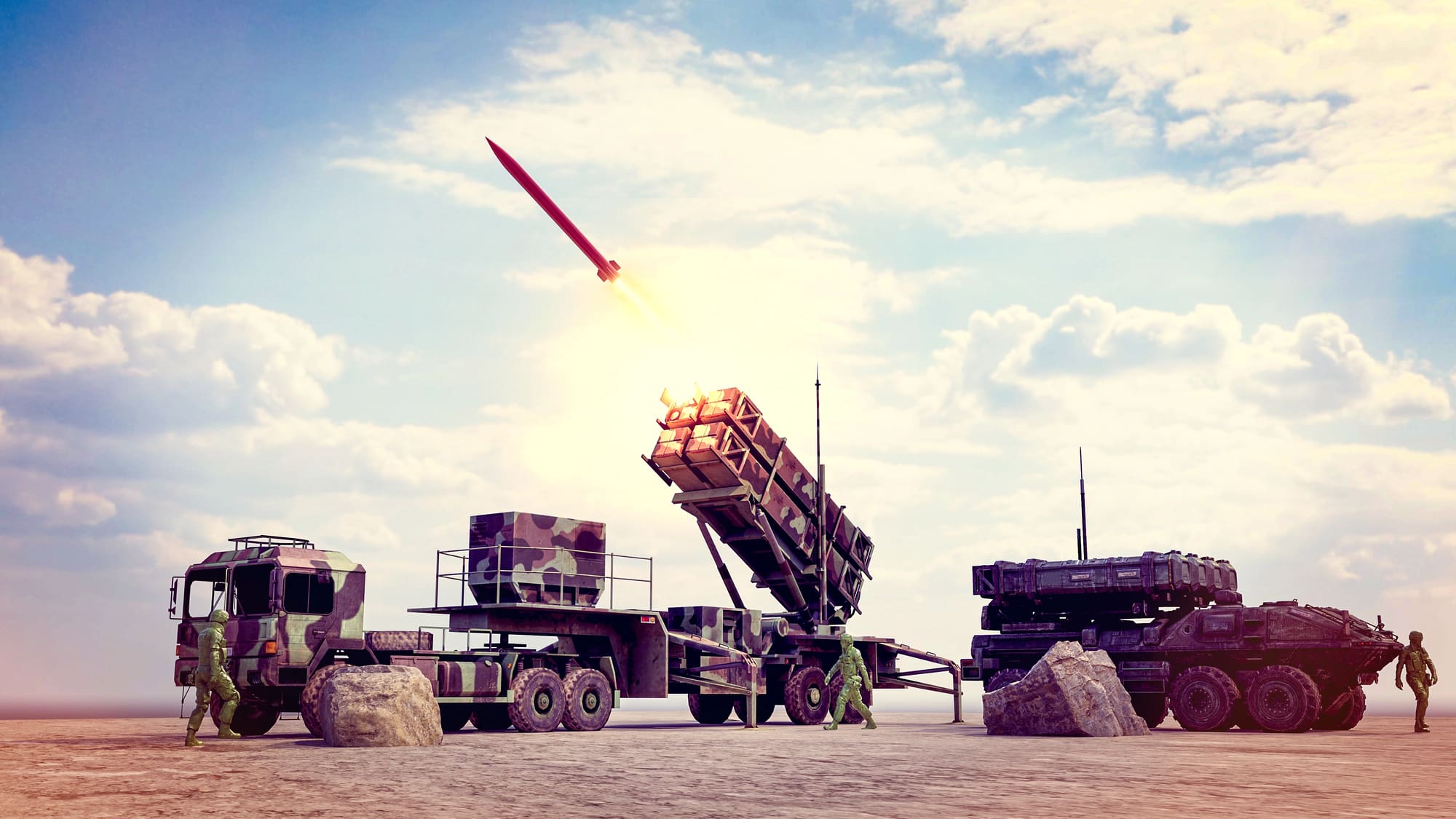
The Iran war transformed these theoretical warnings into concrete crises. THAAD and Patriot interceptors represent the most acute shortage. The June 2025 “12-Day War” alone burned through roughly a quarter of the U.S. THAAD stockpile. Annual production capacity at the time stood at just ninety-six THAAD missiles per year.
Tom Karako of CSIS, the leading expert on missile defense, warned that “our estimates of what our inventories need to be for our various contingencies are dramatically too low.” He noted that “we’ve vaporized years and years of missile defense interceptors in a matter of hours.”
The mathematics of this conflict expose the absurdity of America’s strategic position. Iran deploys Shahed drones costing between $20,000 and $50,000 each to force the United States to expend interceptors costing millions apiece. Secretary of State Marco Rubio acknowledged that Iran is “producing, by some estimates, over 100 of these missiles a month. Compare that to the six or seven interceptors that can be built a month.”
Senator Mark Kelly (D-AZ), a member of the Senate Armed Services Committee, was among the most direct lawmakers on record. He warned that “we do not have an unlimited supply” and added, “At some point, this becomes a math problem. And how can we resupply air defense munitions? Where are they going to come from? How does that affect other theaters?”
That final question points to the strategic catastrophe unfolding beneath the surface. The CNAS analysis by Stacie Pettyjohn and Philip Sheers identified the China deterrence cost directly, warning that “in four critical munitions categories, the Iran campaign is drawing down stockpiles that would be indispensable in the Pacific.” They noted that the Joint Force “has never had sufficient stockpiles for a high-intensity fight with a near-peer adversary like China.”
The standoff munitions consumed heavily in the opening strikes against Iran come from a limited production base. Tomahawk production capacity is being expanded to more than 1,000 a year, but in recent years the U.S. Navy had procured very few, even as forces fired them at hundreds of targets. Solid rocket motors, the propulsion for virtually every missile in the American arsenal, face critical supply chain vulnerabilities in ammonium perchlorate production and rely on a limited number of primary motor makers.
This is what a heavily financialized empire looks like when forced to confront physical reality. The United States outsourced its industrial base to China and other competitors in pursuit of cheap consumer goods and maximum corporate profits. Wall Street celebrated as factories closed across the heartland. The defense industrial base followed the same trajectory, consolidating into a handful of contractors focused on cost efficiency rather than surge capacity.
The American empire has accumulated too many enemies across too many theaters while allowing the industrial foundation of national power to wither. The Iran War represents another adventure that depletes resources needed elsewhere while generating new grievances that could invite acts of reprisal against the homeland. The treasure expended and the blood spilled serve interests that have nothing to do with the safety and prosperity of ordinary Americans.
Washington should recognize what the empty missile bins and shuttered production lines are telling us. The time has come to roll back imperial ambitions and focus on the mounting problems at home. An empire that cannot produce the weapons it needs to fight the wars it starts has already begun its decline. The only question is whether Americans will demand a change in course before the consequences become catastrophic.