
Special Inspector General: Thousands Killed in Failed Afghan Reconstruction

by | Feb 12, 2020

Special Inspector General: Thousands Killed in Failed Afghan Reconstruction

by | Feb 12, 2020

Warns Congress was given incomplete picture of the cost

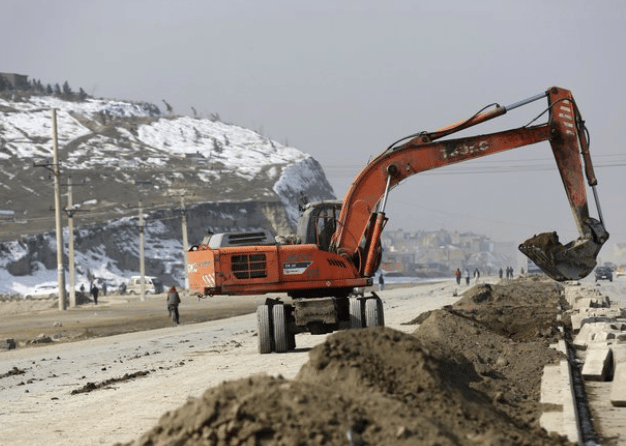
While it is well documented how poorly the Afghan War has gone, and how little has actually been built during reconstruction, the US Special Inspector General for Afghanistan Reconstruction (SIGAR) warns Congress was given an incomplete picture of the cost.

That’s because Congress was told about the financial cost of the reconstruction, a substantial amount of money that produced very little. They were not told about the very high human cost of this program, however.

2,214 people were killed overall, 216 of them American soldiers and 68 others American civilians. 2,921 others were wounded, and 1,182 ominously just “went missing.” This is again, for the sake of a reconstruction which mostly didn’t happen, and failed even where things weren’t built.

SIGAR John Sopko was asked to put a letter grade on the US reconstruction effort, and said he believes even a D- would be too high for it. He added that the US got credit for attendance and that was it.

Cross-posted at Antiwar.com.

Jason Ditz

Jason Ditz

Jason Ditz is the News Editor for Antiwar.com, your best source for antiwar news, viewpoints and activities. He has 10 years of experience in foreign policy research and his work has appeared in Forbes, Toronto Star, Minneapolis Star-Tribune, Providence Journal, Washington Times and the Detroit Free Press.

View all posts

Our Books

Recent Articles

Recent

Kill the Kill Switch!

Kill the Kill Switch!

Back in November 2021, Congress quietly added a clause to the sprawling “Infrastructure Investment and Jobs Act” that would make Orwell blush. Section 24220 authorizes the National Highway Traffic Safety Administration (NHTSA) to require that every new passenger car...

read more
South Sudan, A Case Study in State Failure

South Sudan, A Case Study in State Failure

In 2011, the world welcomed its newest country. Fifteen years later, South Sudan is less a symbol of self-determination than a case study in state failure. Its politics remain dominated by factional strongmen, its economy is almost entirely dependent on oil, and the...

read more

Pin It on Pinterest

Share This