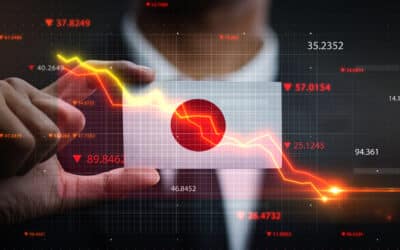
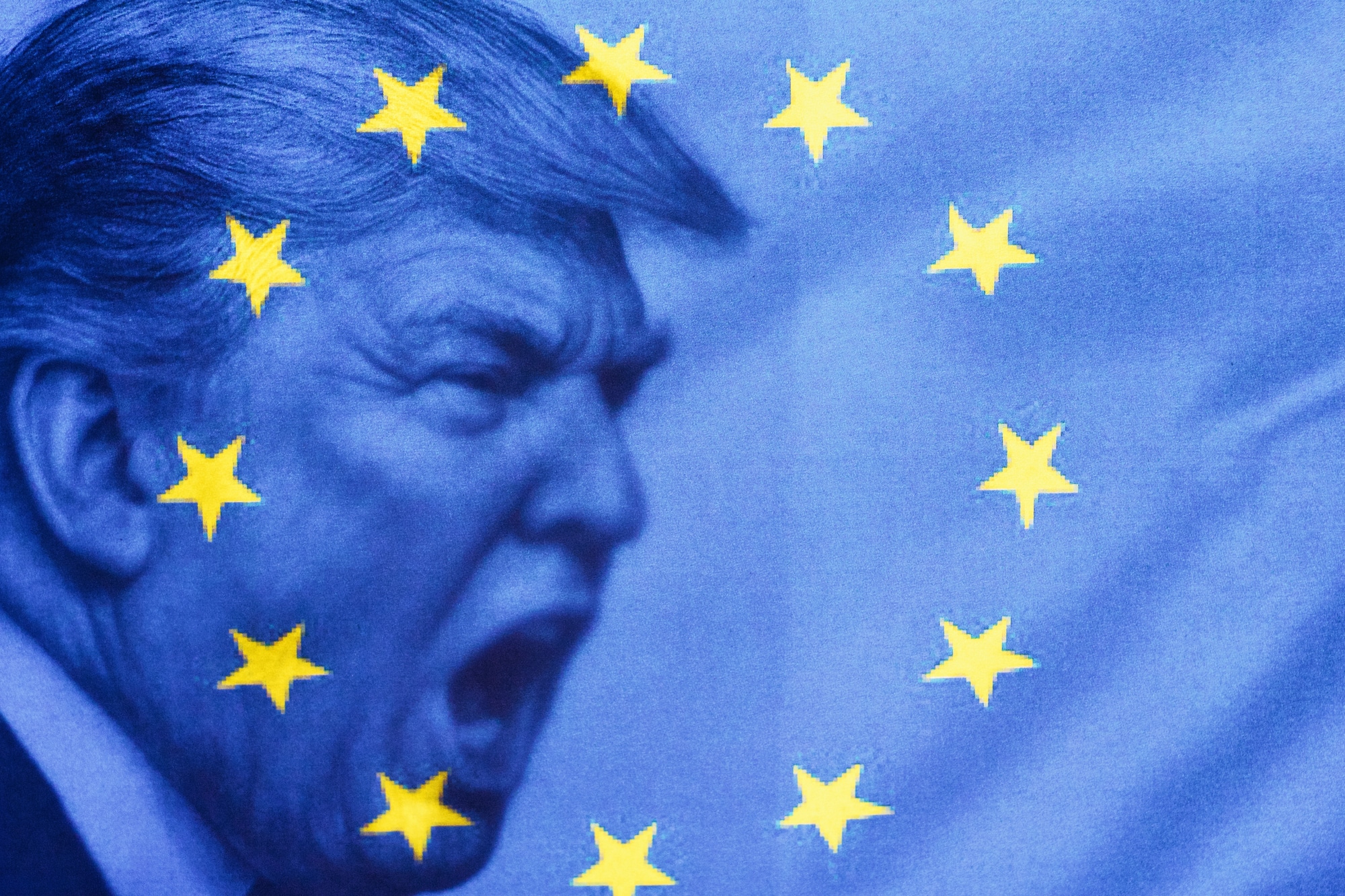
“Tariffs,” President Donald Trump is fond of reminding us, “is the most beautiful word to me in the dictionary.” It’s the most beautiful word “because tariffs are going to make us rich as hell. It’s going to bring our countries businesses back that left us.”
And that’s how it started. On “Liberation Day,” on April 2, Trump announced a 10% minimum tariff on goods from all countries with some countries being hit with higher “reciprocal tariffs.” “For decades,” he explained, “our country has been looted, pillaged, raped and plundered by nations near and far, both friend and foe alike.”
But Trump’s use of tariffs and sanctions quickly broadened as a versatile tool for much more than returning business to America. First they became a blunt tool for regime change; then they became the go to tool for everything from foreign policy goals to election interference.
Iran and Venezuela have felt it the hardest. The JCPOA nuclear agreement promised Iran an escape from sanctions in return for limiting its civilian nuclear program. Though Iran verifiably kept its promise, the United States did not, and the first Trump administration unilaterally pulled out of the agreement. The result for Iran was the return to crippling sanctions that would grow worse when the United Kingdom, France, and Germany would follow with snapback sanctions. Since then, the list of sanctions on Iran has only grown.
Those sanctions created an economic and cost of living crisis in Iran that drove protestors into the streets. The protestors demanded economic reforms that the Iranian government was powerless to implement as long as they were strangled by U.S. sanctions. But they could not escape the hold of those sanctions without concessions that would be existential for survival of both the country and the government. American sanctions were being used as an economic weapon for regime change.
Ervand Abrahamian, Distinguished Professor of History at City University of New York author of The Coup: 1953, the CIA, and the Roots of Modern U.S.-Iranian Relations, told me that, as demonstrated by their refusal to consider Iranian olive branches, the tearing up of the nuclear agreement and the refusal to ease sanctions, U.S. policy toward Iran has always been about “increasing pressure until the regime collapses.”
And now, along with “decisive” military strikes, included on the menu of regime change tools is even more economic strangulation. One option reportedly under consideration is imposing a naval blockade that would stop Iran from exporting any oil.
A similar strategy was employed in Venezuela with an embargo and the seizing of tankers. In the wake of the military strikes that removed Nicolás Maduro came the economic warfare. On the edge of insolvency, Venezuela’s acting President Delcy Rodriguez was informed that all American demands had to be fully implemented before the United States would allow Venezuela to pump another drop of oil. Economic warfare would be used as a tool for “running” Venezuela and imposing U.S. foreign policy on its agenda.
Tariffs and sanctions have continued to be the tool for which the Trump administration reaches most readily for regime change in recent days. As American attention turns to Cuba, the Trump administration has reportedly set an end of year deadline for regime change.
Trump has roared that “THERE WILL BE NO MORE OIL OR MONEY GOING TO CUBA – ZERO! I strongly suggest they make a deal, BEFORE IT IS TOO LATE.” The U.S. has cut Cuba off from its essential Venezuelan oil supply. It is pushing Mexico, who in 2025 supplied Cuba with more oil than Venezuela did, to further strangle Cuba by cutting it off from its oil too. Last week, Mexico cancelled plans to send a shipment of oil to Cuba. Going even further, some members of Trump’s team are pushing for “a total blockade on oil imports” to Cuba to collapse the economy and push out the government.” As in Iran and Venezuela, economic warfare is being used as a tool for regime change.
But regime change is not the only job that economic warfare is being used for. It is also being used to influence foreign elections.
As Hondurans headed to the polls, there was a three-way race with no clear winner. That quickly changed when Trump interfered in the election with an economic threat. Trump told Hondurans that if they vote for the wrong candidate, they will face the economic bomb of abandonment. “If Tito Asfura wins for President of Honduras, because the United States has so much confidence in him, his Policies, and what he will do for the Great People of Honduras, we will be very supportive,” Trump said, “If he doesn’t win, the United States will not be throwing good money after bad.”
Trump was no less blunt in his economic interference in Iraq’s recent election. When the election left several parties scrambling to form a coalition, the United States threatened that, if Iran-allied groups are included in the government, the U.S. would target the Iraqi state, including blocking Iraq’s access to its own oil revenue.
But the uses of the economic tool have gone beyond regime choice and regime change. They have become a tool for coercing compliance with American foreign policy. Trump has weaponized the economy to become a key part of the arsenal of hegemony.
Acquiring Greenland has become a key plank in Trump’s foreign policy. He has identified ownership of the island as an “absolute necessity” for “national security.” In defense of the sovereignty of a European nation and horrified by the threat of a NATO ally against the territory of a NATO member, European leaders united in a defensive front for Greenland and Denmark. Trump attacked that defensive front by firing an economic missile. He announced that tariffs would be placed on “Denmark, Norway, Sweden, France, Germany, The United Kingdom, The Netherlands, and Finland…until such time as a Deal is reached for the Complete and Total purchase of Greenland.” Tariffs were being used, not to protect American markets, but to acquire the territory of a European and NATO ally.
But that’s not all. Tariffs have an even greater spectrum of use. As Trump sought to capture even more international influence through his board of peace, several leaders chose either to ignore their invitations or decline. One of the first leaders to decline was France’s Emmanuel Macron. In an attempt to coerce Macron and stanch any possible rebellion, Trump turned to tariffs as a weapon for enforcing U.S. foreign policy. “I’ll put a 200% tariff on his wines and champagnes. And he’ll join,” Trump said. France called the American response the use of tariffs as “threats to influence our foreign policy.”
Trump reached for the same tool against Canada. In an attempt to diversify when its most important trade relationship turned increasingly unreliable and threatening in the face of U.S. tariffs, Canada reached an agreement with China that would allow 49,000 Chinese electric cars into Canada at a reduced tariff of 6.1%. Far from a free trade agreement, the trade won concessions from China for Canadian exports and returned the number of Chinese cars allowed into Canada to pre-Canadian tariff numbers.
In an attempt to coerce Canada into aligning with a U.S. policy of keeping China out and America in, Trump said, “The last thing the World needs is to have China take over Canada. It’s NOT going to happen, or even come close to happening!” He then angrily posted, “If Governor Carney thinks he is going to make Canada a “Drop Off Port” for China to send goods and products into the United States, he is sorely mistaken…If Canada makes a deal with China, it will immediately be hit with a 100% Tariff against all Canadian goods and products coming into the U.S.A.”
Trump said he loved the word tariffs as a way to protect American markets and make the United States rich by bringing business back to the U.S. But they have swollen from an economic tool to an economic weapon that is increasingly being used as an enforcer of U.S. foreign policy and a weapon of regime change.