
On May 28, 2016, a debate took place between presidential candidates at the Libertarian National Convention. A question in that debate about driver’s licenses prompted a notable slate of responses that quickly went viral.
When former New Mexico Governor Gary Johnson, the eventual nominee, was asked, he responded in his typical matter-of-fact style, and choosing his words carefully, said, “I think government has a basic responsibility to protect us against individuals, groups, corporations, foreign governments, that would do us harm…In that context, a license to drive? You know, I’d like to see some competency exhibited by people before they drive.”
His response, perhaps unsurprisingly, was met with a fair number of boos.
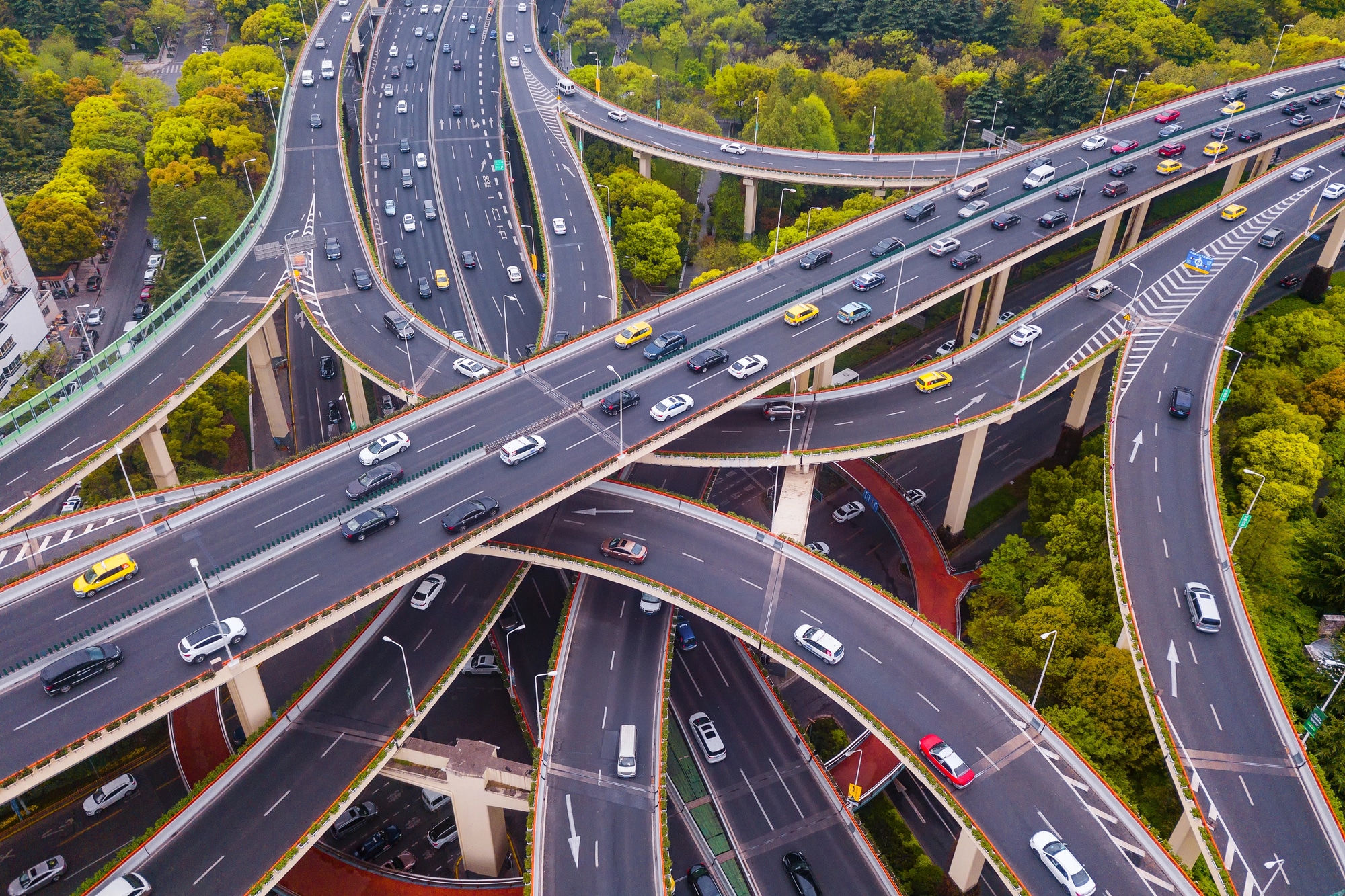
Fast forward to 2026, and the debate about libertarianism and traffic laws is being litigated yet again, this time prompted by the rise of self-driving cars.
In a December 2 article for The New York Times, neurosurgeon Jonathan Slotkin noted that Waymo’s self-driving safety record is so impressively good that we have a duty to act. The widespread adoption of self-driving cars ought to be ushered in as soon as possible for the sake of public health, he argues, given that traffic accidents are a leading cause of injury and death, especially for younger people. His argument is compelling:
“In medical research, there’s a practice of ending a study early when the results are too striking to ignore. We stop when there is unexpected harm. We also stop for overwhelming benefit, when a treatment is working so well that it would be unethical to continue giving anyone a placebo. When an intervention works this clearly, you change what you do.”
The libertarian response to this piece has generally been two-fold. On the one hand, enthusiasm about self-driving cars is a perfect example of the techno-optimism that has always been closely intertwined with the liberty movement, and this technological breakthrough is a clear instance of the market providing solutions to our problems and thus making our lives better in a multitude of ways. On the other hand, many are concerned that it will only be a matter of time before human-driven cars are banned from public roads in the name of safety.
National Review senior editor and self-described “Conservatarian” Charles C. W. Cooke summarized these sentiments:
I like Waymo, but the moment that this argument switches, as it inevitably will, from “we have a cool new technology that works and is available everywhere and saves lives” to “you must now be banned from driving your own car,” I will become a foe. https://t.co/QU401pYyvb
— Charles C. W. Cooke (@charlescwcooke) December 3, 2025
It was this reopening of the public debate that prompted yours truly to recall that infamous 2016 moment. And the reason it came to mind is because my issue is identical to the issue I have always had with the 2016 responses, and with many other discussions on the question of libertarianism and traffic laws. Namely, the idea of privatizing the roads is not even mentioned.
The libertarian position on driver’s licenses, on drunk driving, on human-driven cars, on speed limits, and every other road rule is the same as it has always been: privatize the roads and let private road owners make their own rules. If one is asked “What shall the government do if privatization is off the table,” the answer is “Libertarian principle does not mandate a particular second-best solution, only that the right thing to do is complete privatization.” If road privatization is thought to be undesirable for whatever reason, then that is understandable—but then the person with this position is simply not a libertarian on this question.
For libertarians to omit this privatization point, as all five of the 2016 candidates did, and as people continue to do, is a grievous error. What ought to be a smooth application of the non-aggression principle turns into a hodgepodge of ideas. “Libertarians are against licensing, right? So of course we’re against driver’s licenses.” Okay, but what if a private road owner, quite reasonably, demands a privately issued certificate of competence to drive on their private road. That is fully consistent with libertarianism—and is in fact what would almost certainly happen in a private-road society.
If, instead of explaining that system, we simply say that we are against driver’s licenses, we give the impression that we want a free-for-all on the roads—which is certainly not the kind of “anarchy” I am interested in. Or if, following Johnson, we object so strongly to that free-for-all that we endorse government restrictions, without clarifying that what we would really prefer is a private-road society where such restrictions are at the discretion of the road owners, we fall into a similar trap, in both cases giving the wrong impression about what libertarianism actually prescribes.
This is why omitting this crucial point results in needless confusion. One of the first questions many people have upon learning about the freedom philosophy is how road rules would work in a free society. If our answer is anything other than laying out the idea of private roads and how they would likely function, we are completely misleading them. If we confine ourselves to either condemning traffic laws as tyranny or, on the flip side, conceding the necessity of government traffic laws because a free-for-all is clearly unworkable, then we are only proving that our philosophy is as unserious as our critics make it out to be.
I’d like to think we’re better than that.