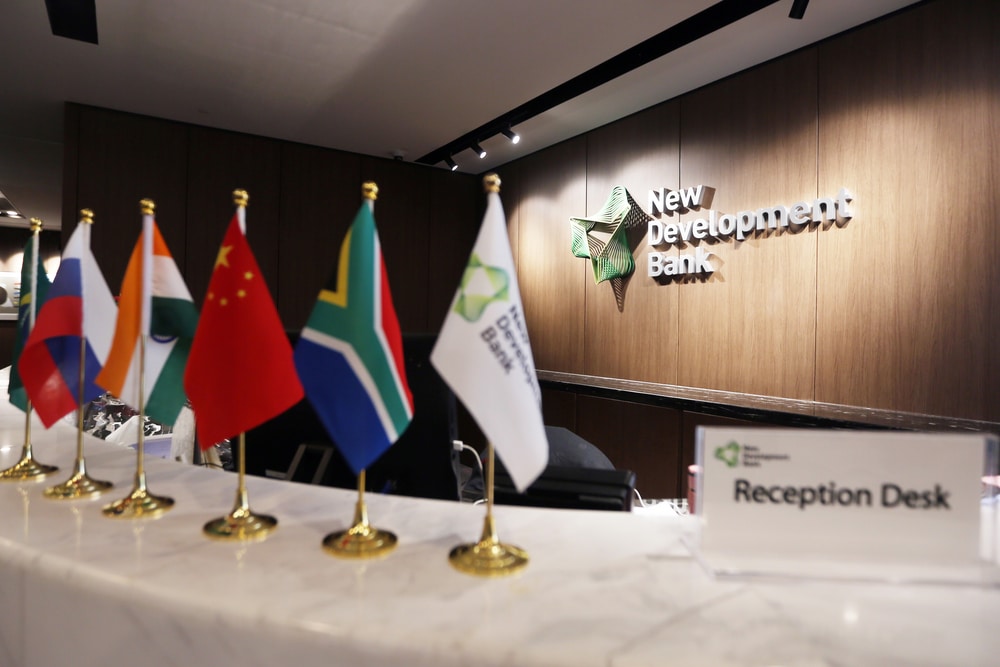
Donald Trump’s legal troubles, the possibility that Joe Biden will face an impeachment inquiry, and other stories related to the upcoming presidential election, caused the American media to miss a story of potentially greater significance. This was the decision of the BRICS (Brazil, Russia, India, China, and South Africa), who formed their alliance to challenge U.S. political and economic dominance, to induct six new countries into their group: Argentina, Egypt, Ethiopia, Iran, Saudi Arabia, and the United Arab Emirates.
One way the BRICS hope to achieve its goals is to undermine the foundation of U.S. power: the dollar’s global reserve currency status. Brazilian President Luiz Inacio Lula de Silva called for BRICS nations to create their own currency, while India is pushing to have its trading partners, including Russia, trade in Indian rupees rather than U.S. dollars. China and other BRICS countries have also reportedly taken steps to explore using gold instead of dollars for international trade.
After then-President Richard Nixon severed the link between the dollar and gold in 1971, Henry Kissinger negotiated a deal with Saudi Arabia where, in exchange for U.S. diplomatic and military support, Saudi Arabia would use dollars for its dealings in the international oil market. The “petrodollar” is the backbone of the dollar’s reserve currency status. Early this year, Saudi Arabia signed a deal with Brazil to accept Brazil’s currency instead of dollars for oil purchases. If Saudi Arabia signs similar deals with other BRICS nations it will hasten the end of the dollar’s reign as reserve currency.
The rejection of the dollar is also being driven in large part by resentment over the “weaponization” of the dollar’s reserve currency status. The U.S. government uses the dollar’s reserve currency position in order to force other countries to comply with U.S. sanctions against the latest “designated Hitler.” Sanctions are an act of war, so by forcing other countries to follow U.S. sanctions the U.S. government is dragging them into conflicts that are not in their national interests. It was inevitable that the arrogance of our foreign policy elite would eventually cause a backlash. The backlash started last year when the U.S. demanded other countries join in sanctioning Russia, regardless of the effects of those sanctions on their own economies.
The movement to replace, or at least create alternatives to, the dollar is also driven by concern over the long-term effects of the massive U.S. national debt. Despite the claims of both parties that the recent debt ceiling deals showed that Congress and the President were getting serious about being fiscal responsibility, the U.S. $33 trillion debt is still poised to grow by as much as $115 trillion over the next 30 years. Congress and the President refuse to cut spending in any area. They can’t even manage to stop shoveling billions into the no-win war in Ukraine even though this spending is opposed by a clear majority of Americans.
Sadly it will take a shock like the rejection of the dollar’s reserve currency status and the resulting dollar crisis to force the U.S. government and the people to take steps to kick their addiction to welfare-warfare spending and fiat currency. This will mean some tough times ahead. However, the economic downturn may not last as long as people expect. The good news is the crisis could lead to a return to limited constitutional government, a true free-market economy free of corporations and cronyism, a foreign policy based on peace and free trade, and a free-market monetary system.
This article was originally featured at the Ron Paul Institute for Peace and Prosperity and is republished with permission.