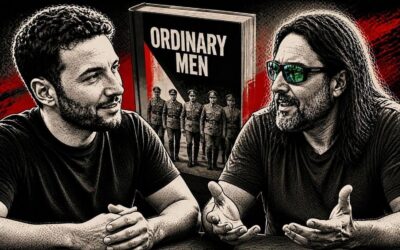
Bush says America didn’t overreact after 9/11. We don’t let that pass. Kyle Anzalone sits down with Scott Horton to walk through what Washington knew before the attacks, what it chose to ignore, and how a moment that demanded focused justice became an open-ended Global War on Terror. If you’ve ever wondered whether there was a serious middle ground between “do nothing” and “invade half the world,” this talk lays it out in plain terms.
We dig into the intelligence warnings that piled up, the political incentives to widen the fight, and al-Qaeda’s strategy of baiting the United States into a costly overreaction. Then we get specific about Afghanistan: Taliban frustrations with bin Laden, reported offers to try or transfer him if the US provided evidence, and why negotiation was dismissed even when it could have put the actual perpetrators in custody. We also revisit Tora Bora and the argument that bin Laden’s escape wasn’t inevitable, raising hard questions about priorities in late 2001.
From there, we trace the aftershocks: the Iraq War’s weak connection to 9/11, the 2001 AUMF as a permanent blank check, drone-war blowback, and the “redirection” era that helped empower extremist factions in conflicts from Syria and Libya to Yemen. We end by talking about realistic security: stopping support for violent proxies, avoiding new wars, and focusing on keeping attackers off US soil. Subscribe, share the episode with a friend, and leave a review with the biggest claim you agreed or disagreed with.
Podcast (kyle): Play in new window | Download