The next time you wire money internationally, consider this: someone in Washington or Brussels can decide you don’t get to complete that transaction. Not because you broke any law. Not because a court found you guilty of anything. But because a U.S. Treasury Department or the European Council official added your name—or your bank’s name, or your customer’s name—to a list. That’s the power the U.S. government has wielded over the global financial system for two decades, and it’s the power that’s now driving the construction of a parallel financial architecture designed specifically to operate beyond American reach.
You might not care about central bank digital currencies or Chinese payment systems. But you should care that the world’s governments are building competing monetary blocs where they can monitor every transaction you make, freeze your assets on a whim, and cut you off from the global economy without due process. The financial iron curtain is descending. And neither side of it offers freedom.
In November 2025, the United Arab Emirates Ministry of Finance transferred funds to the Dubai Department of Finance using the wholesale digital dirham. The transaction settled within seconds—no correspondent banks, no SWIFT messages, no dollar accounts. Just central bank nodes on a blockchain called mBridge.
By that point, mBridge had handled 4,047 transactions worth $55.49 billion. Two years earlier: 160 transactions, $22 million. What changed? The Bank for International Settlements handed the project to participating central banks—China, Hong Kong, Thailand, the UAE, Saudi Arabia—and stepped away. Chinese regulators began directing banks to use the system. Companies in Xinjiang, cut off from U.S. financial systems over human rights abuses, found they could conduct international trade through mBridge without Washington seeing the transactions.
For those who worry about concentrated state power, this presents an uncomfortable paradox. mBridge runs on central bank digital currencies through government-controlled nodes, counting among its participants some of the world’s most authoritarian regimes. Yet it emerged as a direct response to something predictable: when you transform the dollar from a medium of exchange into a weapon, people build alternative weapons.
The story starts, as so many stories of government overreach do, on September 11, 2001. President George W. Bush signed an executive order granting the Treasury Department new powers to track terrorist financing. What Treasury officials discovered changed the nature of American power; they could punish adversaries without firing a shot by cutting them off from dollar-denominated transactions.
The architecture made this possible. About 90% of foreign exchange transactions touch the dollar. SWIFT, the messaging system connecting 11,000 banks across two hundred countries, processes most international payments in dollars, euros, or pounds. To move money across borders, you need access to correspondent accounts that clear these currencies. The United States government realized it could deny that access.
In 2012, Washington and Brussels disconnected Iranian banks from SWIFT. When Russia invaded Ukraine in February 2022, seven major Russian banks got the same treatment. The ruble collapsed 30%. French Finance Minister Bruno Le Maire called it “the financial nuclear weapon.” He meant it as praise.
The weapon extends beyond its direct targets. Under what Treasury calls “secondary sanctions,” Washington can punish any foreign bank that does business with a sanctioned entity. Banks worldwide adopted “zero risk” policies toward sanctioned countries, cutting off transactions that would probably be legal under U.S. law. A Thai bank now enforces American foreign policy not because Thai law requires it, but because the bank fears losing access to dollar clearing. This is what imperialism looks like in the age of digital payments.
Former Treasury Secretary Jack Lew saw the danger. The more frequently Washington deployed financial sanctions, the stronger the incentive for other countries to build alternatives. When the United States and European Union froze $300 billion in Russian reserves after the Ukraine invasion, the lesson became unmistakable: dollar reserves aren’t reserves. They’re hostages.
Beijing watched. Chinese state-owned institutions analyzed the Russian sanctions and concluded Washington possessed a “financial nuclear weapon.” The People’s Bank of China accelerated alternatives. China’s Cross-border Interbank Payment System, launched in 2015, processed $17 trillion in 2023—a 27% annual increase. Russia-China trade shifted almost entirely out of dollars; 90% now settles in yuan and rubles.
Russia built its own SWIFT alternative, the System for Transfer of Financial Messages, connecting 550+ institutions across twenty-four countries by 2022. Clunky and inefficient, but it works.
And mBridge. The BIS launched it in 2021 with the central banks of China, Hong Kong, Thailand, and the UAE. The project built a custom blockchain to enable real-time cross-border payments using wholesale central bank digital currencies. Each central bank runs a validating node. Commercial banks execute transactions directly for customers.
The 2022 pilot involved twenty banks settling actual payments. Settlement that normally takes days completed in seconds. No intermediaries. No pre-funded accounts. No SWIFT messages U.S. intelligence can monitor.
The mechanism: A Thai company pays a UAE supplier. Traditionally, the Thai bank messages its New York correspondent, which holds dollars, which messages a UAE correspondent, which credits the supplier. The chain operates in dollars or euros, giving Western governments visibility and control.
mBridge bypasses this. The Thai bank connects through digital baht. The platform instantly converts to digital dirhams and settles through central bank nodes. No New York. No London. No dollars. No Treasury visibility.
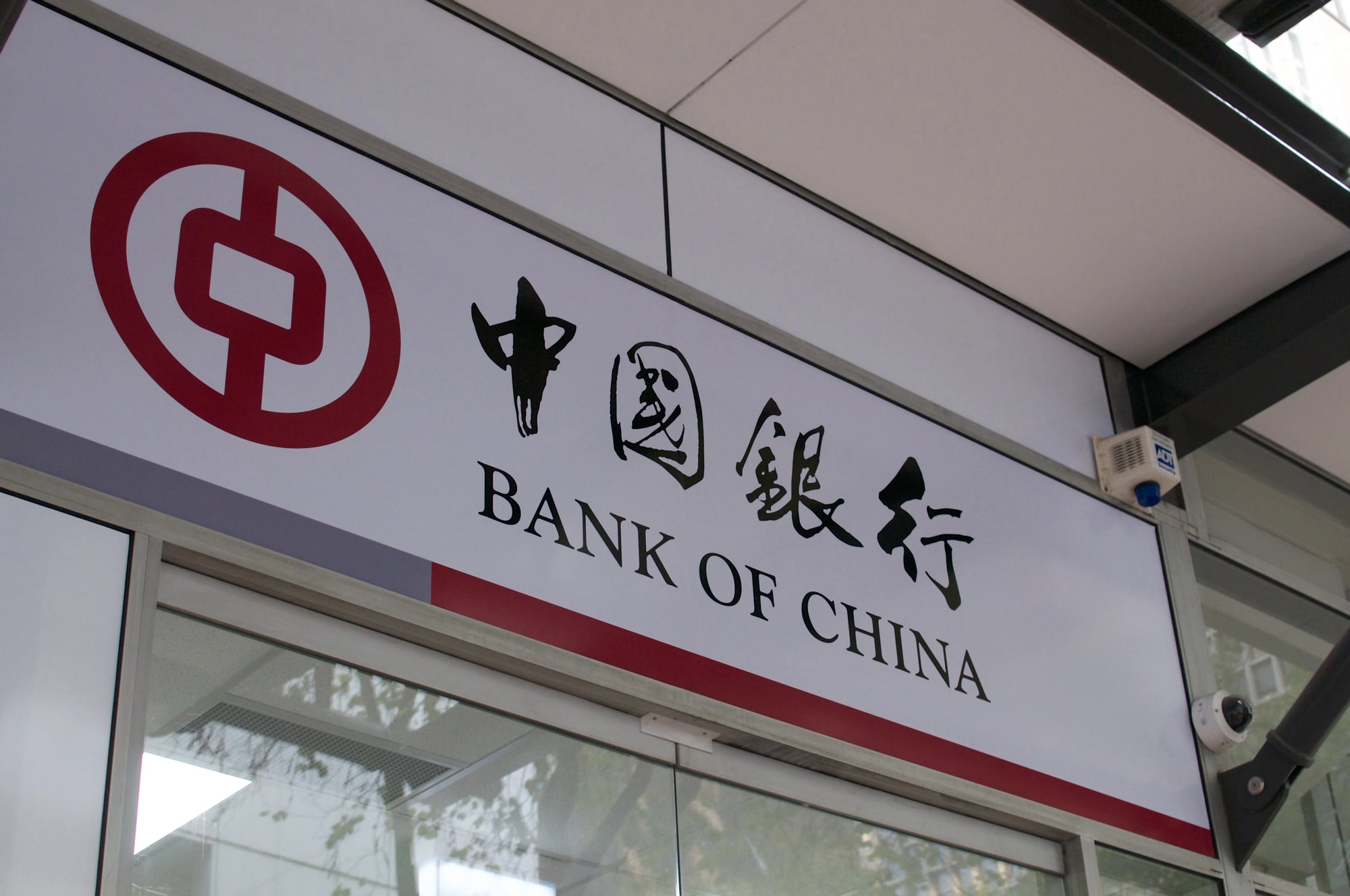
Beijing controls the technology working group and plans to open-source the software. Bank of China, Agricultural Bank of China, China Construction Bank have announced participation. Bank of China executed the first UAE-China transaction in January 2024.
In October 2024, the BRICS summit in Kazan discussed creating a “BRICS Bridge” based on mBridge technology. The expanded group—Brazil, Russia, India, China, South Africa, Iran, Egypt, Ethiopia, the UAE—would settle bilateral trade in their own currencies.
One week later, BIS General Manager Agustín Carstens announced his institution would leave mBridge. The project had reached sufficient maturity. He categorically denied mBridge was becoming a “BRICS bridge” for evading sanctions. The BIS doesn’t work with sanctioned countries.
Carstens didn’t address whether China or the UAE might clone the technology for Russia. Russia can’t participate directly—its BIS membership was suspended after Ukraine. But three mBridge participants are BRICS members. The code will be open-source.
The BIS pivoted to Project Agorá: Federal Reserve Bank of New York, Bank of England, Bank of Japan, Western central banks. No BRICS members. The financial system is splitting along geopolitical lines.
Firms in Xinjiang—sanctioned over forced labor and human rights abuses—are using mBridge for international trade. A Xinjiang company receives payment from UAE or Thai customers using digital yuan and digital dirhams. The transaction bypasses dollar accounts, Western correspondent banks, and SWIFT messaging Treasury monitors. No U.S. bank participates. No sanctions screening.
Whether this is “evasion” depends on perspective. Washington claims mechanisms allowing sanctioned entities to operate undermine the regime. Beijing claims U.S. sanctions are illegal extraterritorial law. Libertarians must ask, should any government cut private actors from the global economy based on administrative designations never tested in neutral courts?
The U.S. Treasury hasn’t formally charged Xinjiang entities in U.S. courts. Sanctions rest on executive orders. Companies appear on lists without trials, without confronting accusers, without independent review. Banks worldwide must accept these determinations or face secondary sanctions.
If the forced labor allegations are accurate—and substantial evidence suggests they are—then mBridge facilitates commerce by entities profiting from coerced labor. Yet accepting the sanctions regime means endorsing a system where executive agencies designate anyone guilty based on administrative findings, then compel the global financial system to enforce those designations through exclusion threats.
On one side, Washington weaponizing the dollar, transforming a medium of exchange into a tool of coercion, punishing entire populations for their governments’ actions, conscripting foreign banks into enforcing American policy preferences, and seizing currency reserves without legal process.
On the other side, mBridge, which operates entirely through central banks and government digital currencies, runs transactions through nodes controlled by Beijing, Hong Kong, Riyadh, Abu Dhabi, and Bangkok, provides Chinese authorities with unprecedented visibility into economic activity, and counts among its participants governments that execute dissidents, operate detention camps, and maintain surveillance states.
This is not a choice between freedom and tyranny. This is a choice between different forms of monetary authoritarianism.
The People’s Bank of China employs over three hundred staff working on its digital currency project. Every mBridge payment using digital yuan generates data flowing through systems controlled by the Communist Party. This isn’t peer-to-peer electronic cash enabling financial privacy. This is state-controlled digital money enhancing government power over economic activity.
Yet the alternative is accepting that Washington should maintain monopolistic control over global payment systems, with the power to freeze anyone’s assets, block anyone’s transactions, and exclude anyone from international commerce based on executive branch determinations. The same mechanism deployed against Xinjiang today could target cryptocurrency exchanges tomorrow, or any business conflicting with State Department priorities.
Absent from this debate: genuinely decentralized alternatives. Bitcoin was designed to solve state control over money. Yet Bitcoin hasn’t become a solution. Volatility, scaling limits, and most significantly, government opposition prevent cryptocurrency adoption for international trade.
China banned cryptocurrency in 2021. The United States aggressively enforces against crypto businesses facilitating what Treasury calls “sanctions evasion.” These barriers exist because decentralized money threatens state power—both American power to impose sanctions and Chinese power to monitor transactions.
The result is that the alternative to dollar systems under U.S. control is yuan systems under Chinese control. Both enable surveillance and coercion. Both concentrate power in bureaucrats who freeze accounts and block transactions without judicial process. mBridge doesn’t reduce state dominance over money. It redistributes control from Western to Eastern central banks. Then-Treasury Secretary Janet Yellen acknowledged in April 2022 that sanctions could undermine dollar hegemony. She was right. The damage was done.
The global financial system is splitting. On one side, dollar-based SWIFT and Western regulation. On the other, yuan payments, CIPS, SPFS, mBridge bypassing Western institutions. The integrated global economy is disappearing.
This stems from dollar weaponization. Washington punished adversaries by denying payment access. Targeted countries built alternatives. The sanctions that seemed to offer leverage have accelerated erosion of the dollar dominance that made sanctions effective.
For those believing in limited government and monetary freedom, the lesson is stark: state control over money becomes state control over people. When governments monopolize currency and payment infrastructure, they gain power to surveil, freeze accounts, and exclude actors from economic participation. This power will be abused.
Washington abused dollar dominance by transforming sanctions into a blunt instrument. China builds alternative systems enhancing Beijing’s surveillance. Neither path leads to freedom.
mBridge processes $55 billion through central bank digital currencies on government blockchain. This isn’t progress toward liberty. This is construction of a financial iron curtain, dividing the world into competing monetary blocs where governments monitor and restrict subjects’ economic activity.
The only genuine alternative is decentralized cryptocurrencies removing state control. Yet governments suppress these because they threaten state power. The choice between dollar hegemony and yuan alternatives is the choice between forms of monetary tyranny. Neither deserves support. Both deserve opposition.