There is always an urgency to put an end to war. But there is a growing urgency to bring an end to the war in Ukraine. That urgency was expressed in Ukrainian President Volodymyr Zelensky’s claim that the Trump administration had set a June deadline for negotiating an end to the war. Even NATO Secretary General Mark Rutte, a strong advocate for defending Ukraine, recently told Ukraine’s parliament that “getting to an agreement to end this terrible war will require difficult choices.”
The urgency is also being felt in Russia, where Vladimir Putin’s patience with Donald Trump is stretching thin, and Moscow’s patience with Putin is tiring. There are elements in Russian government and society that are pressuring Putin to escalate and decisively win the war. As high ranking an official as Deputy Chair of the Security Council of the Russian Federation Dmitry Medvedev has called for escalation; as high ranking an official as Russia’s Foreign Minister Sergey Lavrov has expressed frustration with the complaint that the “United States is now reluctant to follow through with proposals it put forward on Ukraine in Anchorage.”
The urgency is also being felt on the battlefield where Russia is getting closer to winning the territory they are demanding at the negotiating table.
As the frustration and urgency grow, for the first time since early days of the war when a peace was almost reached in Istanbul, Ukrainian and Russian negotiators are talking directly with each other. While both sides have firmly drawn their red lines, they have also shown a willingness to compromise.
If peace is to come to Ukraine three things are needed. First, the historical causes of the war must be acknowledged. Second, the goals and security needs of both sides must be addressed. Third, each side’s red lines need to be respected. Compromises need to be acknowledged and embraced as an accomplishment and starting point. Instead of seeing the remaining issues as frustrating impasses that lead to despair of diplomacy and continued war, they need to be seen as the last hurdles to a peace that all sides—Ukraine, Russia, the U.S. and Europe—should be encouraged to overcome.
No doubt, clearing those hurdles means neither side will get all that it wants, and both sides must decide what they need. That is why the historical causes and essential goals of each side need to be identified. The compromise settlement must then be composed in terms that allow both sides to present it to their citizens as having achieved the core goals and security concerns.
Faced with the immovable reality of Russia, Ukraine has made many compromises since Zelensky’s maximalist promises in the early days of the war. The most important is de facto abandoning NATO membership and recognizing that Crimea will not be recaptured and that Donbas will be de facto, if not de jure, ceded to Russia. More nebulous and malleable concessions include a cap on the size of the Ukrainian armed forces and reforms that protect the cultural, religious, and linguistic rights of Russophone Ukrainians. These are important and promising concessions.
Russia too has made important compromises, conceding the necessity of Ukraine receiving security guarantees from external parties. It has also conceded that Ukraine will become a member of the European Union and allowed for a significantly larger cap on the size of Ukrainian armed forces than was agreed to in Istanbul. It has also compromised on the fate of the $100 billion plus in frozen Russian assets and its use to rebuild Ukraine.
Now diplomats can test how far each side is willing to move to accommodate the other. Battlefield realities, and the fading will of Ukraine’s partners to support Ukraine financially and militarily, favor Russia. But Russia has its own incentives to compromise. For example, it would be very costly to conquer all of Donbas. To facilitate the region’s recovery, Russia would be better off reintegrating with the larger international community, rather than relying only on itself.
The two key points where red lines seem most incompatible and unresolvable are security guarantees and territory. And, although Ukraine’s demand for security guarantees has been more in the spotlight, it is actually Russia’s demand for security guarantees that unleashed this war. All sides have acknowledged that a major reason Russia went to war was to prevent further NATO expansion. To secure its own security, Russia now demands not only that NATO stay out of Ukraine, but that both nations become part of a wider European security framework. Russia will not end the war without a guarantee that Ukraine will not join NATO, as stipulated in its declaration of independence and founding constitution.
While conceding on NATO membership, Ukraine still insists on formal security guarantees to protect it from possible future Russian aggression. The outlines of a solution are already present in the various versions of agreements that are on the table.
Russia could receive written guarantees that Ukraine will never join NATO, but, by conceding its right to join the European Union, also provide significant security guarantees. Several articles in the EU Association Agreement with Ukraine speak of convergence and cooperation in security and defense. And Article 42.7 of the Treaty of the European Union states that “If a Member State is the victim of armed aggression on its territory, the other Member States shall have towards it an obligation of aid and assistance by all the means in their power.” In some ways, this is more of a guarantee than NATO’s Article 5.
In exchange for giving up NATO membership, Russia has shown a willingness to significantly raise the cap on the size of the Ukrainian armed forces and allow for NATO training. It has also recognized the necessity of granting Ukraine binding security guarantees so long as those guarantees do not include NATO troops in Ukraine. The provision of long-range weapons to Ukraine remains a point to be negotiated.
Russia’s second security demand is that, after the European and Ukrainian betrayal of the Minsk Agreements, ethnic Russians in Donbas be protected. Russia is on its way to accomplishing this militarily but would prefer to accomplish it diplomatically. Ukraine is unwilling to surrender land diplomatically it has not surrendered militarily and wants to preserve as much of its original territory as possible.
Both sides have already compromised here. Russia seems to have yielded on claiming the unconquered parts of Kherson and Zaporizhzhia. Ukraine, too, has compromised, calling for “We stand where we stand” as the start for a ceasefire and negotiations.
Russia will not give up Donbas diplomatically; if it cannot win it at the negotiating table, it will win it, at great cost, on the battlefield. But a border could be drawn at Donbas. Unlike the more questionable referendums in Kherson and Zaporizhzhia, Luhansk and Donetsk have both long expressed the desire, through referendums on language and cultural rights, for autonomy and even reunification with Russia. Russia might be willing to trade conquered land in Kherson and Zaporizhzhia for the remaining uncaptured land in Donbas.
In this way, Russia could achieve the security for the Russophone citizens of Donbas it demands, while Ukraine could reasonably declare that it has succeeded in the survival of an independent, European oriented, independent and sovereign state on 80% of its original territory. Finland credibly made the same claim in the 1940’s and thrived.
The sticking point that will demand difficult negotiations is that, fearing that a future U.S. administration could reverse de facto recognition, Russia is demanding recognition de jure, which Ukraine may feel unable to concede. Trump’s original 28-point peace plan suggests a possible U.S. willingness to recognize Crimea and Donbas as Russian territory de jure. Ukraine’s willingness to go along with this may need to be put to a referendum.
With the incorporation of Donbas into Russia, Moscow will have achieved its goal of protecting the linguistic, cultural, and religious rights of its ethnic Russian citizens. Protection of the rights of the rest of Ukraine’s Russophone citizens might be left by Russia to Europe.
Russia has demanded that Russian be an official national language of Ukraine and that recognition be granted to the Ukrainian Orthodox Church, canonically recognized as legitimate by the majority of Orthodox churches (though not by the Ecumenical Patriarch of Constantinople). Trump’s 28-point plan promised much less, stating only that “Ukraine will adopt EU rules on religious tolerance and the protection of linguistic minorities.” Both Ukraine and Russia could accept this and claim victory. Ukraine can claim that it has successfully resisted Russian demands for “denazification”. At the same time, Russia could claim a victory in protecting Russophones in Ukraine because Ukrainian ascension to the EU would mandate conformity with EU laws that require guarantees of freedom of religion and linguistic pluralism.
As for economic issues, Russia seems willing to compromise on sanctions and frozen assets. Russia has signaled a willingness both to have sanctions lifted in stages and to have their frozen assets used to rebuild Ukraine, so long as this includes the now Russian parts of Ukraine.
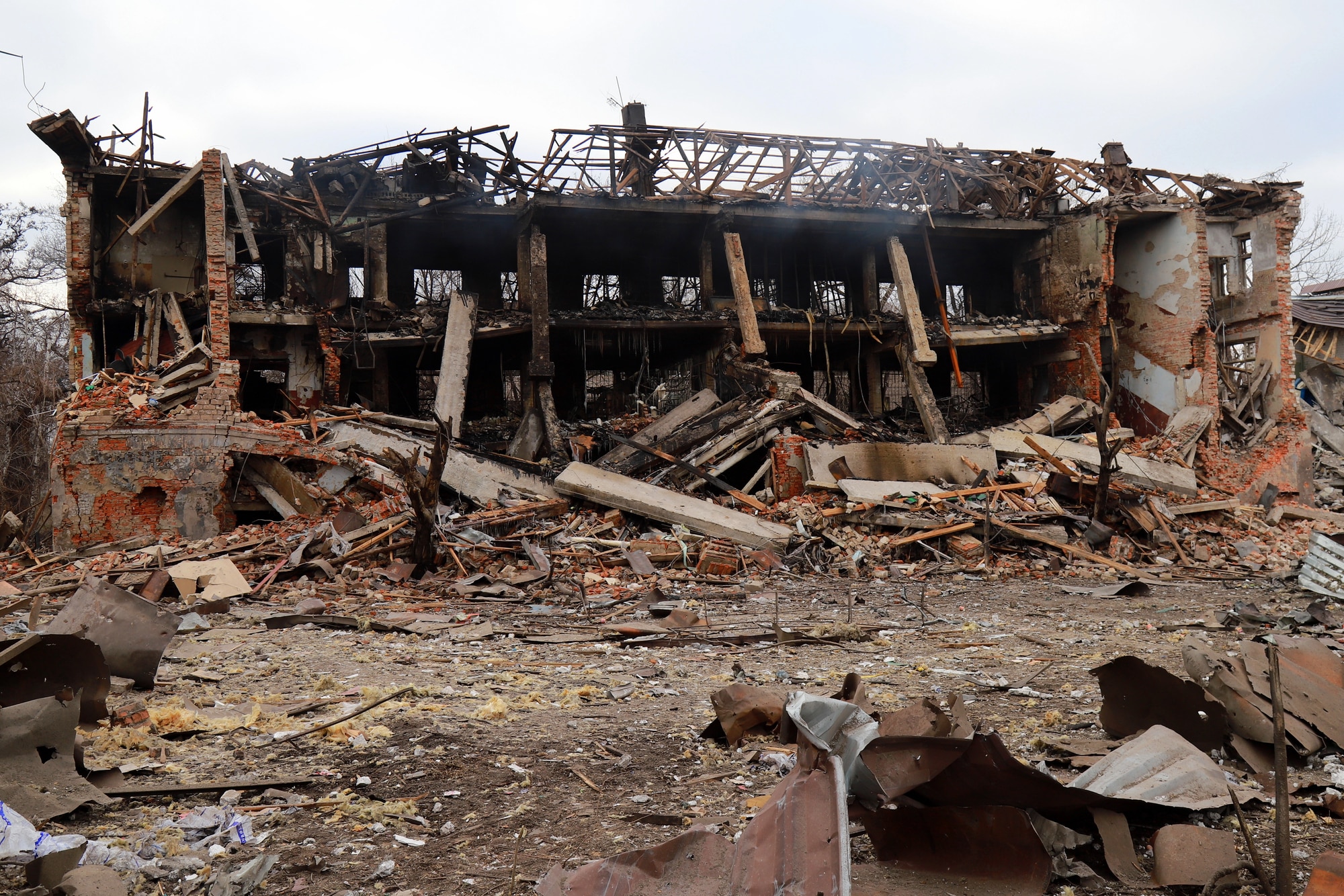
Nobody wins in war. In the Russo-Ukrainian war, land, lives and the environment have been devastated. Hundreds of thousands of people have died. The devastation is all the more tragic since the worst of the war could have been avoided with diplomacy shortly before and shortly after it began.
But there is still a diplomatic path that allows each side to accomplish its essential security needs and that allows each side to come out with what it needs and adopt a narrative in which it emerges as the victor. Sadly, this agreement will look much like the agreement that was available in the first days of the war. After over four years of fighting, there is certainly a diplomatic path that is more desirable than continuing down the path of war.