
The United States has long operated under a seductive strategic fantasy. Remove the leader of an adversary organization, whether a drug cartel, a terrorist group, or a sovereign state, and that organization will collapse, enabling American interests to fill the resulting vacuum.
However, decades of academic literature, hard empirical data from Mexico’s drug war, and the lived consequences of America’s post 9/11 targeted killing campaigns all tell a damning story many in the DC ruling class refuse to acknowledge. Decapitation strategies are, at best, tactically satisfying and strategically hollow. At worst, they escalate violence, radicalize successors, and produce precisely the instability they were designed to prevent.
The ongoing U.S.-Israeli military campaign against Iran represents the most ambitious test of this doctrine in history. The results so far are deeply troubling.
The poor results should come as no surprise to anyone familiar with the academic literature on leadership targeting. The scholarly consensus against decapitation has been building for decades. Jenna Jordan’s landmark research, first published in Security Studies in 2009 and later expanded into her book Leadership Decapitation, examined 298 incidents of leadership targeting from 1945 through 2004. She concluded that “decapitation is not an effective counterterrorism strategy” and that it tends to extend the life of terrorist organizations.
Jordan identifies three structural factors that make organizations resilient to leadership decapitation: bureaucratic depth, popular support, and ideological coherence. The more institutionalized and ideologically rooted an organization is, the more it absorbs the loss of leaders. Martyrdom replaces individuals with myth.
Through analysis of over 1,000 decapitation events against 180 terrorist groups, Jordan found that decapitation “does not increase the mortality rate of terrorist groups and, in some cases, even leads to more terrorist activity,” as War on the Rocks reported. The University of Pretoria’s Emmanuel Ofuasia confirmed that “the decapitation tactic has served as a basis for escalation and proliferation of terrorist groups rather than serving as deterrence against the possibility of recurrence.”
The fixation with decapitation strategies is part and parcel of the DC mindset, which puts regime change on a pedestal—consequences be damned. Alexander Downes of George Washington University, whose book Catastrophic Success surveys roughly 90 instances of foreign-imposed regime change, finds that more than 40% of states that experience foreign-imposed regime change have a civil war within the next ten years. Ben Denison of the Cato Institute concurs that “even after high-profile failures in Iraq, Afghanistan, and Libya, some in the policy community still call for ousting illiberal regimes,” and the empirical record “clearly reveals that a regime-change operation is more likely to fail than to succeed.”
The academic literature is damning enough, but the real-world laboratory of Mexico’s drug war offers even starker evidence of decapitation’s failure. By January 2011, Mexican authorities had captured or killed 20 of their 37 priority cartel targets. Violence did not recede. More than 66,000 drug-related deaths occurred in Mexico between 2007 and 2012.
The landmark 2015 study in the Journal of Conflict Resolution—by Calderón, Robles, Díaz-Cayeros, and Magaloni—found that “captures or killings of drug cartel leaders have exacerbating effects not only on DTO-related violence, but also on homicides that affect the general population.”
The mechanisms are clear: “When drug capos are eliminated, other cartels possess incentives to fight turf wars…Moreover, as the elimination of drug capos weakens existing chains of command, criminal cells begin operating with less restraint.”
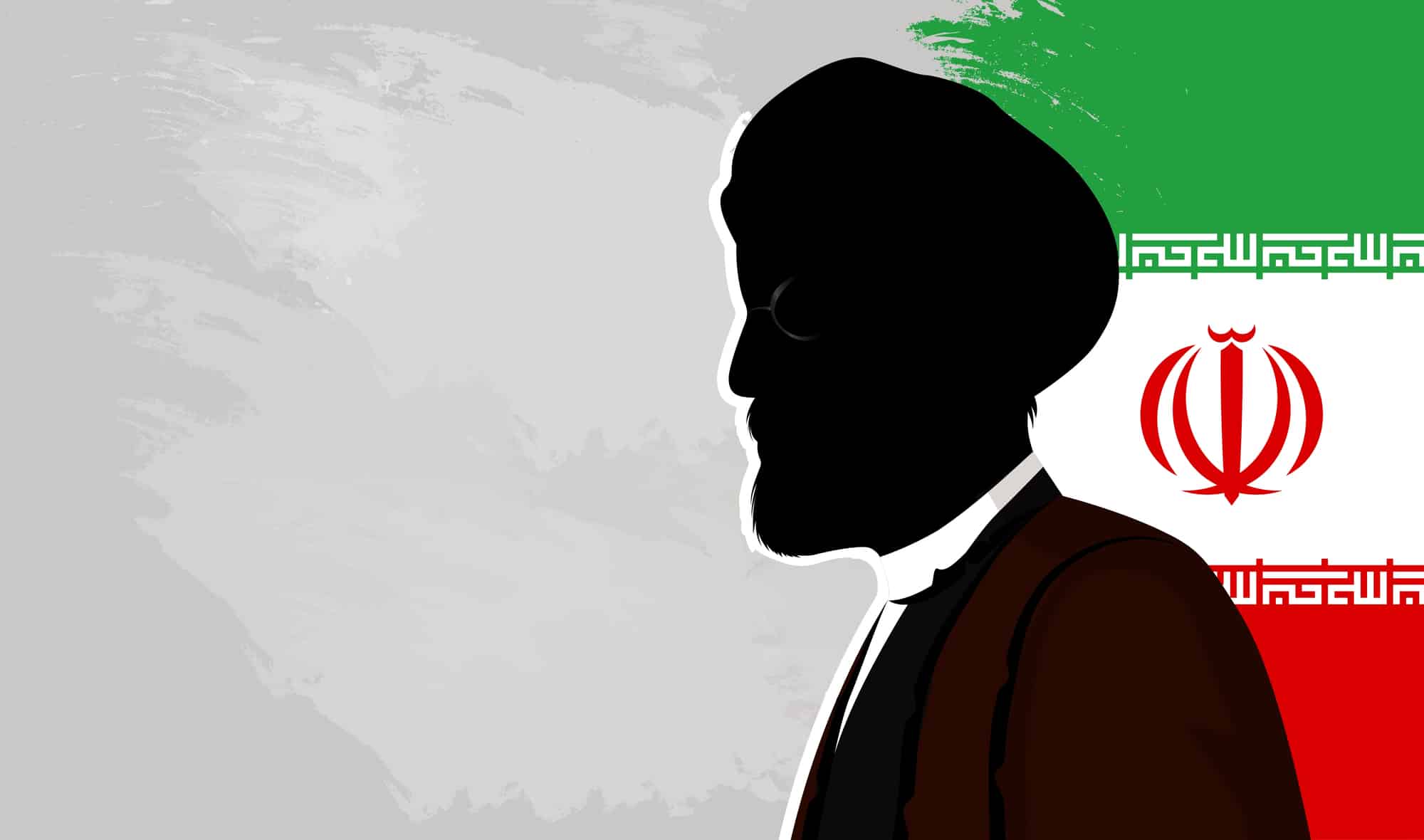
The lessons from Mexico have gone unheeded. Today, the same flawed logic drives American policy toward Iran, where prominent voices in the foreign policy establishment have begun sounding the alarm. Jon Alterman of the Center for Strategic and International Studies has been the most prominent institutional voice of skepticism about the Iran campaign. In March 2026, he wrote that “Killing Iran’s top leaders may feel like a decisive blow, but history shows that decapitation rarely produces the political outcomes the United States hopes for, and often exacerbates instability.” He points to Israel’s repeated targeting of Hamas leaders since 1987 as definitive refutation. Instead of changing political direction, Hamas simply “absorbed its martyrs and lives to fight another day.”
Iran is not a hollow dictatorship held together by one man’s terror. It is an institutionalized revolutionary state that has operated under sanctions, sabotage, covert operations, and assassination campaigns for decades. Its architecture was consciously engineered for continuity under stress.
As Al Jazeera’s analysis notes, “Iran is not a single pyramid with one man at the apex. It is a heterarchical, networked state: Overlapping hubs of power around the Supreme Leader’s office, the Revolutionary Guards, intelligence organs, clerical gatekeepers, and a patronage economy. In such a system, removing one node, even the most symbolic one, does not reliably collapse the structure; redundancy and substitute chains of command are a design feature.”
The evidence is overwhelming, yet Washington refuses to learn. Decapitation strategies represent a cartoon, video game style approach to foreign policy, rooted in the fantasy that eliminating a single leader will cause an entire regime to crumble. DC desperately needs a wakeup call.
The United States cannot kill its way to a more favorable world order. America must abandon the interventionist impulse and embrace strategic retrenchment and accept the harsh realities that not all countries want to be remade in Washington’s image. Restraint, not assassination nor quixotic regime change ventures, is the foundation of a sustainable grand strategy.