
Rep. Joaquin Castro (D-TX) tweeted on May 4, 2026:
For nearly six decades the U.S. has voluntarily remained in the dark on Israel’s nuclear capabilities.
The ambiguity ends now.
There is too much at stake to accept ignorance. We are at war alongside Israel against Iran without knowing what their red lines are for using a… pic.twitter.com/oe0KF9MnKQ
— Joaquin Castro (@JoaquinCastrotx) May 6, 2026
That tweet accompanied a letter signed by Castro and twenty-nine other House Democrats addressed to Secretary of State Marco Rubio. The lawmakers argued that Congress has a constitutional duty to understand the nuclear balance in the Middle East, especially now that American forces are fighting alongside Israel against Iran.
“We are in the fullest sense, fighting this war side by side with a country whose potential nuclear weapons program the United States government officially refuses to acknowledge,” the letter stated. “Congress has a constitutional responsibility to be fully informed about the nuclear balance in the Middle East, the risk of escalation by any party to this conflict, and the administration’s planning and contingencies for such scenarios.”
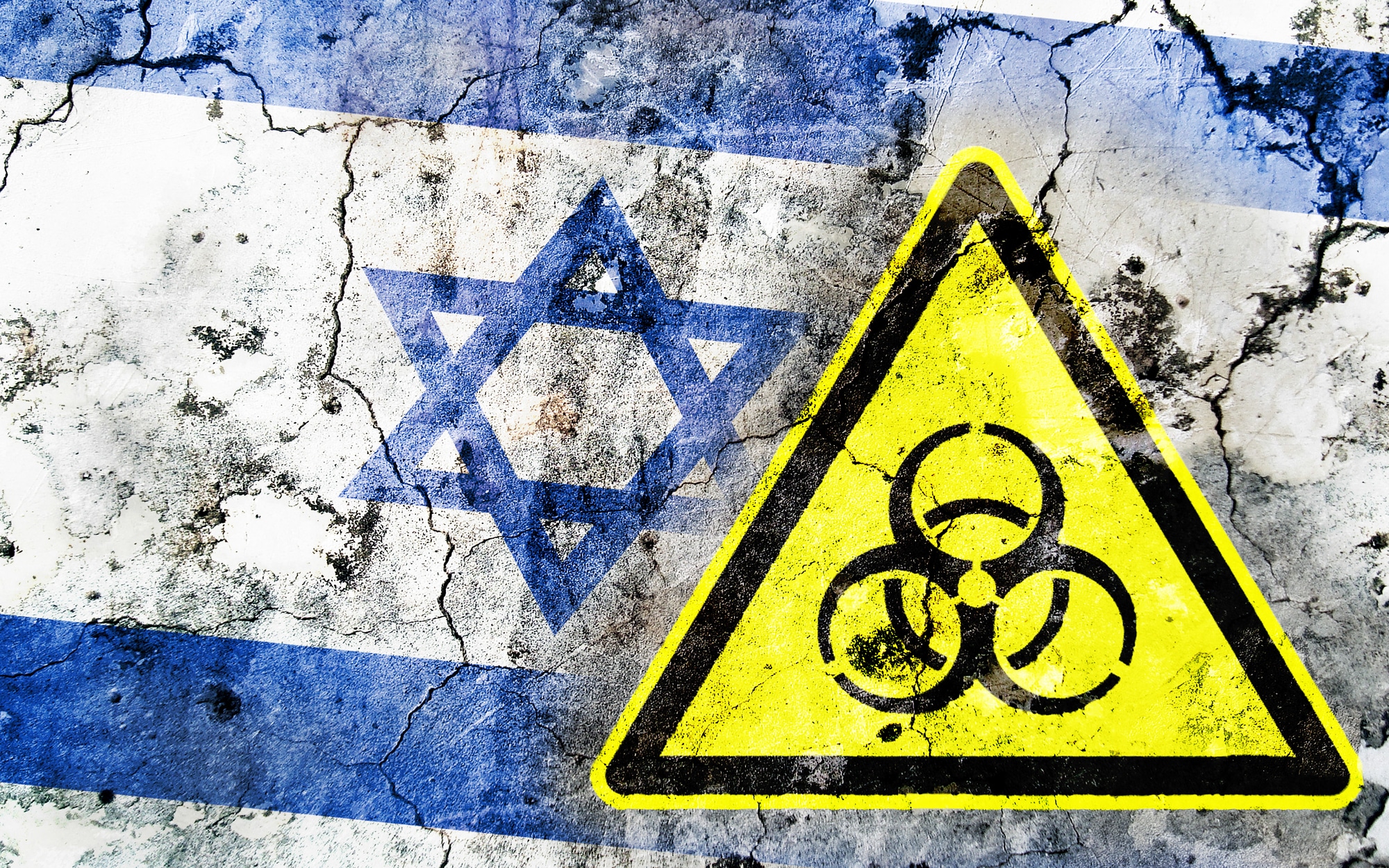
Israel has maintained a deliberate posture known as nuclear opacity—in Hebrew, amimut—for nearly six decades. The policy was formally codified in 1969 in a secret accord between Prime Minister Golda Meir and President Richard Nixon, and has remained in place ever since. As Foreign Affairs summarized, it combines secrecy, signaling, and denial: officials are prohibited “both by law and by custom” from discussing nuclear activities; Israel implies capability without confirming it; and the government neither confirms nor denies possession.
The canonical formula, first given by Prime Minister Levi Eshkol in 1966 and repeated ever since by Aviezer Pazner, is that Israel “will not be the first to introduce nuclear weapons into the Middle East.” The goal, as scholar Avner Cohen has documented, is to allow Israel to “live in the best of all possible worlds by having the bomb but without having to deal with many of the negative consequences that such possession entails”—namely international sanctions, Nuclear Non-Proliferation Treaty (NPT) obligations, and a formal nuclear arms race in the region.
Israel has never signed the Nuclear Non-Proliferation Treaty, has never conducted a publicly acknowledged nuclear test, and has never been subject to international inspections at the Dimona facility. This posture was codified in a secret 1969 deal between Israeli Prime Minister Golda Meir and President Richard Nixon. As long as Israel did not publicly test or declare nuclear weapons, the United States would stop pressuring Israel to sign the NPT and halt inspections of Dimona.
Estimates consistently place Israel’s assembled nuclear arsenal at approximately ninety warheads, though the country holds enough fissile material for substantially more. SIPRI estimated in 2025 that Israel possesses roughly ninety warheads supported by thirty aircraft, fifty land-based missiles, and ten sea-based missiles. The Nuclear Threat Initiative assessed Israel’s plutonium stockpile at 750 to 1,110 kilograms, enough for up to 300 potential weapons.
Israel’s warheads rely on plutonium produced at the Negev Nuclear Research Center near Dimona in the Negev desert. Israel operates six Dolphin-class submarines believed capable of launching nuclear-armed cruise missiles, and the Jericho III ballistic missile has an estimated range of 4,800 to 6,500 kilometers—sufficient to reach targets across the Middle East, Europe, and into Asia. The nuclear-capable submarine fleet gives Israel a potential second-strike capability, though the Center for Arms Control and Non-Proliferation notes there is “no solid evidence” of confirmed nuclear deployments on the submarines.
The program traces back to an agreement reached in 1956 in which Shimon Peres, then director-general of Israel’s Defense Ministry, negotiated French assistance to construct a plutonium-producing reactor near Dimona. The Suez Crisis was the political catalyst: France had invited Israel to participate in the Suez military operation and, in exchange, agreed to provide the nuclear reactor. The initial agreement was struck in September 1956 and reaffirmed at the Protocol of Sèvres on October 24, 1956—the same summit at which France, Britain, and Israel coordinated the Suez invasion.
The formal Dimona package was signed on October 30, 1957, including the reactor, natural uranium fuel, and a reprocessing plant capable of separating weapons-grade plutonium. French engineers began construction in late 1957 and 1958, with as many as 2,500 Frenchmen secretly living in Dimona by the end of the decade. By 1966, U.S. intelligence assessed that Israel had crossed the nuclear threshold and possessed a functional weapon.
What had been assessed in secret for decades became documented fact when the most dramatic breach of Israel’s nuclear secrecy came in 1986. Mordechai Vanunu, a nuclear technician at Dimona, photographed the interior of the facility and brought evidence to The Sunday Times of London. His photographs and testimony provided the first hard public evidence that Israel had developed an estimated one hundred to two hundred nuclear warheads. Before the article was published, the Mossad lured Vanunu to Rome, abducted him, and transported him secretly to Israel. He was convicted of treason and espionage in a secret trial and sentenced to eighteen years in prison, more than eleven of which were spent in solitary confinement—he served every day of the full sentence. After his release in 2004, he remained subject to severe restrictions on travel and contact with foreign journalists, and was re-arrested multiple times for violating those conditions.
The policy of willful blindness to Israel’s nuclear weapons program has a direct legal dimension. The Symington Amendment requires termination of most U.S. military and economic assistance to any country that receives nuclear enrichment technology outside international safeguards. The Glenn Amendment prohibits aid to undeclared nuclear states not signed to the NPT. Critics argue that decades of U.S. military aid to Israel—estimated at approximately $234 billion in inflation-adjusted terms since these laws took effect, according to Grant Smith of the Institute for Research: Middle Eastern Policy—violates these statutes. Every administration since Gerald Ford’s has simply chosen not to trigger the mandatory cutoff by refusing to formally acknowledge what the CIA and intelligence community have assessed for decades.
In 2012, the Department of Energy, acting under State Department guidance, issued a secret directive designated WNP-136—”Guidance on Release of Information Relating to the Potential for an Israeli Nuclear Capability”—effectively institutionalizing a gag on U.S. government officials and contractors who discuss the Israeli nuclear program, with imprisonment as the threatened consequence.
Rep. Castro’s letter represents a crucial first step toward dismantling the dangerous fiction that has enabled Israel to operate outside the rules-based international order for nearly six decades. Exposing Israel’s nuclear arsenal is essential not only for maintaining regional stability and restoring balance of power in the Middle East, but for holding Israel accountable to the same nonproliferation standards imposed on every other nation. As long as Washington maintains willful blindness to Dimona, it cannot credibly demand transparency from Iran, enforce the NPT globally, or prevent a regional arms race that threatens to spiral beyond control.
Accountability begins with acknowledgment, and Castro’s demand to end the ambiguity is the necessary foundation for a coherent, lawful U.S. policy in the region.