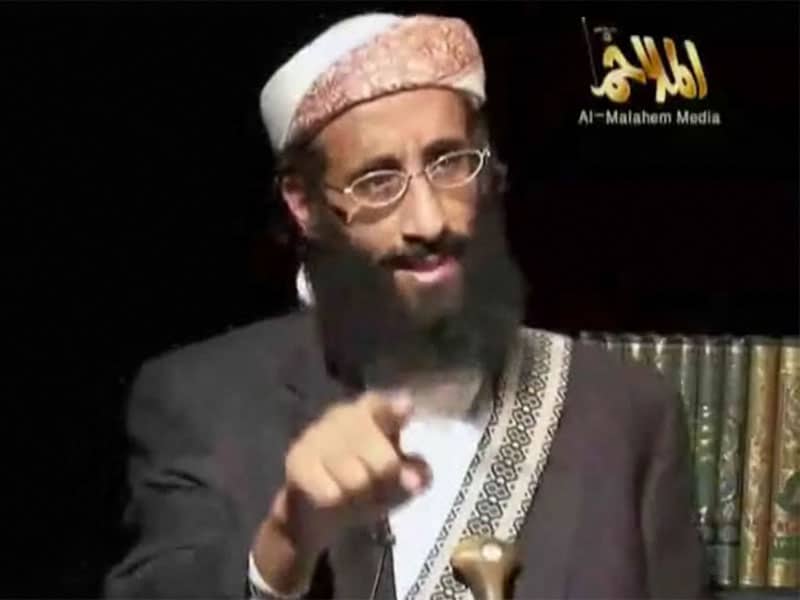
In 1990, the U.S. Agency for International Development (USAID) provided “full funding” for one Anwar Nasser Abdulla al-Awlaki for studies in civil engineering at Colorado State University.
There was only one problem: the USAID document listed his birthplace as Sana’a, Yemen. Awlaki was actually born in Las Cruces, New Mexico, an inaccuracy which federal security agent Ray Fournier and The New York Times describe as being done in an attempt to qualify for scholarship money.
Awlaki returned to the United States on October 23, 2000, just two weeks after the bombing of the USS Cole in Yemen. This sequencing is worth mentioning, but at this time the FBI did not establish any connection between Awlaki and the attack.
Just months before September 11, Awlaki moved to Virginia and became an imam at the Dar Al-Hijrah Mosque in Falls Church. After the events of 9/11, on September 15, he was questioned by authorities and claimed he flew into Washington DC’s National Airport at 9 AM—less than an hour before the Pentagon was hit.
Significantly during interrogations, Awlaki would not show his passport and left the interview at one point to take an “urgent” phone call. When asked about his feelings about jihad, he would go on to state “I would like not to comment on that.”
Years later, in 2003, Awlaki himself would initiate a conversation with the FBI, stating he was “astonished by some of the talk circulating in the media.” This included allegations of him serving as a “spiritual advisor” to the hijackers, to which Awlaki stated he would like to “clarify any misunderstandings.”
As one FBI agent asked upon receiving correspondence from Awlaki, “Holy crap—isn’t this your guy?”
While they discussed a potential meeting in London, the meet up never happened as Awlaki stopped replying. Still, the story didn’t end there.
In 2004, the 9/11 Commission Report was released in which Awlaki’s relationship with the hijackers was detailed. In the report, it discusses hijackers Nawaf al-Hazmi and Khalid al-Mihdar who were reported to have “developed a close relationship” with Awlaki.
Years later, on July 16, 2010, Awlaki was revealed by the U.S. Treasury as a key leader for al-Qaeda in the Arabian Peninsula (AQAP), and described as being increasingly dangerous with an “operational role” in the group.
This included assistance to Umar Farouk Abdulmutallab, known by some as the “underpants bomber,” who attempted to detonate a device in mid-air during a flight on Christmas 2009. Awlaki also exchanged messages with Nidal Hasan before he killed thirteen people at Fort Hood in 2009. In 2010, Faisal Shahzad—who attempted to use a car bomb in Times Square—stated he was a “fan and follower” of Awlaki.
Awlaki was killed a year later in Yemen by a drone strike. Weeks later, his 16-year old son was also killed by a drone strike which raised multiple legal and ethical questions, as he was a U.S. citizen and killed in a country the United States was not formally at war with. His daughter was also killed in a raid over five years later.
As families of 9/11 victims sued the Saudi Arabian government, more potential reveals were provided in 2015. This included a witness during a civil lawsuit who stated they saw Hazmi and Mihdhar at a second-floor guest room at Awlaki’s San Diego mosque and also that he had “closed-door meetings in San Diego with al-Mihdhar, al-Hazmi, and another individual, whom al-Bayoumi had asked to help the hijackers.”
An April 4, 2016, FBI “Encore Investigation Update, Review and Analysis” discussed how Awlaki had phone contact with Ziyad Khaleel—an alleged equipment procurer for Osama Bin-Laden. It was this connection that led the FBI to open an investigation into Awlaki in the first place in 1999.
A part of Operation Encore released in 2021, the Joe Biden administration revealed that Saudi diplomat Fahad al-Thumairy had directed an associate to look after “two very significant people,” who were later identified as Hazmi and Mihdhar.
Later reveals also show Omar al-Bayoumi—who supported both Hazmi and Mihdhar—worked as an agent of Saudi intelligence. Awlaki was later revealed to have phone calls with Bayoumi just days after Bayoumi was setting up bank accounts for the hijackers in San Diego. Videos released in 2022 show Awlaki warmly greeting Bayoumi before the events of September 11.
With the U.S. government having years of warnings, connections, and unanswered questions, Awlaki’s story has continued to raise questions about intelligence failures, foreign alliances, and the consequences of intervention. As we approach the 25th anniversary of 9/11, the question Awlaki leaves behind is why so many warning signs were missed, and why some answers remain hidden.