
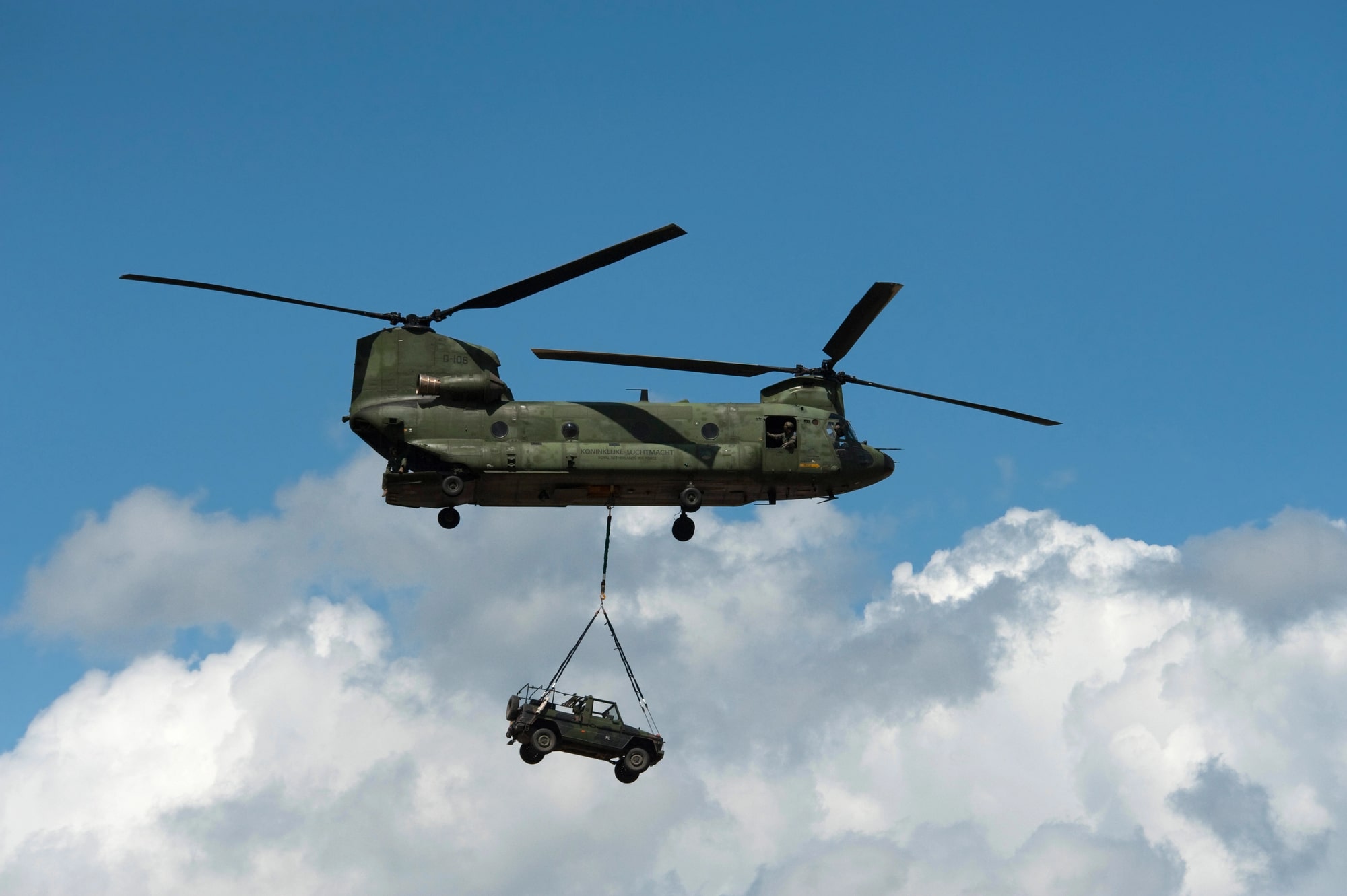
Roughly 4,000 soldiers of the Army’s 2nd Armored Brigade Combat Team, 1st Cavalry Division, unpacked their gear in the second week of May. The Associated Press reported that the Pentagon had scrapped their rotation to Poland altogether, thinning American numbers in Europe by blocking arrivals instead of extracting anyone already on the ground. Three officials tied the cancellation to a presidential order signed at the start of May directing a cut of roughly 5,000 troops across the continent. Nobody warned Warsaw.
Rep. Don Bacon (R-NE) said the Polish officials he reached described themselves as “blindsided.” Pentagon spokesman Joel Valdez pushed back, arguing that “the decision to withdraw troops follows a comprehensive, multilayered process” and that it was “not an unexpected, last-minute decision.” Polish Prime Minister Donald Tusk told his own public he “received assurances” that the change carried no strategic weight.
That single canceled rotation explains the whole architecture of President Donald Trump’s approach to American forces overseas across two terms. Units relocate constantly, but they almost never come back to the United States and stay.
The order driving the Poland reversal landed on May 1, 2026, days after German Chancellor Friedrich Merz complained that Washington was being “humiliated” by Iran’s leadership and lacked any meaningful war strategy worth the name. Chief Pentagon Spokesman Sean Parnell confirmed that Defense Secretary Pete Hegseth signed the withdrawal, stating “This decision follows a thorough review of the Department’s force posture in Europe and is in recognition of theater requirements and conditions on the ground. We expect the withdrawal to be completed over the next six to twelve months.” Those 5,000 represent roughly 14% of the 36,000 Americans garrisoned in Germany.
Within days Trump promised the reduction would run “a lot further,” and he dangled the same threat over Italy and Spain. The administration had already tested the maneuver on NATO’s eastern flank half a year earlier. On October 29, 2025, the Pentagon announced that the rotational U.S. brigade in Romania—the 2nd Infantry Brigade Combat Team of the 101st Airborne Division, which had rotated through Romania, Hungary, Bulgaria, and Slovakia—would return to Fort Campbell with no replacement unit. Roughly 1,000 Americans remained in Romania after the drawdown. The Pentagon justified the decision defensively, insisting it was “not an American withdrawal from Europe or a signal of lessened commitment to NATO and Article 5” and crediting Secretary Hegseth’s “deliberate process to ensure a balanced U.S. military force posture.”
Senate Armed Services Chairman Roger Wicker (R-MS) and House Armed Services Chairman Mike Rogers (R-AL) rejected that argument entirely. The decision came “just weeks after Russian drones violated Romanian airspace,” they noted, and had been made without consulting Congress despite “clear, bipartisan, and bicameral support for a robust U.S. posture in Europe” in both chambers’ versions of the FY26 NDAA. “We strongly oppose the decision not to maintain the rotational U.S. brigade in Romania and the Pentagon’s process for its ongoing force posture review that may result in further drawdowns of U.S. forces from Eastern Europe,” they declared.
Anyone who watched the first term recognizes the choreography. Trump ordered troops out of Germany in June 2020 and framed it as collecting on an unpaid bill, telling reporters “Until they pay, we’re removing our soldiers.” Then-Defense Secretary Mark Esper presented the finished plan on July 29, announcing:
“The current EUCOM plan will reposition approximately 11,900 military personnel from Germany, from roughly 36,000 down to 24,000, in a manner that will strengthen NATO, enhance the deterrence of Russia, and meet the other principles I set forth.”
The clarification that followed matters more than the headline number:
“Of the 11,900, nearly 5,600 service members will be repositioned within NATO countries, and approximately 6,400 will return to the United States, though many of these or similar units will begin conducting rotational deployments back to Europe.”
Headquarters slid toward Belgium, aircraft and fighter squadrons toward Italy, and the lead element of the newly established V Corps headquarters toward Poland. Lawmakers from both parties objected, execution never started, and President Joe Biden cancelled the plan in February 2021. Poland had meanwhile offered upward of $2 billion in 2018 for a permanent U.S. installation its leaders called Fort Trump, and the American footprint there climbed toward 10,000 rotational troops regardless.
Every theater produced the same result. The December 2018 announcement of a complete Syria exit cost Trump both Defense Secretary Jim Mattis and presidential envoy Brett McGurk, and still left Americans in country. Outgoing Syria envoy Jim Jeffrey later explained the mechanics to Defense One, “We were always playing shell games to not make clear to our leadership how many troops we had there.” He went on:
“What Syria withdrawal? There was never a Syria withdrawal. When the situation in northeast Syria had been fairly stable after we defeated ISIS, [Trump] was inclined to pull out. In each case, we then decided to come up with five better arguments for why we needed to stay. And we succeeded both times. That’s the story.”
Afghanistan slid from about 13,000 troops to 2,500 under the Doha agreement of February 2020. Iraq fell from 3,000 to 2,500 on the same January 2021 timeline. Some 700 troops exited Somalia that December and reappeared in Kenya and Djibouti, close enough that AFRICOM staff joked about “commuting to work.” Biden reversed the arrangement in 2022.
Whatever one theater surrendered, another absorbed. The Qasem Soleimani strike in January 2020 brought roughly 3,750 paratroopers of the 82nd Airborne into the region, layered atop the 14,000 the administration had already dispatched since May 2019. The second term poured thousands of active-duty soldiers onto the southern border, squeezed Syria toward a single outpost, and turned the Caribbean into the largest concentration of all. By late 2025 the buildup against Venezuela included roughly 15,000 troops, more than a dozen warships, a submarine, and the carrier USS Gerald R. Ford. Hegseth formally named the campaign on November 13, writing:
“Operation SOUTHERN SPEAR defends our Homeland, removes narco-terrorists from our Hemisphere, and secures our Homeland from the drugs that are killing our people. The Western Hemisphere is America’s neighborhood — and we will protect it.”
The boldest instincts never became orders. The New York Times revealed in January 2019 that “several times over the course of 2018, Mr. Trump privately said he wanted to withdraw from the North Atlantic Treaty Organization,” telling his top national security officials “he did not see the point of the military alliance, which he presented as a drain on the United States.” Michèle Flournoy warned that exiting would rank as “one of the most damaging things that any president could do to U.S. interests.” National Security Advisor John Bolton recorded Trump treating a total Korea pullout as a bargaining chip, quoting him saying “That puts you in a very strong bargaining position.” Esper wrote that he “became very uneasy when Trump talked about the need to pull all US forces completely out of Korea,” and recalled Secretary of State Mike Pompeo floating it as a second-term project, to which Trump replied “Yeah, yeah, second term” while flashing what Esper described as a Cheshire cat smile.
Those impulses hardened into a bureaucratic review rather than an exit. On July 28, 2026, Under Secretary of Defense for Policy Elbridge Colby announced that the Pentagon had “kicked off” the Europe Posture Review, framing it as guaranteeing “that NATO is moving fast and irreversibly toward Europe taking primary responsibility for its conventional defense.” The review follows Hegseth’s formal announcement at the NATO Defense Ministerial in Brussels on June 18, and gives allies up to six months of process before any recommendations land. Allies shoulder more. Americans stay put.
The tallies bear that out. About 80,000 troops hold positions in Europe, roughly 36,400 in Germany, 12,700 in Italy, and 10,200 in Britain. Another roughly 81,000 occupy overseas positions across the Indo-Pacific, including some 53,500 in Japan and 24,000 in South Korea. The FY2026 defense bill locks in statutory floors forbidding cuts below roughly 76,000 in Europe and 28,500 in Korea.
Two terms, dozens of announced withdrawals, and the Army’s brigades are still unpacking their gear in Europe, the Pacific, and beyond. Rhetoric about restraint and retrenchment is one thing; the discipline to see it through is another. On that score, the Trump administration has been exactly what its critics always suspected: all talk, no action.