
In November 1903, the United States executed one of the most blatant territorial amputations in modern history when President Theodore Roosevelt dispatched American warships to shield a rebellion on the Colombian isthmus. Bogota had just rejected a treaty that would have granted Washington a renewable lease of one hundred years on a canal zone while leaving Colombia sovereign. Roosevelt moved quickly, sending the gunboat Nashville to Colón with orders to stop Colombian troops from reaching Panama City, and recognizing Panama days later.
As Roosevelt boasted at Berkeley in 1911, “I took the Isthmus, started the canal, and then left Congress not to debate the canal, but to debate me.” Yet across the Pacific, American forces had waged a war of more than three years to crush Filipino independence fighters, with Roosevelt declaring victory in July 1902 and fighting against holdouts, including the Moros, dragging on until 1913. That imperial war established a brutal template where self-determination is championed solely when it advances American strategic assets and violently extinguished when it does not.
That cynical pattern defined American posture across the twentieth century. Covert operations repeatedly harnessed peripheral ethnic and regional tensions to pressure adversaries while Washington washed its hands of the human fallout. From the late 1950s to the early 1970s, the Central Intelligence Agency ran a covert paramilitary and political campaign around Tibet, bankrolling guerrillas based in Nepal and subsidizing the Dalai Lama and Tibetan exile offices, as a January 1964 memorandum to the Special Group shows. The memo put the Tibetan program’s cost for fiscal year 1964 at roughly $1.735 million. It described the aim as keeping “the political concept of an autonomous Tibet alive,” not delivering independence. When President Richard Nixon sought rapprochement with Beijing, Washington wound down the program.
This playbook ran in parallel in Indonesia, where the CIA armed regional rebel colonels in 1957 and 1958 to undermine the neutralist government of Sukarno, an operation exposed in May 1958 when CIA pilot Allen Pope was shot down over Ambon, as historian William Blum details in Killing Hope. Simultaneously, the agency ran Project AERODYNAMIC against the Soviet Union, subsidizing Ukrainian nationalist exiles, shielding figures like Mykola Lebed from deportation, and funding anti-Soviet propaganda aimed at Ukraine. Through the 1959 Captive Nations resolution, Congress declared support for the freedom aspirations of peoples under communist rule, while the covert programs above treated some of those same peoples as expendable instruments against Eurasian rivals.
The selective defense of borders became stark during the Balkan collapse and its aftermath. In February 2008, Secretary of State Condoleezza Rice recognized Kosovo, calling independence “the only viable option to promote stability in the region.” Yet six months later, when Russia recognized Abkhazia and South Ossetia after the war with Georgia, the W. Bush administration reversed its rationale. President Bush announced that “The territorial integrity and borders of Georgia must be respected, just as those of Russia or any other country.”
There is a method to this foreign policy madness. Political scientist Bridget Coggins argued in the journal International Organization that great powers use recognition strategically to advance their own interests, so external politics, more than domestic factors, determine which secessionist movements become states. David Siroky, Milos Popovic, and Nikola Mirilovic found in the Journal of Peace Research that countries in the American sphere of influence, with strong economic and military ties, recognized Kosovo more often and faster. Washington championed the unilateral secession of Kosovo from Serbia, a traditional Russian ally, while backing Jakarta’s grip on East Timor with diplomatic cover and arms transfers through much of its brutal occupation.
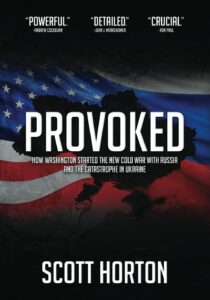
This instrumentalization explains why Washington rejected Crimea’s 2014 referendum and fiercely defended Ukraine against breakaway enclaves in the Donbas. In Ukraine, where Kiev’s regime and military serve as a battering ram against Moscow, territorial integrity suddenly becomes an untouchable sacred doctrine. Washington fully supported Kiev when it mobilized military power to forcibly integrate eastern breakaway enclaves, treating self-determination as criminal subversion because the local movement aligned against American geopolitical goals. When Washington facilitated the 2011 partition of South Sudan, peeling away roughly 75% of Sudan’s oil as recorded by the Congressional Research Service, official statements welcomed the birth of a new nation.
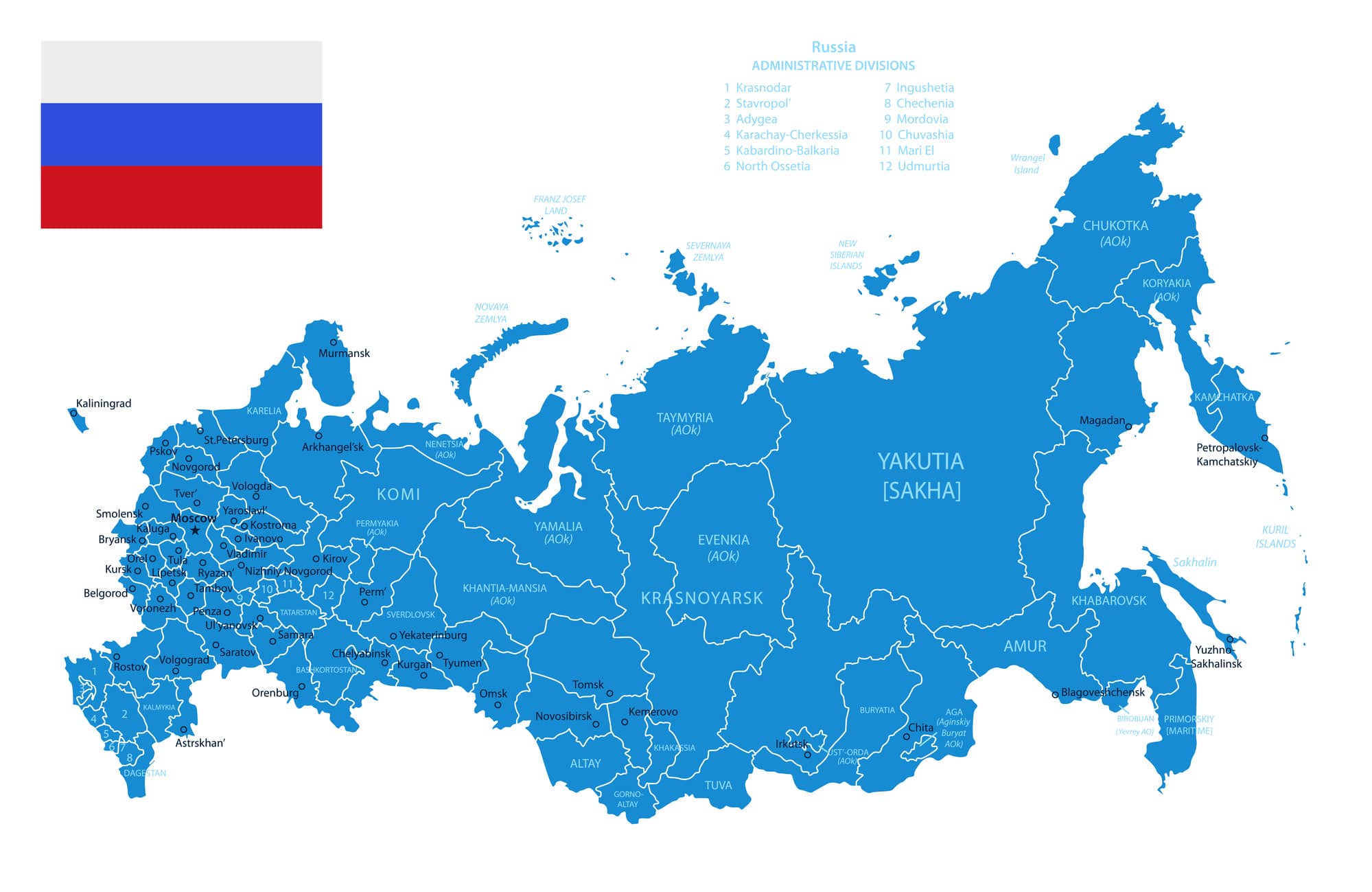
Parts of Washington have since flirted with similar themes against Moscow. In 2022, the Helsinki Commission hosted a briefing titled “Decolonizing Russia: A Moral and Strategic Imperative,” though its panelists insisted decolonization did not mean partition. In February 2023, the Hudson Institute and Jamestown Foundation convened a symposium on “Preparing for the dissolution of the Russian Federation,” according to Peter Rutland. In Responsible Statecraft, Rutland, a Wesleyan University government professor, called pushing for the break-up of Russia “absolute folly,” warning that fragmentation would trigger civil wars and ethnic cleansing in a country holding thousands of nuclear weapons.
From the early days of gunboat engineering on the Colombian isthmus to twenty-first century proxy flashpoints, the United States has treated secessionism not as a universal human right, but as a cynical instrument to weaken global competitors while ensuring its own sphere remains entirely intact.
The United States must pursue a different path, one of non-intervention that allows countries to settle questions of autonomy and territorial integrity among themselves, without Washington manipulating events.