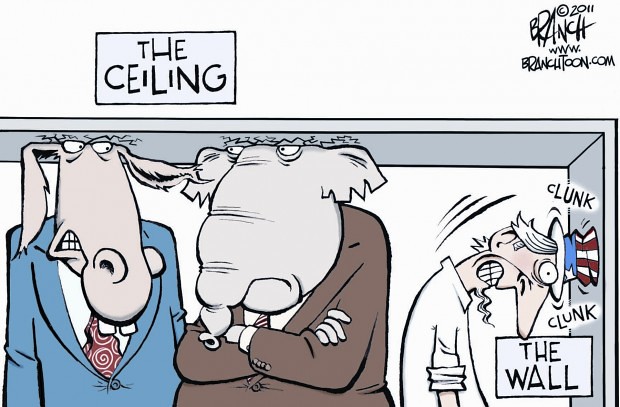
Last week the House passed legislation increasing the debt ceiling. The bill was supported by all but four Republicans. For some Republicans, this was the first time they had ever voted for a debt ceiling increase. Perhaps the reason they did so this time was because the legislation also promised to reduce federal spending by $4.5 trillion over the next decade. Most of those spending reductions are achieved by rolling back Fiscal Year spending to 2022 levels and then limiting increases in spending to one percent for the next ten years. The bill also returns unspent COVID relief money to the U.S. Treasury and eliminates President Biden’s student loan forgiveness programs.
Perhaps the most significant part of the bill is the REINS Act. This legislation requires congressional approval of any new federal regulation that will have an impact of more than $100 million, will have significant harmful impact on the economy, or will increase consumer prices. Even though the bill increases spending and debt, there are reasons a supporter of limited government might vote for it.
However even in the unlikely event that this bill is passed in the Senate and signed into law by President Biden, it is unlikely that the one percent spending cap would remain in force for the full ten years. Historically, spending caps imposed as part of a balanced budget or debt ceiling deal do not last for more than one or two Congressional terms. This is because every spending program is “protected” by members of Congress whose constituents and/or donors benefit from the program. This process already occurred with this bill before it was even voted on, as Speaker McCarthy had to remove provisions limiting ethanol subsidies to appease several farm state Republicans.
Surely lobbyists for the military industrial complex are already plotting to use hysteria over China, Putin, Iran, or one of the U.S.’s many other designed enemies to justify greater than one percent increase in military spending.
The only reason the U.S. government is able to run up such huge deficits without experiencing a complete economic meltdown is the dollar’s world reserve currency status. But the growing de-dollarization movement-fueled by the US government’s fiscal recklessness and hyper-interventionist foreign policy should be a wake-up call to Congress.
Sadly, few in DC seem to be paying attention.
The government’s fiscal situation will soon worsen, as both the Social Security and Medicare trust funds will likely be bankrupt within the next decade, forcing Congress to find an additional $116 trillion to fully fund them.
The looming economic crisis is a symptom of our moral and philosophic crisis. Too many Americans have bought into the lie that government can and should provide them with economic and physical safety while promoting “global democracy” abroad. Therefore, the most important step in the liberty movement now is convincing more people to apply the same moral code to theft and murder committed by government as they apply to those same crimes by private citizens. The government, at the very least, should be held to the same moral codes as the people it governs.
Ensuring that government follows the same nonaggression principle as law-abiding citizens is the key to a society of freedom, peace, and prosperity.
This article was originally featured at the Ron Paul Institute for Peace and Prosperity and is republished with permission.