
In 1996, I was a 21-year-old antiwar conservative who cast my first presidential vote ever for Pat Buchanan in the Republican primaries. I was also a native South Carolinian and Lindsey Graham was already running for a second term representing my state in the U.S. House.
In 2008, I voted for Dr. Ron Paul and against war. Graham had become a senator by then, succeeding Strom Thurmond and representing the Palmetto state for five years.
In 2024, I voted for Donald Trump for the first time and against war, as he had promised numerous times on the campaign trail. But instead, Trump started a new war with Iran and molded his administration with a foreign policy very much to the likeness of 24-year Senate veteran Lindsey Graham.
In July, Senator Graham died. No more Grahams. It was done.
Or so I thought. Instead, with Trump’s encouragement, South Carolina’s governor installed his sister Darline as a stand-in vote for war.
Literal neocon birthright succession. In America. Seriously!
I wasn’t the only South Carolinian who thought we would never get rid of this guy, in one form or another.
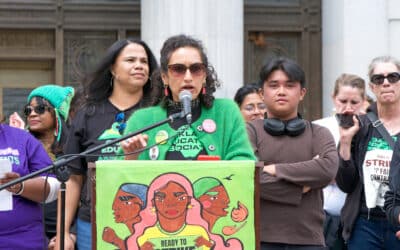
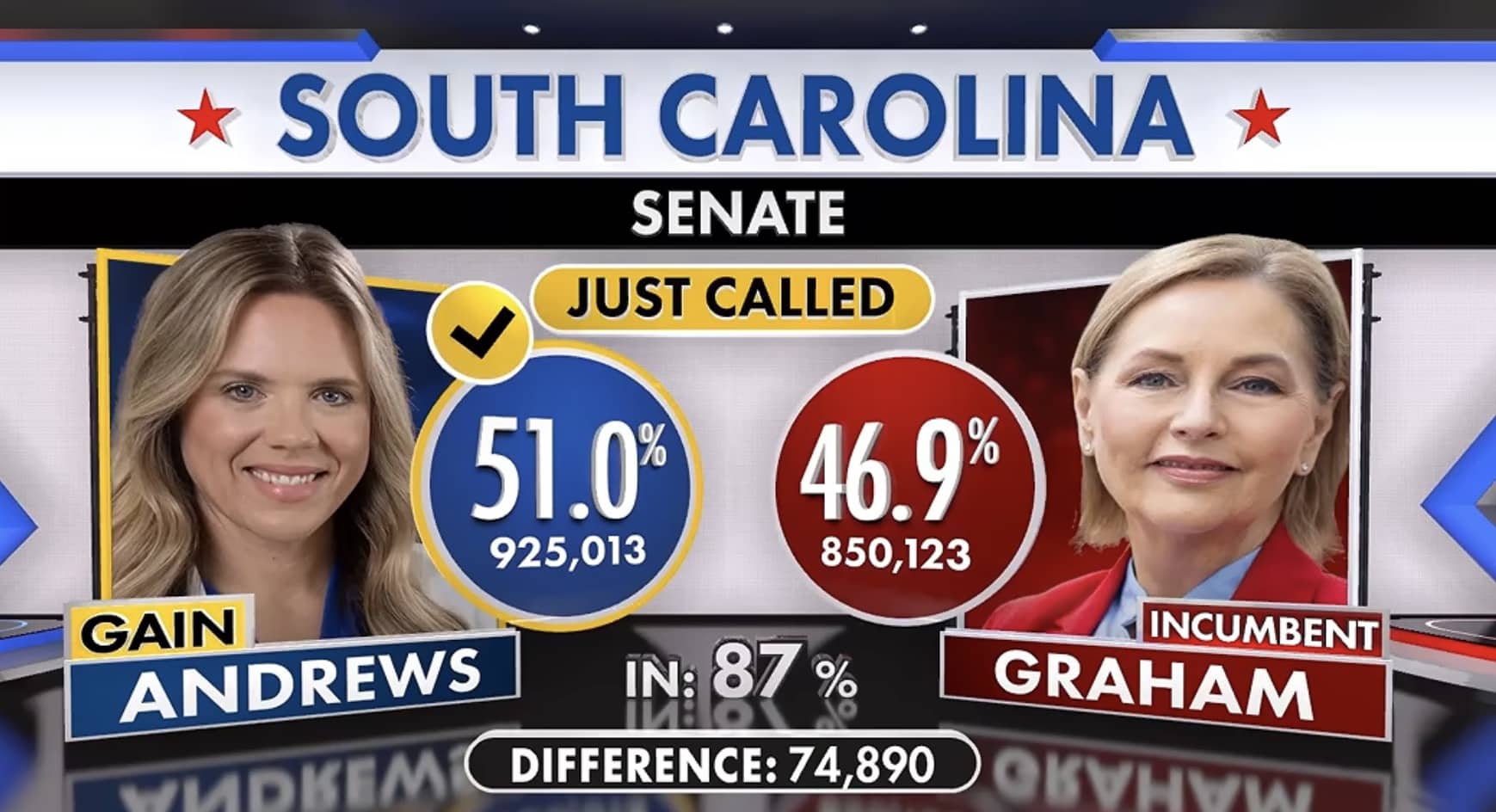
But we did. On election night, November 3, Annie Andrews defeated four-month incumbent Darline Graham to become the first Democratic senator elected from my state this century.
It’s easy to imagine Darline winning a full term if not for the Iran war, an environment where people might have grumbled about how she got her seat, but still loyally voted Republican.
But that’s not what happened, and the war was at the center of what did happen.
“My opponent…had the opportunity to vote to end the war,” said Democrat Andrews in her one and only debate with the female Senator Graham in early October. “But three times in a row, she voted to continue it.”
Andrews is a pediatrician who downplayed her party label and history of social progressivism in this race, instead emphasizing her “doctor” title, her family, and most of all, pocketbook commonality with South Carolina voters on things like groceries and healthcare.
Which also meant talking about the Iran war. Andrews was never some thunderous antiwar candidate, and certainly no Buchanan or Paul on any level, or even an apporximation of the late Democratic Senator Eugene McCarthy.
When Lindsey Graham was still alive and still who Andrews was running against—and probably with no chance of defeating the two-decade incumbent—her rhetoric was more fiery. “Lindsey Graham wants to send your sons and daughters to war,” Andrews said in March. “Your sons and daughters are the reason I am in this fight.”
But though comparatively gentler toward his familial successor, Andrews constantly tied the war in Iran to rising costs, especially gas, and noted that she wanted it to end and her Republican opponent did not.
“This reckless war in Iran has helped drive fuel prices to record highs,” Andrews said at a campaign stop in late September. “Darline Graham has voted multiple times to continue this war that is directly responsible for the six-dollar diesel.”
“We need to lower the damn diesel,” Andrews declared.
Not a hard message to understand at all. Basic. Simple.
Donald Trump handily won South Carolina in each of his three presidential campaigns, running on an “America First” platform each time.
I don’t recall Andrews ever uttering that phrase throughout her race. But you could buy an “America First” t-shirt on her official campaign website.
That message didn’t need to be any more explicit, and the Democrat’s contrast with Graham was enough.
In the debate, Graham would deliver windup, neocon toy-sounding “answers”—if that’s what you wanted to call them—particularly to war questions like, “I support a strong military. I believe in peace through strength.”
Okay, Ronnie.
“I fully believe that we need to stand with Israel,” Graham would add. “The same people that want to hurt and attack Israel want to come after us.”
Graham was just going through the motions.
Doing her best impression of her brother’s Global War on Terror, we-have-to-fight-them-over-there-so-we-don’t-have-to-fight-them-over-here routine, Darline Graham even said of Iran, “The terrorists that were close to getting a nuclear weapon will come here.”
She was a hawk cartoon.
Obviously, Andrews won in a deep red state along with other Democrats, who nationally did the same, for example senator-elect James Talarico, who turned Texas blue on election night.
It was an unpopular year for Republicans because of their even more unpopular war.
But the combination of the war factor and also Graham gaining her seat by birthright did not sit well with South Carolinians, enough to hand that long-held Republican seat to a Democrat.
Will political novice Andrews follow through on her promises? Appearing on Fox News (another thing Democrats aren’t necessarily known for) right after her election, host Bret Baier asked her, “What about dealing with President Trump? It seems like there are different voices in the Democrats coming in about how that’s going to go, whether it’s unified to fight or deal. Where are you?”
“Yeah, I’m willing to work with President Trump to secure the border, to stop these Medicaid cuts, to find a way out of this war,” Andrews replied. “Fighting the administration is not gonna lower gas prices and grocery prices.”
Just as no one would have predicted Lindsey Graham’s sudden death at 71, even fewer in South Carolina and beyond would have predicted that his seat would have gone to a Democrat in 2026.
Because of a war that will always be as much his legacy as Donald Trump’s.
Regardless, the Graham dynasty is finally over. I’ll take it.