
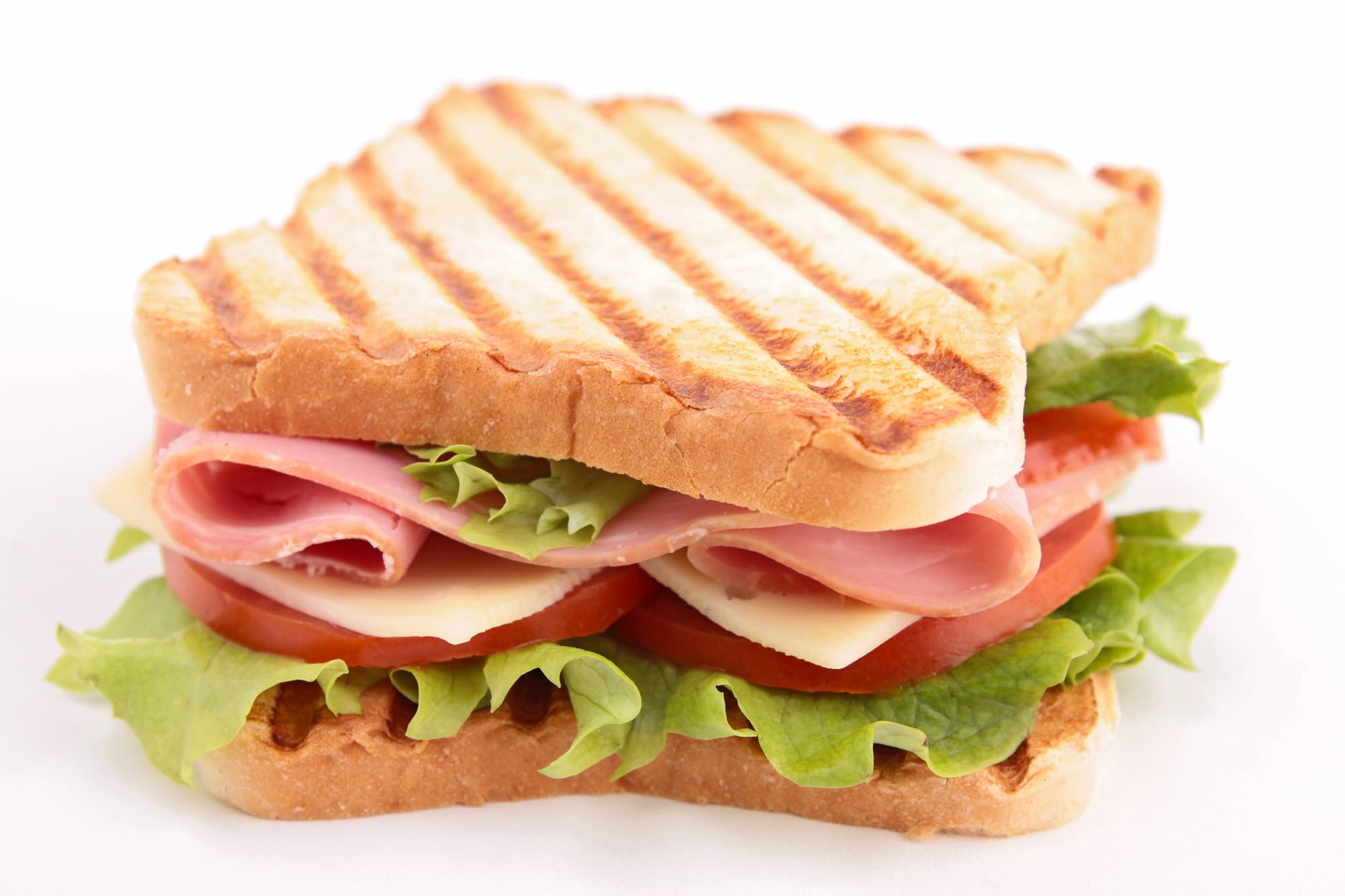
The other day, my wife made me a sandwich, and I ate it. Who benefitted from this transaction?
I enjoyed the good, but my wife did all the work.
I like to think I benefitted from the transaction. It’s in the enjoyment of a good that’s the benefit of the good. The labor in creating the good is necessary, and often troublesome, but it’s not the benefit of the good.
But President Donald Trump and defenders of economic protectionism who despise trade deficits think my wife cheated me because she had the privilege of doing all the work. Or, at least that’s the implication protectionists make in their public pronouncements on U.S. trade policy with the world. I now have a sandwich trade deficit with my wife, according to them.
Even when there is money involved in a modern economy, it’s important to keep in mind the good and not the money is the primary point of the transaction and the primary benefit in it.
When a hungry person goes into the sandwich shop Subway, the diner gives the money to the Subway worker because he no longer wants the money and prefers the sandwich. The sandwich, not the money, is the primary point of this transaction. Nobody but a fool wants money for money’s sake.
People accept money, not because they want money for money’s sake, but because they want some other good further down the line instead of the money they get from their labor. The Subway worker and franchise owner doesn’t want the money itself, but an actual good they can buy with that money later. Money is only a medium of exchange; it’s not a good in-and-of-itself.
This truth was brought into clear and humorous focus in the 1979 Steve Martin film The Jerk, where Martin’s character and his girlfriend in the movie (played by Bernadette Peters) went from being super-rich to flat-broke in a single day. “I don’t care about losing all the money,” Peters whined. “It’s losing all the stuff.” Money without the stuff just isn’t all that useful.
It’s by focusing on the money, and not enjoyment of the good, that Trump and his protectionist acolytes go completely off the rails in their economic analysis. Protectionists are essentially arguing that the diner is a fool because the money is more valuable than the sandwich, creating a trade deficit with Subway.
Of China, Trump has said:
“They were making from us $1 trillion a year. They were ripping us off like nobody’s ever ripped us off. And by the way, we have other countries that were just as bad. If you look at the European Union it was terrible what they’ve done to us. Almost every country in the world was ripping us off.”
Like the Subway analogy, Trump is laser-focused on the money and ignores the goods being produced and consumed entirely. In Trump’s fictional worldview, China is doing all the work and we Americans are the ones enjoying all the goods. Who’s really better off?
Trump is in reality fully incapable of demonstrating how China could possibly be “ripping us off.” China is a much poorer country than the United States. And all protectionist countries are poorer than free trading nations. If they are ripping us off, why do their people remain so much poorer? Why are their economies always so much poorer?
The answer is in simple math. Tariffs oppress 100% of the population all the time, increasing prices for literally everyone, and at most only help a small fraction of a country’s population with employment and an income. There’s no math that makes imposing more tariffs more often a net benefit to a society.
It’s a political truism that the United States is in economic decline today, while China and other countries are on the rise. But that political truism is so obviously false upon the slightest inspection. In fact, the only way someone could say American prosperity is falling in comparison to other countries is by not looking at all. The United States has the highest GDP per capita of any large country, outpaced only by a few oil sheikdoms and a dozen tiny city-states, the latter engaging in full-blown free trade out of economic necessity. Anyone who says the U.S. economy is in decline compared to other countries has simply never bothered to look at the math. And by the way, other countries are not growing faster than the U.S. either.
The second tier of next-richest countries after the United States and tiny free-trading city-states are the European countries, Canada, and Japan, all of whom engage in relative free trade, though somewhat less so than the U.S., and all of whom (except oil rich Norway) are very substantially poorer than the U.S.
Despite massive market reforms introduced since the 1980s, by imposing more tariffs and currency manipulation, China both impoverishes its own consumers and distorts markets away from maximum efficiency. This is why the Chinese people will always be poorer on average than Americans, absent a major Chinese government pullback in government intervention on international trade.
The United States is richer because we have completely free trade within our very large national economy and relatively free trade internationally, Trump’s efforts to the contrary notwithstanding. This is why Trump’s complaints about the European Union and Canada, both poorer economies on average than the U.S., “ripping us off” should fall on deaf ears to those actually looking at the numbers.
Protectionists who have the wide disparity of numbers on wealth between free trade countries and protectionist countries often switch their argument over to national security. And national security is an entirely different argument than prosperity. It’s not an economic argument at all; it’s an explicitly political argument. And that’s usually the bait-and-switch they use to tacitly admit (by changing the subject) that tariffs don’t promote prosperity. As soon as a protectionist falls to the national security argument, you know they’ve unconditionally surrendered the prosperity ground and they never really believed tariffs and trade barriers would bring a country wealth in the first place.
But neither does protection generally promote national defense. Wealth, not poverty, is a strong support for national defense. Who tends to prevail more in war, richer countries or poorer countries? Tariffs and protection actually put a nation’s national security at greater risk. With a large and prosperous economy like the United States has, a modest peacetime stockpile of foreign-manufactured goods (or raw materials) in the eventuality of military conflict is typically more than what’s needed to ensure national security against an invasion.
“We don’t make stuff anymore,” goes the popular political slogan, a falsehood that ignores the undeniable mathematical reality that the United States is still the second largest manufacturer in the world after China (a country with four times our population). Americans manufacture about twice as much goods per capita as the average Chinese. Of course Americans still make stuff, and lots of stuff. But we increasingly make things we’re more efficient at making, and fewer of the things we are not as efficient at making, which is why we’re richer than China and all of our more protectionist competitors.
The perpetual political complaint, an argument that’s nothing more than historical sentimentalism, about how Americans don’t make televisions (or some other consumer product) any more is really an admission by protectionists that they never read David Ricardo’s classic essay on comparative advantage. Ricardo demonstrated authoritatively in just a few pages how specialization in what a country does most efficiently creates more wealth for that country.
Or sometimes we hear a protectionist complaint about “fairness.” It’s unfair to American manufacturers, the argument goes, if other countries impose tariffs or other trade barriers to American exports to their country. But this argument ignores the most important part of the transaction and the most important mathematical equation. If the U.S. government retaliates with counter-tariffs, 100% of American consumers lose economically from tariffs by paying higher prices, and only a small fraction stand even the potential to gain employment from them (a theoretical potential that’s rarely actualized). The protectionist never cares about fairness to the American consumer. Never. The more tariffs, the more 100% of American consumers lose. There’s literally no math supporting tariffs, which is why the richest countries are always the ones with the freest trade policies. It’s also why protectionists never use any real math.
Trump has revealed that he doesn’t understand basic economics, that he doesn’t do math, and possibly even that he doesn’t have the skills to make a sandwich. I just can’t help wondering if Trump feels the way he does about trade because, as he was born into privilege and wealth, he never had to make anyone else a sandwich.