Last week, President Trump announced that the US would recognize Jerusalem as the capital of Israel.
The move was widely panned on the international stage, with many world leaders expressly condemning the action. Protests broke out in parts of Israel and the occupied territories. Demonstrations also took place in front of the US consulates in nearby Jordan and Turkey. Recognizing the reaction, the US State Department also provided a helpful travel advisory to inform Americans that the US government has endangered its citizens more than normal this month.
To readers unfamiliar with the Israel-Palestine conflict, it may not be obvious why this decision is so controversial. After all, Israel has considered Jerusalem to be its capital for some time, and in most cases, the US government would recognize the same capital that the country itself recognizes internally. The problem in Israel is that the ownership of a large part of Jerusalem is disputed.
In 1967, after the Six-Day War, Israel illegally annexed a large area of land known as East Jerusalem. Israel considers this to be part of Jerusalem and part of Israel proper. But prior to the war, East Jerusalem was actually administered by the country of Jordan and predominantly inhabited by Palestinians. Under international law, this type of land grab was and is illegal.
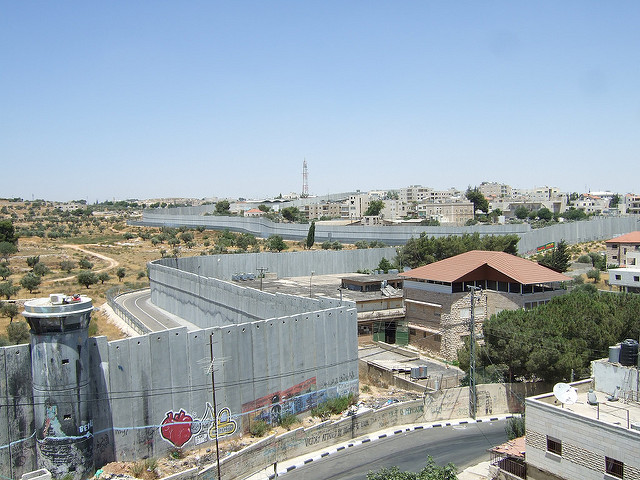
Today, many Palestinians still live in East Jerusalem under Israeli law. Their conditions are generally less dire than the ones that confront Palestinians in the West Bank and Gaza Strip. But as with the West Bank, Israel has been restricting development and expropriating the land of Palestinians to build illegal settlements. These very tangible and secular grievances are then compounded for some Palestinians by the religious significance of Jerusalem within Islam and Christianity, as well as Judaism. Most Palestinians are Muslim, but a small minority (~6%) are Christian.
Thus, when Trump decided to recognize Jerusalem as Israel’s capital, it amounted to a tacit endorsement of these policies–first the illegal annexation and now the ongoing settlement activities. The US is taking the Israeli government’s side is one of the major sticking points in the broader Israel-Palestine conflict. This naturally caused a sharp reaction from Muslim-majority nations that sympathize with the Palestinians. It also drew condemnation from as European nations that see the one-sided move as sabotaging any possible peace negotiations.
The Silver Lining?
Given the context above, the outrage expressed by Palestinians and others about this decision is clearly understandable.
But when we take a longer-term view of the matter, Trump’s decision may actually be a gift to the Palestinian cause–albeit an unintentional one.
Up until now, the US government’s pro-Israel stance has been obvious enough.
As one example, the US routinely grants billions of dollars in explicit foreign aid to Israel, in spite of the fact that Israel is one of the wealthiest nations in the world. Under President Obama, the aid was increased to $3.8 billion per year, to be paid out for the next ten years.
The US provides diplomatic cover for Israeli actions by consistently vetoing UN resolutions that are critical of Israeli activities. The typical excuse given for blocking criticism is that it is not helpful to the “peace process”.
The one exception to this trend of vetoes occurred when the Obama Administration finally allowed a UN resolution on illegal settlements in December 2016. This episode caused a proper uproar in the US political landscape, and it reveals just how biased the US policy was. In this case, the resolution in question was non-binding and toothless. Moreover, the US did not even vote in favor of the resolution condemning Israel’s settlements; it just abstained from the vote. Nevertheless, the Israeli government and its advocates in US politics described this failure to veto as tantamount to betrayal.
Clearly, no honest observer could mistake the US as a neutral party with respect to Israel and Palestine. And yet, the US still inserts itself into any negotiating process and proclaims itself to be an honest broker. This claim has always been absurd. But politicians in Washington, DC have usually made enough of the right noises to keep up the pretense of impartiality and avoid being challenged on their pro-Israel bias by anyone with real power.
This pretense had been strained by the inauguration of President Trump, who routinely brags of his support for Israel. And now, with the decision to recognize Jerusalem as the capital of Israel, this facade of neutrality will fall apart entirely.
With this move, the US has lost much of its credibility on the subject of Israel. You don’t consult Fox News for an objective assessment on the Republican Party and you don’t look to Uncle Sam for an impartial take on Israel-Palestine. And as the US loses its influence on this issue, other countries and governing bodies are likely to take a more independent and active role.
For the Palestinians, this will ultimately prove to be a positive development. For years, the US has been a powerful obstacle to change; now, US obstruction is going to be seen for what it is.