
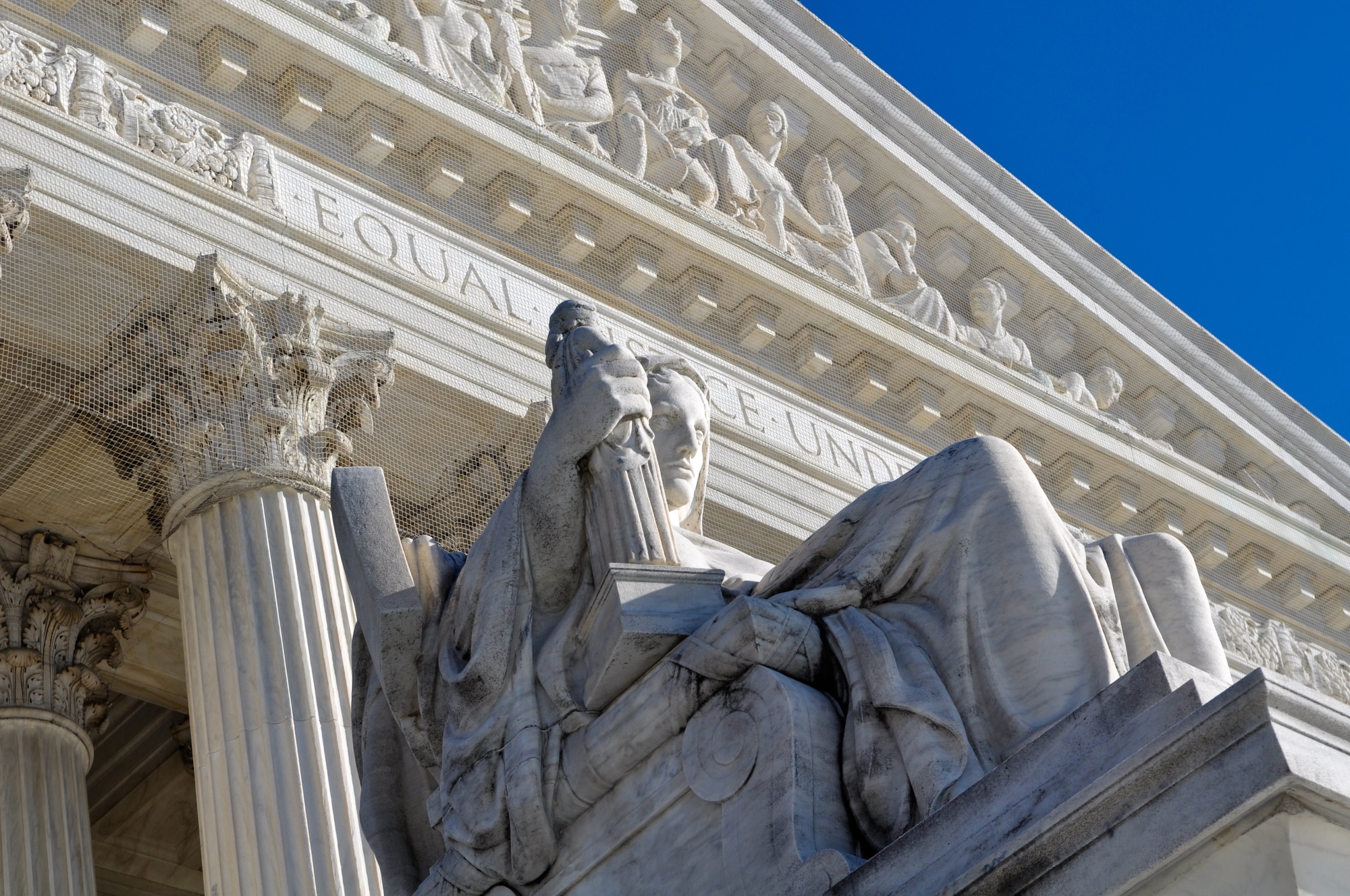
In a landmark 6–3 decision issued on February 20, 2026, the U.S. Supreme Court ruled that President Donald Trump exceeded his statutory authority when he imposed sweeping tariffs on imports from nearly every trading partner under the International Emergency Economic Powers Act (IEEPA) of 1977.
Yet within hours of the decision, the administration made clear that its tariff strategy was far from finished. By pivoting to alternative statutory authorities dating from the 1930s, 1960s, and 1970s, the White House signaled that while one legal pathway had been closed, others remain available. The practical result is not policy clarity but continued regime uncertainty, an outcome that carries real economic costs.
Tariffs have been central to President Trump’s economic program since his first term (2017–2021). During that period, he relied primarily on Section 232 of the Trade Expansion Act of 1962 to impose national-security tariffs and Section 301 of the Trade Act of 1974 to levy duties against Chinese imports.
Upon returning to office in January 2025, Trump escalated dramatically. Declaring national emergencies tied to fentanyl trafficking and persistent trade deficits, he invoked IEEPA, a statute historically used for sanctions and asset freezes, to impose broad duties. The administration levied 25% tariffs on most imports from Canada and Mexico, 10% on most Chinese goods, and a baseline “reciprocal” tariff of at least 10% on imports from nearly all trading partners, with higher rates for dozens of countries.
Rates shifted repeatedly through executive orders, creating a fluid and unpredictable tariff regime. By mid-2025, Customs and Border Protection had reportedly collected between $130 and $200 billion.
From an Austrian political-economy perspective, the central issue is not merely legal authority but economic distortion. Tariffs are taxes on imports, but their burden does not fall on abstract “foreigners.” It is borne through higher prices, reconfigured supply chains, reduced real wages, and the diversion of capital toward politically favored sectors. As economist Ludwig von Mises observed in his critique of protectionism, tariffs do not create wealth: they rearrange production through coercive intervention, privileging certain domestic interests at the expense of consumers and exporters.
The unpredictability of the administration’s tariff adjustments compounded these distortions. Investment requires calculability. When tariff rates can be altered overnight by executive order, firms face what the great libertarian historian Robert Higgs called “regime uncertainty,” a climate in which long-term planning becomes speculative, defensive, and cautious.
Legal challenges came swiftly from importers and states. In Learning Resources, plaintiffs argued that IEEPA’s authorization to “regulate…importation” did not clearly delegate tariff authority. The Court agreed.
Writing for the majority, Chief Justice John Roberts returned to constitutional first principles. Article I assigns to Congress the power to lay and collect “Taxes, Duties, Imposts and Excises.” That allocation was deliberate. The Framers placed the taxing power in the legislature precisely to prevent unilateral executive exactions.
The Court emphasized two doctrinal guardrails: the nondelegation principle and the major-questions doctrine. While modern doctrine permits broad delegations, Congress must at minimum articulate an intelligible principle, and when delegating authority of vast economic and political significance, it must speak clearly. IEEPA contains no reference to tariffs, duties, or taxation. In nearly fifty years of use, no president had invoked it to impose sweeping, revenue-raising import taxes.
Under the major-questions doctrine, the Court reasoned, it will not presume that Congress silently transferred its core taxing authority through ambiguous language. “Regulate importation” could plausibly encompass embargoes or sanctions; it does not unmistakably authorize across-the-board tariffs affecting hundreds of billions of dollars in trade.
The decision stops short of reviving a robust nondelegation doctrine. But it signals a growing judicial unwillingness to treat emergency statutes as blank checks for structural economic transformation. For libertarians concerned about the steady accretion of executive power, that signal matters.
Much of the post-decision commentary has focused on Justice Neil Gorsuch’s lengthy concurring opinion, which joined Chief Justice Roberts’ core holding but extended into a pointed, bit-by-bit critique of his colleagues’ approaches. Spanning forty-six pages, far longer than Roberts’ lead opinion, Gorsuch vigorously defended the major questions doctrine while pressing harder on nondelegation principles, accusing fellow justices of inconsistent application across cases involving executive overreach under Presidents Barack Obama, Joe Biden, and now Donald Trump. His separate writing underscored a broader skepticism toward broad statutory interpretations that enable sweeping executive actions, reinforcing the decision’s lean against emergency powers as tools for structural economic policy while highlighting fractures even among the majority.
As for refunds, the Court left unresolved the question of refunds for duties already collected, potentially exceeding $100 billion. That administrative and fiscal reckoning now shifts to the lower courts and the political branches.
The administration responded immediately. Within hours, President Trump announced a new 10% “global tariff,” this time invoking Section 122 of the Trade Act of 1974, which allows temporary tariffs of up to 15% for 150 days to address serious balance-of-payments deficits.
Simultaneously, the U.S. Trade Representative initiated new Section 301 investigations, laying groundwork for longer-term duties tied to findings of unfair trade practices. Existing Section 232 tariffs remain in place. The administration has also suggested potential reliance on provisions of the Tariff Act of 1930.
Unlike IEEPA, these statutes contain more explicit procedural constraints. But they still reflect decades of congressional delegation that have concentrated substantial trade authority in the executive branch.
From an Austrian vantage point, this is the deeper structural problem. The constitutional issue is not confined to IEEPA. Over time, Congress has delegated significant discretion to the executive in the name of flexibility and responsiveness. The result is a system in which trade policy, once the quintessential legislative function, can be reshaped by administrative process and presidential proclamation.
The Supreme Court’s ruling is a genuine constitutional rebuke. It reinforces the structural insight that taxation and trade barriers are legislative choices, not executive improvisations. Yet economically, the ruling may alter form more than substance.
Section 122 tariffs are temporary. Section 301 investigations invite further litigation. Refund disputes will generate additional complexity. Businesses must now navigate not only fluctuating rates but shifting statutory justifications.
Markets reacted with volatility following the decision, reflecting a deeper truth: uncertainty itself is a cost. Entrepreneurs must discount future regulatory changes while consumers bear higher prices and global supply chains adapt defensively.
Protectionism is often defended as industrial strategy or economic nationalism. But at bottom, it is a species of central planning, redirecting resources through political discretion rather than price signals. Whether justified under emergency powers, national-security statutes, or trade-investigation frameworks, tariffs operate as taxes imposed by coercive authority.
The Court has drawn a line against one particularly sweeping assertion of executive power. Yet as long as Congress continues to delegate expansive trade authority, presidents will test those boundaries.
If there is a lasting lesson in this episode, it is that constitutional structure and economic liberty are intertwined. When the taxing power migrates from the legislature to the executive, especially under the elastic banner of “emergency,” both separation of powers and market order erode. The Supreme Court has closed one door. Whether Congress reclaims its constitutional role, or continues to outsource trade policy to executive discretion, will determine whether this decision marks a genuine restoration of limits, or merely a pause in an ongoing experiment with managed trade.