

It is an exceedingly rare thing that I eagerly await the release of a book. However, Patrick Newman’s second installment in his series on the history of cronyism in the United States, just published by the Ludwig von Mises Institute, is precisely that. Indeed, ever since the release of the first installment in 2021, Cronyism: Liberty Versus Power in Early America, 1607-1849 was released, I and other similarly impressed readers have been checking regularly for updates as to the progress of the second installment. Well, it has arrived and it does not disappoint! In Cronyism: Rise of the...
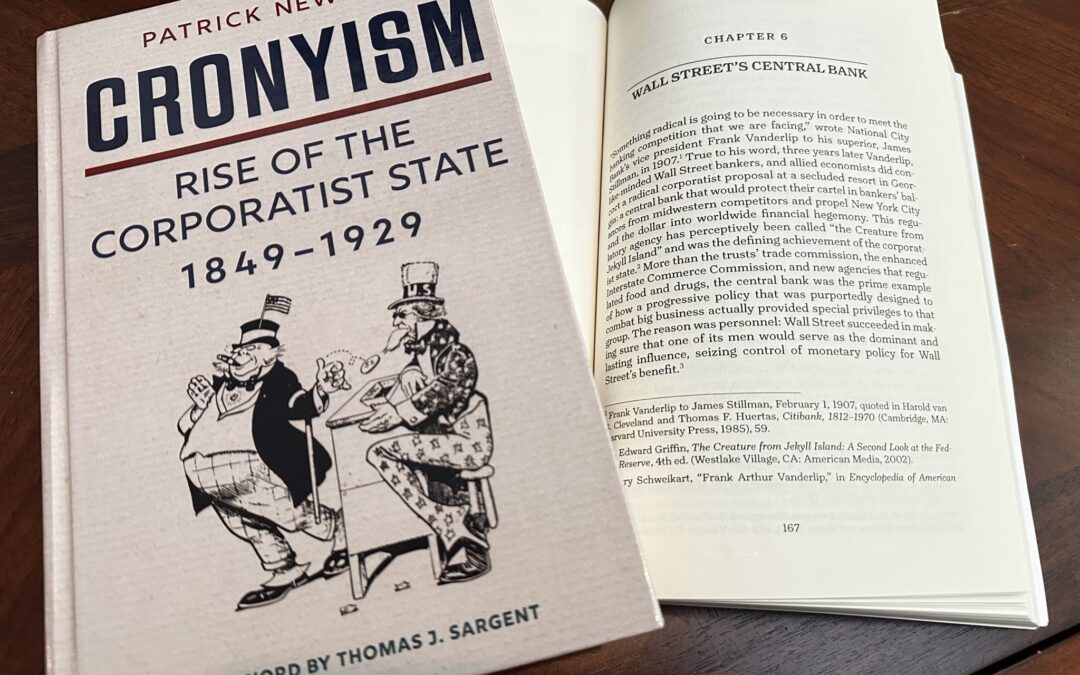
The Most Important History of Crony Capitalism In 50 Years
read more