There was a time, not long ago, when the United States had the social etiquette to conduct its coups clandestinely. That is important because it means they recognized that it is wrong. Coups were carried out by the CIA, and we often only found out years later. Now, they are carried out by the U.S. Navy for the world to watch on television. The change is a reflection of Washington’s hubris and the belief that they can do what they want.
There may never have been a more public and obvious coup than the coup attempt unfolding in Venezuela. Hardly under cover of the dark of night, the largest aircraft carrier in the world, the nuclear powered USS Gerald R. Ford, brought its, at least, forty F/A-18E/F Super Hornets, its EA-18G Growlers, its two squadrons of helicopters, its five destroyers and its B-52 Stratofortress and much more to St. Thomas in the U.S. Virgin Islands, about 560 miles from the coast of Venezuela. Its more than 4,500 troops join the more than 10,000 troops with their Aegis guided-missile destroyers, a nuclear-powered fast attack submarine, F-35B jet fighters, MQ-9 Reaper drones, P-8 Poseidon spy planes, assault ships and a secretive special-operations ship who were already in the waters off the coast of Venezuela.
The U.S. military buildup is too small for a full-scale invasion and too large for stopping small boats carrying drugs. But it is perfect for a coup. The threat and pressure it exerts on Venezuelan President Nicolás Maduro is overwhelming and unbearable.
U.S. coups in Venezuela are not new. They were not new in 2002 when the democratically elected Hugo Chávez was briefly removed from office in a coup before the people and the military restored the popular leader to power.
But the script has changed little since they were new in 1908 when the United States helped oust the left-leaning Cipriano Castro after his objections to American power and influence in Latin America.
From its birth, Venezuela, along with Cuba, has represented an unacceptable challenge to the spread of America’s vision of form of government and leadership in what it perceives as its own backyard. Conceived almost in conversation with the 23-year older American constitution, the first constitution of Venezuela, as Greg Grandin has pointed out in America, América: A New History of the New World, sought to balance America’s preoccupation with individual liberty with the common good. The constitution calls for the “renunciation of the dangerous right to unlimited freedom” and insists that “because governments are constituted for the common good and happiness of men, society must provide aid to the destitute and unfortunate and education to all citizens.”
From Francisco de Miranda and Simón Bolívar, who fought first for Venezuela’s independence and then for a united Latin America, to Hugo Chávez who united and galvanized the Latin American left, Venezuela has been a challenge to the spread of American ideology and hegemony in the western hemisphere.
But the American response has never been so public and bellicose. In late November, President Donald Trump spoke to Maduro by phone. The phone call lasted less than fifteen minutes. Precisely what transpired on that phone call remains unknown. But one thing is clear. Like a sheriff in a bad western movie, Trump, with guns drawn, Trump told Maduro to get out of town. He told him that he had one week to leave.
What happened next is not clear. It is not entirely clear whether Maduro refused to leave or if Trump refused Maduro’s conditions for leaving. According to reporting by The Miami Herald and Reuters, Trump told Maduro that safe passage would be granted to him, his wife and his son if he agreed to resign right away and flee Venezuela for the destination of his choice.
According to the reporting, Maduro told Trump he was willing to leave under three conditions. He and his family had to have complete legal amnesty. Sanctions on over a hundred Venezuelan officials had to be dropped. And he asked that his vice president, Delcy Rodriguez, be allowed to head an interim government until elections could be held. Trump rejected the conditions and gave Maduro until November 28 to leave.
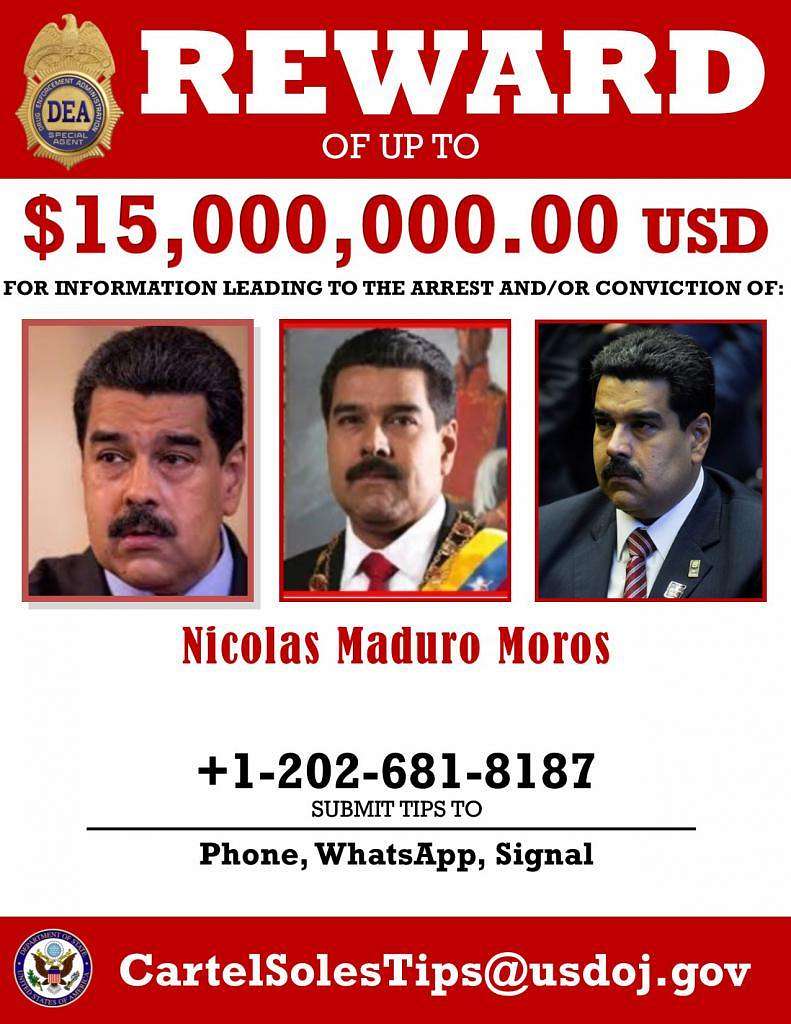
That deadline has passed. Trump has closed Venezuela’s airspace, formally designated Venezuela’s Cartel de los Soles a foreign terrorist organization, declared that Maduro is the head of that foreign terrorist organization, and threatened land strikes on Venezuela “very soon.”
But Maduro is still in Venezuela. The Washington Post, while confirming that “Trump indicated he would like to see Maduro step down,” denies that there was an “ultimatum.” They report that Maduro, while “feeling the pressure,” has opted “to dig in and wait out President Donald Trump’s threats of an imminent attack.” Neither the people nor the military in Venezuela have turned on him, and, the Post reports, Maduro’s “inner circle shows no signs of imminent collapse.” There has been diplomatic pushback against the American threat from Colombia’s President Gustavo Petro, Brazil’s President Lula da Silva and Mexico’s President Claudia Sheinbaum.
Who will back down first, Maduro or Trump, remains to be seen. But the blatant, public push to force Maduro to back down suggests that the United States and the Trump administration no longer feel the need to hide from the world that they can impose their will on sovereign nations and do whatever they want.