After much back and forth it appears that “Florida Man”-occupied government prevailed, and on overnight on January 4, as if they are the Cuban Mafia or something, the Trump administration broke into Venezuelan President Nicolás Maduro’s house and spirited him to another location after claiming he was cutting into the drug trafficking business.
The operation has been hailed as a stunning success, and I must admit I was quite surprised when the bombing started just a few hours before Donald Trump said Maduro was in custody. We can’t know the details, but we must assume that Maduro was betrayed by an internal faction, a quite common way to take a city 2,500 years ago. Then, Maduro was said to be paraded through New York City in a van with an open door (though he wasn’t visible in the shared video) and then last Monday morning was in a U.S. court room to face spurious charges.
The public is struggling to even know what to call this. It is an act of war, but wasn’t a war or a coup in the normal sense; nor is it sensible to call this abduction a kidnapping, as the victim is a head of state. Regardless, the Trump administration rapidly dropped the claim that Maduro was some sort of cartel leader or that the cartel exists at all, and at least for now has left his entire regime and his seemingly more pliable second in command in charge. In addition, Trump appears to be openly demanding tribute in oil for that regime to stay in power. In short, this is nearly identical to any number of the more shameful episodes in the ancient histories, and our poorly educated public doesn’t even know what to do with having witnessed it.
Stories of abductions as a cause of war date back to pre-history, and were notably the beginning of Herodotus’ narrative which lists a few, with Helen of Troy being only the most famous. Of course, Maduro’s face is unlikely to launch one thousand ships, even if his mustache is impressive. However, betrayal of some sort used to be the most common way that cities fell, with endless examples in Thucydides and the other histories. In our era where “the key to the city” is something ceremonial, it’s easy to forget that there was a time when cities were walled and cities did have gates with actual keys. Before siege engines, the two main options for breaking into a city you were attacking were to get someone inside to use the key to the city to open the door, or starve them out until someone in the city agreed to open the gate.
In this instance, the United States has done something like both. After decades of sanctions on Venezuela, it seems somehow or another Venezuela’s military was made to mostly stand down or its air defenses, such as they are, were turned off that the United States could safely conduct this operation; helicopters were seen flying low enough over Caracas that it would not have taken particularly fancy equipment to shoot them down. Upon getting to Maduro’s location, they seem to have blasted through his Varangian Guard of Cubans, the only troops he could rely on. All of these things are signs a faction betrayed Maduro, though of course it still seems the operation was conducted without any serious mistake and the risks of it being a trap were high.
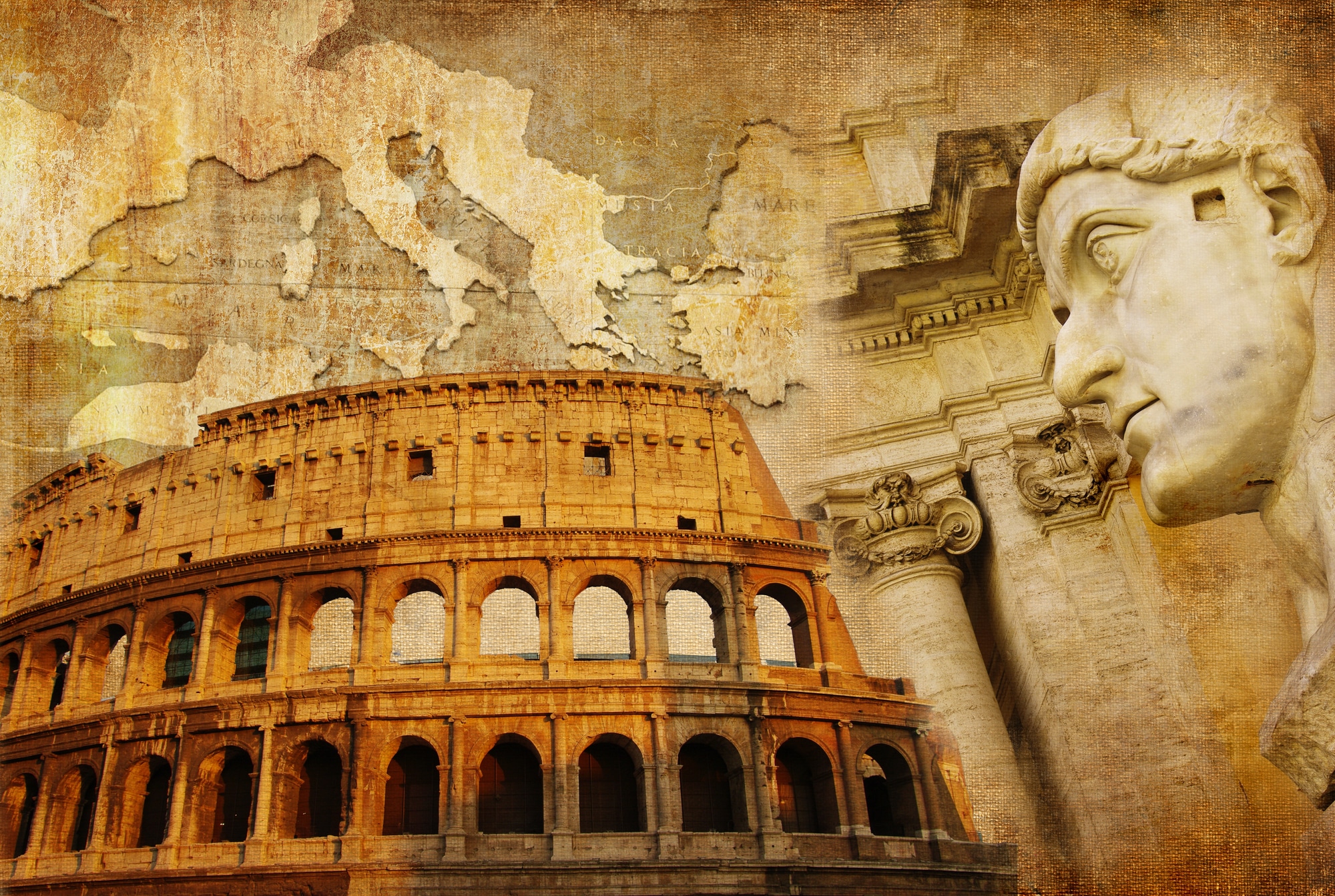
Having captured the enemy chief, he was then paraded through the streets of our most important city. This was favored by the Romans, who would hold triumph parades after having killed a sufficient number of other humans and then the public could see some of the remaining enemies in chains. It is often said that if our political leaders had to fight themselves we would have fewer wars, but in Rome the desire for triumphs just encouraged more wars, as every politician wanted to lead troops to further his career. Regardless, Maduro was indicted on a various charges, including strangely enough the possession of machine guns, for a head of state in his own country. Historically, a vanquished enemy may be made to limit their ships or elephants, but to charge him with having possessed small arms seems unprecedented. The Trump administration is quite clearly making things up as they go along, and then shamelessly dropping key parts of their narrative, such as that the Cartel de los Soles was a real thing when it is convenient.
Maduro now removed, his entire regime is left in place where it is trying to bring order to the chaotic country. It is said that they are cracking down on those celebrating the capture of the state’s erstwhile leader. However, it seems that the message has gotten through to them that they have no choice but to be subservient. They are torn between showing an amount of pride which will not lead the country to detest them and accepting the reality they find themselves in. This is a common situation when an imperial power has removed a chief but decided that the state can remain nominally independent. Likely, Maduro will ultimately find himself on an island more remote than Manhattan for his exile.
With justifications all over the place, it is Trump himself who is being the most nakedly imperialist. He has said we will be given thirty to fifty million barrels of oil imminently and then started saying they will be buying only American products with any money they are given from the oil. It seems more like Trump is openly demanding tribute. This is particularly bizarre because by all accounts there is a global overproduction of oil and we have no genuine need, either as a strategic resource or the wealth it represents. Further, Venezuela broke oil contracts a long time ago, and it is not reasonable to still be aggrieved. Ryan Grim noted that Trump may be the first president to lie that he did go to war for oil, but it isn’t clear what the lie covers for, besides just doing what Miami wants, which he only kind of did, leaving the rest of the regime in power. It seems more than anything the Trump administration wanted to prove the point that it was willing to abduct a head of state and then demand resources from those who remained in power.
Many of Donald Trump’s supporters seem to take great joy in this military operation. Most of all, they feel that just taking what we want puts America first, which seems somewhat short sighted, particularly in a situation where we have no genuine need and were just pushed into the action by aggrieved foreigners living in our country. The main talking point among Trump’s supporters is that international law is “fake,” which is too complex to go into here but suffice to say governments are supposed to be restrained by their own rules. Even in antiquity, civilized people generally found better excuses for war than just saying “I want it so I took it,” which is what Trump landed on here after trying everything else. While “might makes right” may rhyme, it’s important to remember that in the Melian Dialogue when the Athenians say, “The strong do what they can and the weak suffer what they must,” there was a much more complex understanding of ethics and international law in Athens and the university of Greece; what this represents is that Athens had abandoned all principle and reason after decades of conflict and was finally laying its baseness bare.
While as an appreciator of history I do find it somewhat amusing to see actions of such antiquity, abducting an enemy chieftain to parade him through the streets and take his country’s resources is exactly the sort of thing humanity spent thousands of years slowly moving past, and it is certainly a bad thing to see such behavior make a comeback.