During the late nineteenth century, under the aegis of a colonial order supervised by the French and British and German Empires, the constitutional monarch of Belgium, a tiny country in Europe, created an imitation empire that became the world’s evilest regime.
In 1876, Leopold II, King of the Belgians, a grandson of the last King of France and a cousin of both Queen Victoria and the German-born Prince Albert, founded the International African Association for humanitarian improvement of the “dark continent.” Three years later, in 1879, the Association sponsored Henry Stanley, who had explored central Africa in the 1870s, to secure land there for Leopold. In 1885, at the Berlin Conference that divided Africa among the empires governed by Leopold’s relatives, Leopold began governing the Congo Free State as his own private kingdom until 1908: an extension of colonial mechanisms of control that was even less regulated than colonial operations on behalf of actual governments. What came next was the deaths of millions of people so that Leopold’s agents or those native inhabitants these agents paid could extract ivory to service high-end collectors and rubber to equip bicycles and automobiles and make Leopold a fortune.
The Cambridge World History of Genocide—which acknowledges that “summarizing the impact of the Congo Free State is not a straightforward task” since “estimating the death toll is fraught with controversy” especially given contested current scholarship and the fact that “describing the effects on survivors…is necessarily impressionistic”—nonetheless describes Leopold’s rule as amounting to “a cataclysmic event with a 23-year trajectory extending across hundreds of thousands of square miles and affecting millions of people.” Over these twenty-three years:
“People were deliberately killed in war and in systematically violent exploitation. They died of wounds inflicted through fighting, punishment or torture. Villagers sent in search of rubber, fleeing from the demands of the state, or homeless because of reprisals died from accidents, attacks by wild beasts, exposure and starvation. The colonial transport system spread fatal diseases, particularly smallpox and sleeping sickness, accelerating a process already put in motion by Swahili-Arab slavers. The malnourishment that attended the Free State’s exactions increased mortality by reducing resistance. In some places, sleeping sickness took 80 per cent of the population. Sexually transmitted diseases both took lives and reduced fertility. Fertility also fell due to malnourishment, family disruption and women’s decisions to prevent pregnancy so that flight would be easier if necessary…The number who died because of official action could have ranged from some hundreds of thousands to close to 2 million.”
These effects had wider and longer consequences, making the Congolese population vulnerable to other influences so that, until roughly 1925, “deaths from privation or disease…could have ranged anywhere between 3 million and 8 million, including the impact of the 1918–19 influenza pandemic”; estimates which “imply a total of between 3.4 and 10 million lives lost.”
At the same time, Leopold brought colonization home, remaking Belgian cities like Brussels off the example of Napoleon III’s Paris, a project that displaced its own citizens in the name of “tourism” and “glory.” As in the Congo, Leopold, off his “competitiveness and desire for prestige” and his determination “to recreate Parisian style boulevards,” put the urban renewal process in Belgium on accelerant. His “haste and ambition converted into a reckless approach to urban planning” and “drove Brussels into a blind spot” of “large scale demolition” where residents were “victimized by the relentless drift of the authorities to modernize.” In the end, “boulevards were seen as alienating…and interest [in]…apartment buildings remained low”; “the urban plan…was unpopular among residents”; and the construction process led to the “mass eviction of inhabitants.” Destruction also continued as Leopold erected more buildings off his profits from the Congo.
For a period, Leopold’s activities abroad were masked by propaganda off the model of Henry Stanley’s early-1870s trek through Africa, shorthanded in popular history as an exercise in humanitarian adventurist bonhomie (“Dr. Livingstone, I presume?”). But by 1908, books on what was in fact happening in the Congo by Joseph Conrad (The Heart of Darkness) and Arthur Conan Doyle had created an outcry that forced Leopold, a year from death, to cede his possession to the Belgian Parliament, formalizing colonial rule with some semblance of the humanitarianism initially promised by Leopold. And yet this was not the end of the empire. In 1906, knowing his possession of the Congo was running short, Leopold had partnered with an associate of the Rockefellers on the logic that “American dollars are not imperialistic” to begin extracting the Congo’s other precious resource, diamonds. The partnership created the foundations for extractions like the “blood diamond” trade that continue today. Leopold’s predations at home also continued after his death: his “modernizing” demolitions of Belgian cities set the terms for two future “modernization” projects widely agreed to be disastrous failures which left Brussels a “fragmented” and “traumatizing” symbol of “a volatile society.”
Overall, the reign of King Leopold II would seem to be the ultimate cautionary tale, the opposite of what any citizen anywhere would want put on repeat. This is a perception reinforced by a stream of books, museum exhibitions, proclamations and mea culpas on the subject of the Belgian Congo which assure everyone that what happened a century ago “under western eyes” will never happen again. And yet, for all of that, what happened then is happening again. It is happening under western eyes and with western help and after western disavowals. And it is happening with a humanitarian justification and under an aesthetic of bonhomie and with reverberations “back home.” It’s only the players who differ, and their scope.
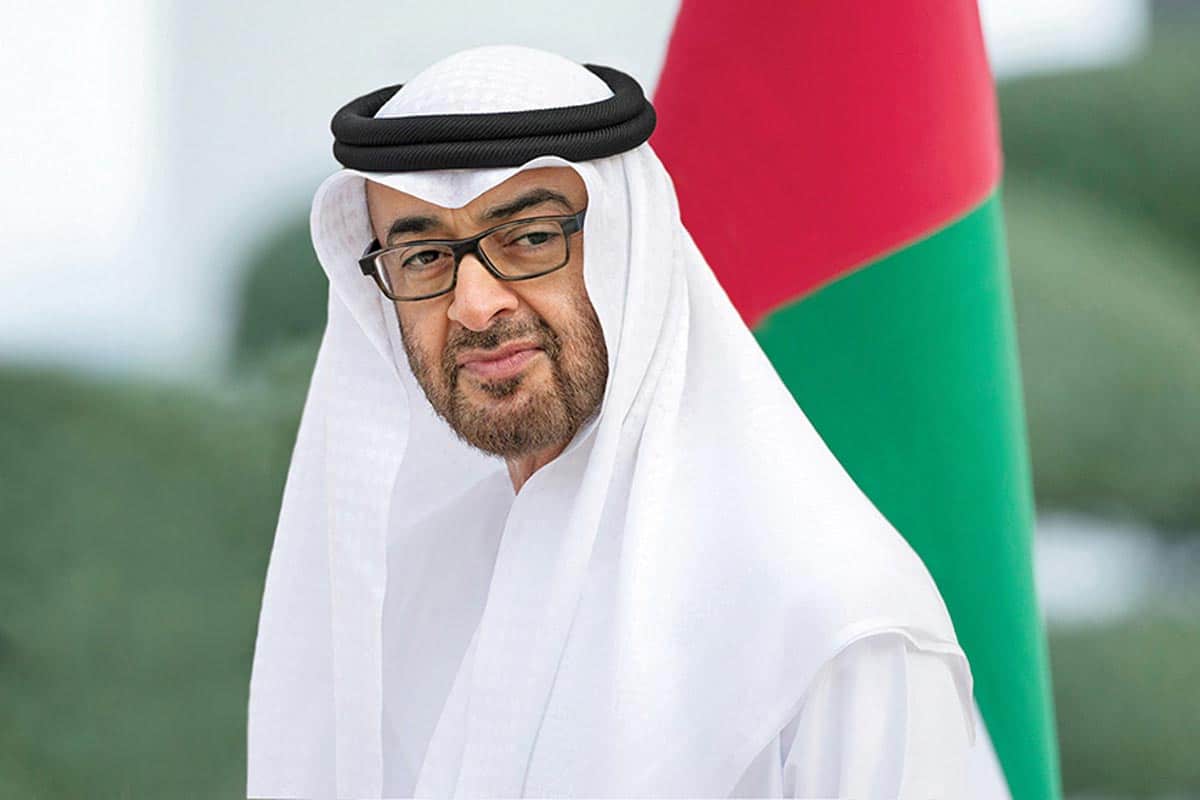
America has assumed the role of European empires. A tiny sliver of a country, the United Arab Emirates, which was formed from the federation of seven Gulf principalities or emirates in 1971 under the leadership of the Sheik of the largest emirate, Abu Dhabi, and whose landmass is smaller than the state of Indiana’s, has assumed the role of tiny Belgium. A similarly grasping, imitative monarch as Leopold with similarly deep imperial connections, Sheik Mohammed bin Zayed Al Nahyan, has taken Leopold’s role. And the damage of Mohammed’s actions not only accrues in the Congo and “at home” in the UAE but across Africa with America’s backing.
This modern-day saga of imitative empire begins, in the telling of the scholar Elham Fakhro in a recent book covering the subject, in the early 2000s, when Mohammed’s father Sheik Zayed, Abu Dhabi’s leader and the founder of the UAE, died. Mohammed, thanks to his older brother’s declining health, quickly became de facto leader or president of the UAE until succeeding formally in 2022. Zayed, the father, had been known for his low-key, pro-Arab and pro-Muslim rule, and for keeping nominal distance from America and America’s proxy Israel. But in fact Zayed was, from the beginning, a western proxy; “installed” by the British to rule Abu Dhabi in 1966 “at the request of leading Abu Dhabi families…because they were fed up with his brother…who had been…averse to development.” In the years after his de-facto accession, Mohammed has shed even his father’s nominal concerns with religion and sovereignty and, in the name of development, drew close to Israel, Saudi Arabia, and American empire; the equivalents of Britain, Germany, and France in Leopold’s day.
According to Fakhro, Mohammed’s early actions in this direction were “strengthening the UAE’s military and its technological capabilities”; creating what American commanders saw as the region’s most effective air force; and offering support for America during its invasion of Iraq. He also inked security and technology agreements with Israel; and with Saudi Arabia after the accession to power there of Crown Prince Mohammed bin Salman, twenty years younger than Mohammed but with a similar modernizing bent. It was from this feathered nest of imperial entanglements, more substantive in every way than Leopold’s family ties to Britain and Germany and France, that Mohammed moved into Africa with a similar purpose as Leopold’s: resource extraction. The actuality of this extraction was as dramatic as Leopold’s but much more broadly flung. Indeed, in 2024, after twenty years of concentrated investment, the UAE became the largest backer of new business projects in Africa, with its commitments “more than double the value of those made by companies from the UK, France or China.”
What, precisely, does this investment look like? Where Leopold’s aim for Congo had been enriching his small and resource-poor kingdom using ivory and rubber, Mohammed’s was enriching his small oil-rich kingdom with land, agricultural produce, and mineral wealth. To this end Mohammed has steadily colonized substantial portions of multiple African countries, affecting over 900 million human beings. In four countries, including Liberia and Zimbabwe, he has purchased 10-20% of each country’s landmass for “carbon exchange”; a scheme where companies buy land in the name of environmental preservation, then sell “carbon credits” to companies which generate carbon dioxide. In ten countries, including Egypt, Ethiopia, Kenya, and Morocco, he has accelerated direct and indirect purchases of agricultural land. In at least seven countries, including the Democratic Republic of the Congo, Rwanda, and Sudan, he has invested in extractions of diamonds, cobalt, copper, graphite, lithium, nickel, and gold—creating a web of smuggling and exportation-on-the-cheap. And underpinning all of this is naval and military strength: ports in twelve African countries, including Egypt, and military agreements for training and weapons with five, including Somalia.
One byproduct of infringements which span so many countries and operate via so many different economic spheres is that their impacts can’t be measured as directly as Leopold’s—and yet, despite this, some fairly direct impacts of Mohammed’s activities can be described. His land buys are linked to “the forced eviction of local populations” in Liberia and Kenya. His buyout of agriculture across countries has concentrated production, displaced small farmers, limited available water, and incentivized armed takeovers of agricultural land. His forced shift away from farming produce and toward farming livestock feed has denuded the soil and made actual food scarce. His inducements for diamonds mean that, since 2015, “the UAE’s rough diamond trade has grown by over 75%,” unseating Belgium to become the world’s top trading hub with at least $1.6 billion of it under the table: “a major deprivation for African treasuries” which need the revenue. His inducements for gold have led experts to estimate that at least 95% of gold exports from Central and East Africa pass through Dubai, often under the table. (In 2015, for example, exports were reported by the UAE of “$7.4 billion from 25 African countries,” nineteen of which “had not declared any exports to the UAE.”) And this illicit smuggling, like agricultural concentration, fuels profiteering militias.
On the occasions when Mohammed’s expanding empire has been threatened by Muslim-led popular movements for sovereignty—in Egypt and Libya and Tunisia—he has successfully supported proxy wars or coups to stop them. In other places, Mohammed has supported order, at least for a time, for his own purposes. One example is Somalia, which the UAE helped fight piracy by providing funding for forces led by the Iraq War “veteran” mercenary Erik Prince. The UAE also invested in Somalia’s sea trade by pouring $440 million into Berbera Port and receiving a thirty-year concession to manage it, and refurbishing Bosaso Port to “catalyz[e] economic growth” in a region where unemployment is estimated to affect up to 75% of the population. And yet Mohammed can also abandon his commitment to order as swiftly as he makes it. Only this year, the UAE’s iconoclastic stealth encouragement of the international recognition of Somaliland—“a self-declared independent” or breakaway region of Somalia which is also the location of the same Berbera Port that the UAE has claim to for thirty years—led Somalia’s government to sever all ties with the UAE for “practices…that undermine…sovereignty.”
But the hearts of the UAE’s particular darkness are the Democratic Republic of the Congo and Sudan, countries where Mohammed’s desire for agricultural land converge with his desire for minerals. The UAE is “by far the largest importer of conflict gold from both Sudan and Congo.” It is also a recent major investor in Congolese mining while, in Sudan, it “has pumped over US$6 billion into…foreign reserves [and] agricultural expansion projects” totaling approximately 525,000 acres. And so it is perhaps not surprising that the Rwandan government, which counts the UAE as its largest trading partner and backer, has been “arming and training the M23 militia accused of indiscriminate killing, rape and mass displacement in the…Congo” to extract minerals on the cheap via firms or intermediaries tied to the UAE. Nor is it surprising that, in response to increasing Muslim power in the Sudanese government, the UAE has made a proxy of the paramilitary Rapid Support Forces (RSF), run by a tycoon worth $7 billion off of deep ties to the gold trade via the UAE. The UAE has financed and armed the RSF, sometimes with weapons transferred from the UAE’s proxies in Libya, to engage in “mass executions and killings” and “sexual violence and torture”; what amounts to “[genocide]-level mass extermination.” As a result of these conflicts in the Democratic Republic of the Congo and Sudan, hundreds of thousands of people have been killed and more than twenty million people have been displaced while fifty-eight million face “acute food insecurity” and starvation.
These are, in other words, extraction genocides, much as Leopold’s project in the Congo was an extraction genocide. They are rapes-for-profit by slivers of states with small populations (Rwanda is the size of Maryland and has more than fourteen million people) against countries with vast territory (the Democratic Republic of the Congo is about the size of the United States East of the Mississippi; Sudan is a quarter of the size of the United States) together populated by about 165 million people. And, much as Leopold’s genocide in the Congo provided him with the fortune for demolition projects on his own cities at home, so Mohammed’s genocides in Central Africa are providing him the food base and the precious mineral resources to accelerate colonizing projects in the United Arab Emirates.
Environmental technology, artificial intelligence, and urban developments—these are the new coins of Mohammed’s Emirati realm. First are solar projects: Noor Abu Dhabi park in Abu Dhabi, which Emiratis call the “world’s largest single-site solar power plant”; and the Mohammed bin Rashid Al Maktoum Solar Park in Dubai, a “science fiction-like array of solar panels…covering an area larger than Manhattan.” Next are investments in AI, to the tune of $600 billion since 2025, “to diversify [the] economy” from oil “and become the world’s next technological hub.” And, finally, the ultimate instantiations of these green and AI expansions are “smart cities”: blending “environmental friendly” space-saving techniques with foreign investment and AI-based services. The model city in this vein is Dubai, already “the Gulf’s reigning logistics and financial hub” now being developed based on the Dubai 2040 Urban Master Plan. The Plan “outlines a transition [for the city] from around 3.3 million residents [in 2020] to a daytime population of 7.8 million by 2040.” Its methods include “strategies that extract more value from existing properties” by “increasing building heights, introducing mixed-use towers, and regenerating older districts” while anchoring growth “in trade, finance, tourism, and digital sectors” to generate nearly $9 trillion “in economic output over 10 years.”
But there are undersides to this modernization and glitter. In 2023 and 2024, the human and labor rights organization Equidem interviewed migrant workers on solar and green energy projects in the UAE and reported a list of abuses. These include but are not limited to “physical and sexual violence, excessive overtime,” “delayed or unpaid wages, arbitrary deductions,” “lack of written contracts,” “passports withheld by employers,” “overcrowded and unsanitary accommodations, lack of access to healthcare,” and “threats of deportation for raising complaints.” One worker said, “The company treats all the workers like animals.” And the status of non-laborers in cities like Dubai is similarly if more insidiously precarious. Indeed, the result of urban growth as outlined in the Dubai 2040 Urban Master Plan—”increasing building heights…mixed-use towers…anchoring growth in trade, finance, tourism, and digital sectors”—is to turn cities into techno-feudal, AI-surveilled spaces of the very rich, their white collar support staff, and the service workers who serve both.
Last May I reported for the Libertarian Institute about the growth of these “smart cities” and their “brave new world” aspect. I also reported on their inequality: the fact that their vaunted security apparatuses serve to monitor citizens while protecting only the powerful. I reported specifically about the travails of ordinary individuals in Dubai, which was called by one resident a “modern-day Sodom and Gomorrah; all concrete glass & lights but…built on…criminals & prostitution.” According to Radha Stirling, who for eighteen years has run the nonprofit Detained in Dubai and serviced more than 25,000 people:
“Dubai is not as safe as it’s made out to be. It’s portrayed that way through state controlled crime statistics and media. OnlyFans model[s]…lawyers and other professionals have been lured to Dubai, RAK and Abu Dhabi then assaulted by powerful people who can have their victims locked up (or worse) at the click of a finger.”
Overall, Mohammed’s redevelopment schemes inside his own country would seem to be latter-day instances of the Leopoldization of Belgium—where “the relentless drift of the authorities to modernize” lead to the creation of an “alienating” and “unpopular” urban environment which “victimize” residents. But these redevelopment schemes are of a piece with an even larger modernization project undertaken by Mohammed which involves displacing his own citizens from a stake in their country. According to the scholar Mira Al Hussein, “[UAE] citizens’ material benefits are diminishing while burdens, such as taxes and conscription, are introduced at short intervals” and “incremental changes or reforms, such as the introduction of Golden Visas and nominated citizenship appear to be shrinking the citizen/noncitizen differential.” As Al Hussein describes it, not simply laborers but a new class of foreign government-backed corporatists are part of these importations; people with little connection to Emirati society but total dependency on Mohammed. So too are “pluralist” Muslim jurists from other countries encouraged by Mohammed to “liberalize” Islamic belief into “cosmopolitan” practice. And so, finally, are military operators, beginning with:
“…a secret American-led [800-man] mercenary army being built by Erik Prince…with $529 million from [the UAE]…intended to conduct special operations missions inside and outside the country, defend oil pipelines and skyscrapers from terrorist attacks and put down internal revolts…if the Emirates faced unrest in their crowded labor camps or were challenged by pro-democracy protests…”
But there is an ideological “gloss” put by Mohammed on all of this essentially extractive and “modernizing” activity. In a lengthy 2020 New York Times profile with the reporter Robert F. Worth, Mohammed described the foundations of his governing philosophy this way:
Sometime in the 1980s…he went on a holiday trip to the grasslands of Tanzania, and on his return to Abu Dhabi, he went to see his father…[and] Zayed asked his son…what he had done to help the people he’d encountered. In response, [Mohammed] shrugged and said the people he met were not Muslims. His father’s reaction was sudden and indelible. ‘He clutched my arm, and looked into my eyes very harshly,’ [Mohammed] told me. ‘He said, ‘We are all God’s children.’ ’ [Mohammed] says his father’s pluralist instincts are at the root of his own anti-Islamist campaign.”
Whether Mohammed’s father actually said this or whether Mohammed’s father borrowed this line from the British or whether Mohammed knew it from his time in Britain at school, the idea of “pluralist instincts” seems less of a practical commitment for Mohammed and more of an excuse for treating everyone’s country as an extractable resource including his own. But, as with earlier Enlightened despotisms, Mohammed has another, less abstract reason for rule: he’s better than the alternative. As Times profile put it, Mohammed is “a shrewd, secular-leaning leader with a blueprint of sorts for the region’s future and the resources to implement it” and “for all his flaws, the alternatives look increasingly grim.” This line is hammered home more bluntly by UAE-funded propagandists, who often take to Twitter/X to argue:
Muslim Brotherhood–driven Islamist ideology poisons societies by normalizing hatred, radicalizing individuals, and turning antisemitism into a moral cause. When this ideology is left unchecked, it does not remain theoretical; it manifests in real-world violence, including… pic.twitter.com/hNsDMMHjjo
— أحمد شريف العامري (@AhmedSharif) December 14, 2025
Whether or not making “hatred not an opinion but a crime” is in fact congruent with “the rule of law,” justifications like these—security over liberty, authority in the name of “tolerance”—have been the underlying assumptions of empire since the seventeenth century when Britain became an empire and began colonizing the world. And so it is perhaps not surprising that this logic is not just swallowed by media outlets like The New York Times but supported by operators in Washington D.C., the heart of America’s empire.
Indeed, much as it was Britain and France and Germany which gave Leopold the keys to the Congo, it was a willing George W. Bush and a less willing Barack Obama who relied on Mohammed for logistical and military support in Iraq, allowing Mohammed the imperial support to venture into Africa. It was Donald Trump who presided over what was derided by observers as a false “peace deal” with UAE input between the UAE’s proxy Rwanda and the Democratic Republic of the Congo explicitly for the purpose of extracting minerals and to the benefit of Erik Prince—even as the Trump Organization inked a deal for “its first Middle East-based hotel and tower” in Dubai. It was Joseph R. Biden and Donald Trump who facilitated the UAE’s investment in artificial intelligence, despite concerns over whether the UAE is a reliable partner or whether American AI technology passed onto the UAE may end up with China. And it was some of Donald Trump’s political enemies in America, among them former New York City mayor Michael Bloomberg, who gave legitimacy to Mohammed’s investments in environmental projects—despite the fact that these investments have been shown to hoard valuable land and either justify the production of carbon dioxide elsewhere or actually produce carbon dioxide second-hand while giving the illusion of “climate progress.”
And, much as Leopold’s supporters in Europe inveighed against “savage customs” in Africa to support his agenda, American operators in New York and in Washington and their environs offer the UAE rhetorical support for its extractions. They warn against the dangers of “radical Islam” and praise the “dynamic,” cut-to-the-chase bonhomie of latter-day Henry Stanleys like Erik Prince. These justifications create the perfect, circular, rhetorical trap. When disorder accrues in Africa off of interference from an American proxy like the UAE, it feeds the narrative that the continent is mired in radicalism and so impossible to fix without outside “involvement” and “guidance” from operators like Erik Prince. Or else, of course, in this logic, the end result will be “savagery” and “disorder” and “the state of nature,” the justifications of empire in the first place.
But there is an irony to this evil, though not one of much plausible comfort to those people on its receiving end. Much as Leopold’s justifications and projects came back to Belgium and Mohammed’s came back to the United Arab Emirates, the twenty-first century plundering of Africa at Mohammed’s hands is coming back to his ultimate underwriter, America. As I will report in a coming investigation, it is doing this via Zionists who arbitrate American empire and their host state Israel which is Mohammed’s largest single supporter. Equipped with this support, Mohammed has in the last fifteen years taken his tiny kingdom far beyond where Leopold took tiny Belgium: effectively compromising African, Emirati, Middle Eastern, Latin American, European, and American sovereignties, and bringing the wages of colonization back to empire’s heart.